









DOBROTORIUM.ART
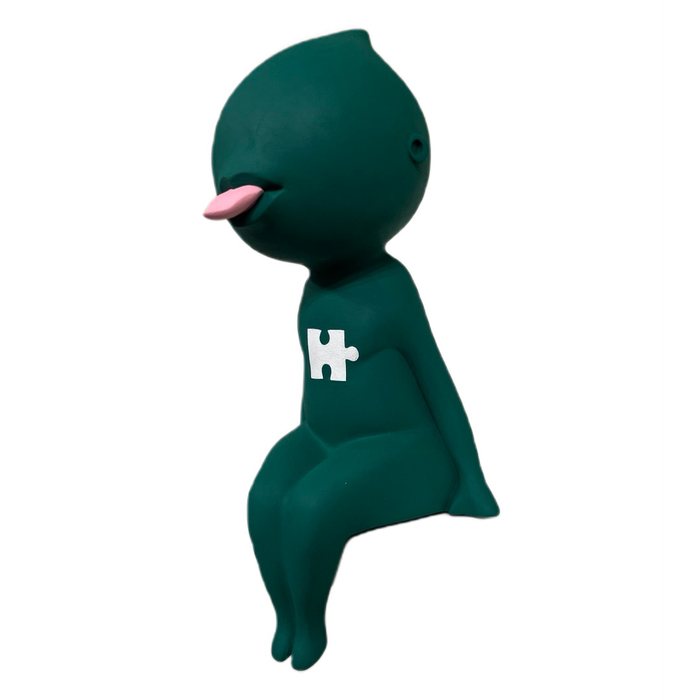
Sculpture by the author "Sinkini Standart" with individual painting, green


50 000 ₽
0
Add a gift label
Engraving on the nameplate 1500 ₽
Delivery options
Worldwide
Delivery by a transport company in the shortest possible time
VIP air delivery
Delivery rates
About this product
The Sinkini sculpture, made of individually painted plastic, evokes an involuntary smile and a slight internal tingling sensation — the same feeling when faced with something naively honest. A miniature creature of deep green color, sitting with outstretched legs and a pink tongue sticking out, embodies childish straightforwardness, but at the same time carries adult depth. The image is built on contrasts: simplicity of form — against philosophical fullness, game aesthetics — against subtle psychological work.
It's not just a decorative figurine. This is a character who speaks without words. It doesn't require decoding — it resonates. It's a moment of vulnerability and freedom at the same time. He's not afraid to be weird, awkward, or funny. He doesn't want to be liked. That's why it attracts. A piece of a puzzle is highlighted in white on the chest of this Sinkini — a symbol of search, imperfection and the very missing element that we are trying to find in ourselves or in the world. This is not an image of an emotion — it is the emotion itself, enclosed in a form. Such a gift will be appreciated by someone who appreciates irony, an animate object, and meaning beyond the usual.
Dobrotorium.Art strives not only to promote and popularize the creativity of children with disabilities, but also to create a community where everyone can contribute to the cause of kindness, love and understanding through art. Shinkini are creatures that embody human emotions. Each of them is individual and unique. In addition to the spectrum of "classic" emotions, there are deep emotions. It is them that we recognize in such sculptures intuitively, through sensation.
Characteristics
- Brand:
- DOBROTORIUM.ART
- Country of manufacture:
- Russia
- Material:
- plastic
- Sizes:
- 27 × 13 × 10 cm.
Similar products