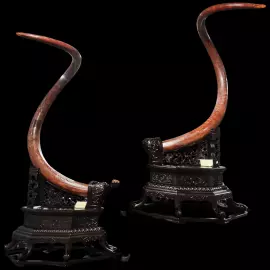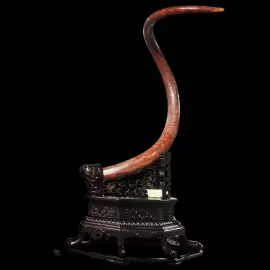












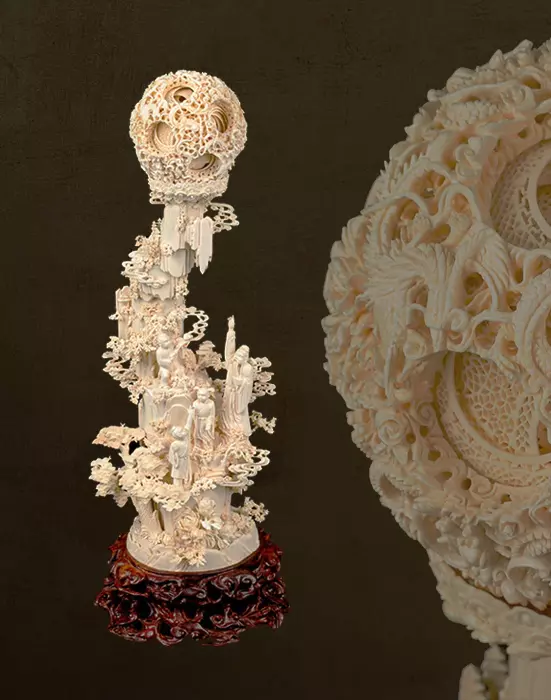
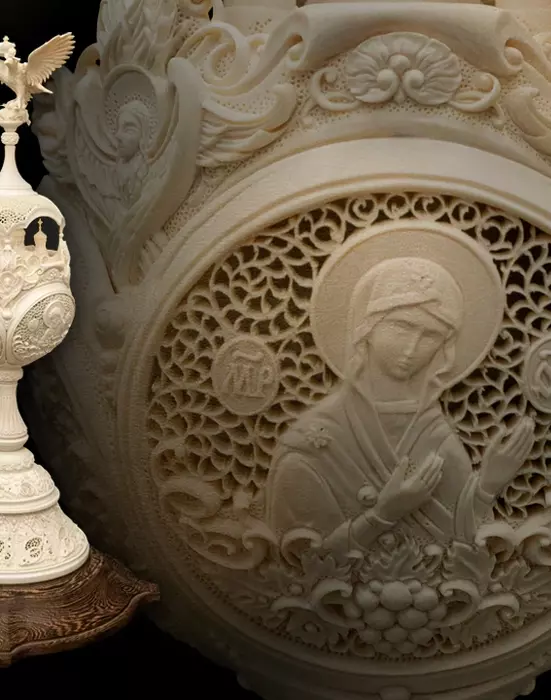












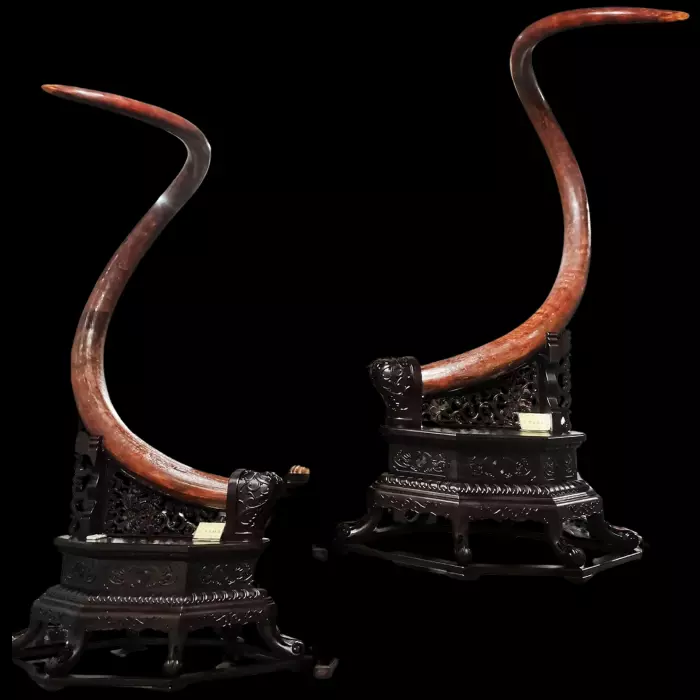
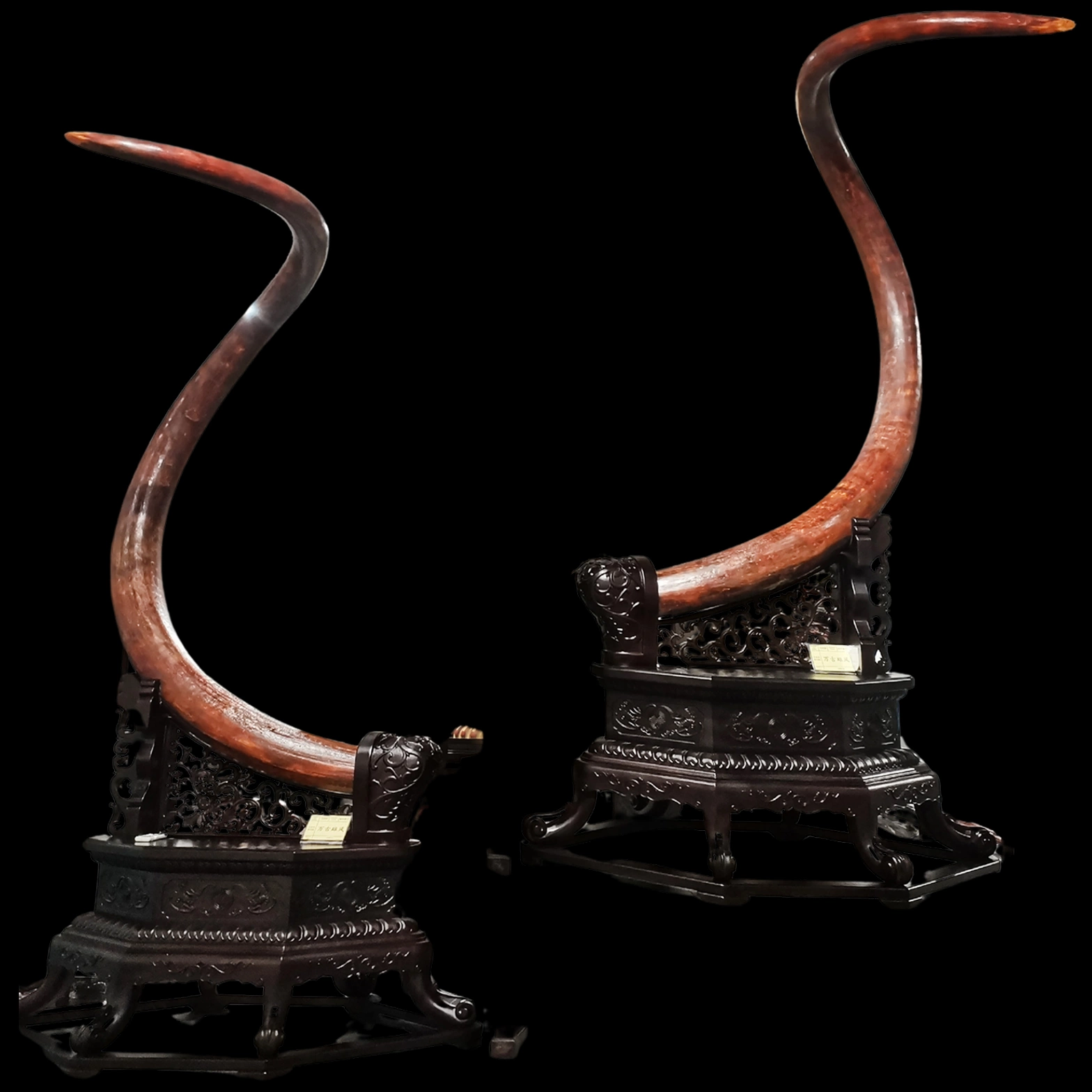
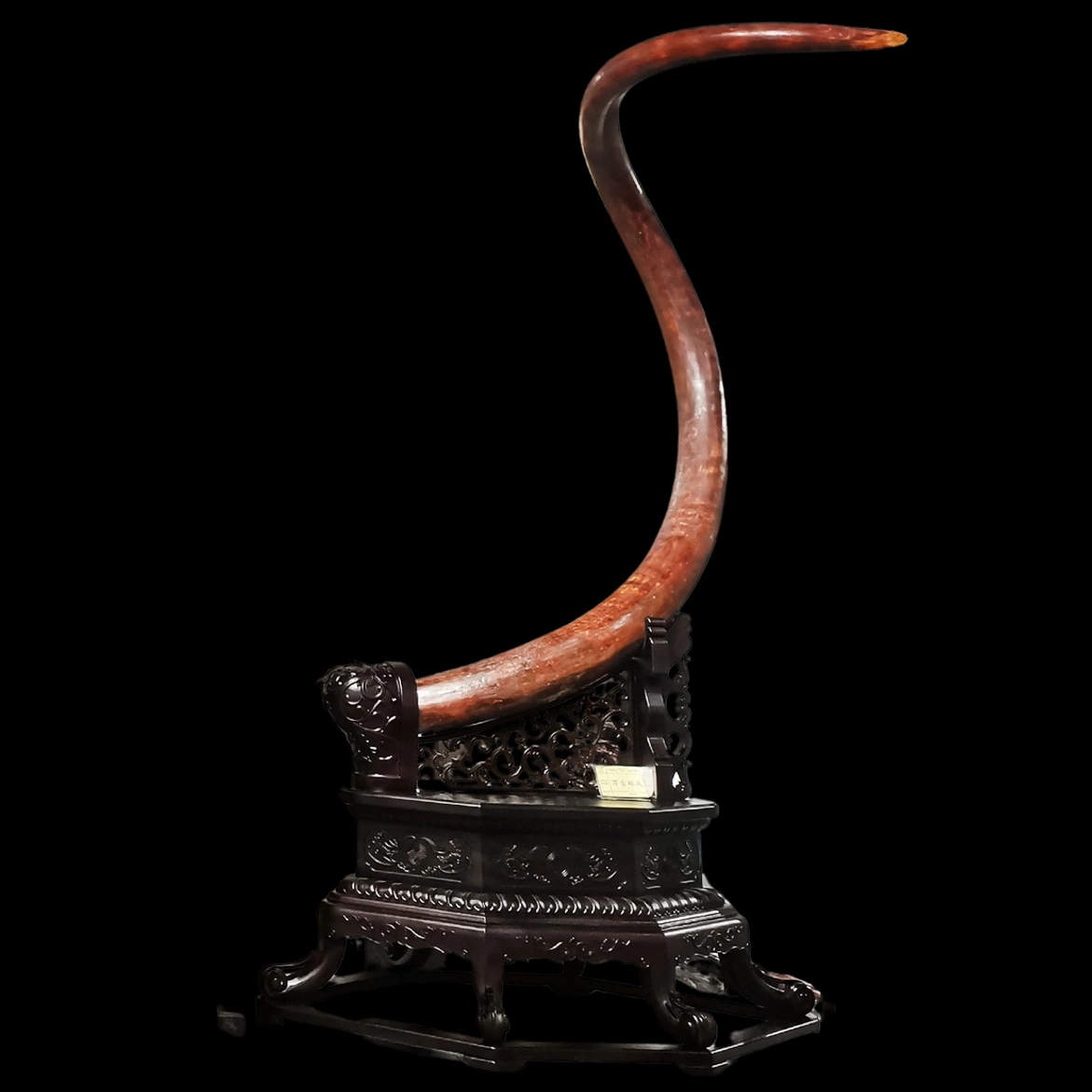
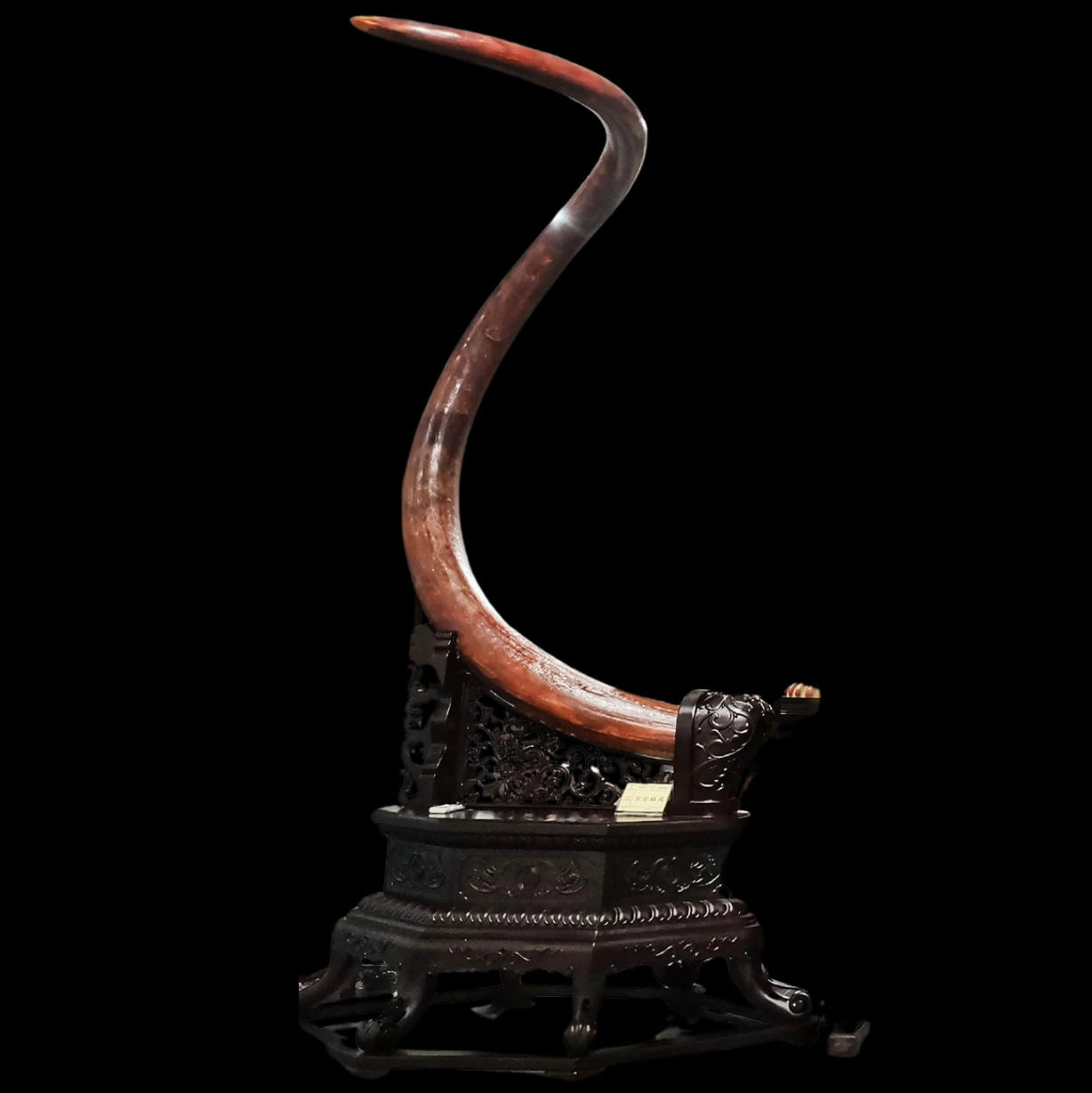
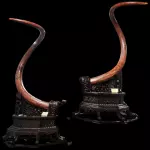

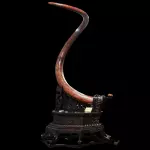
The original force of form is consciously preserved in the composition. The master does not seek to completely transform the material, but rather emphasizes its natural beauty and scale. The curved silhouette of the tusk seems to rush upward, creating an image of continuous movement and energy. Due to this, the composition is perceived not only as a decorative object, but also as a symbol of the power of time, which has survived the millennia.
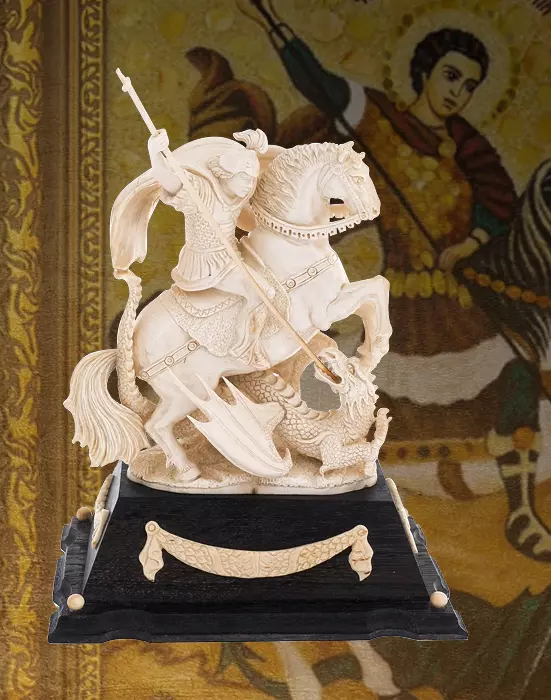
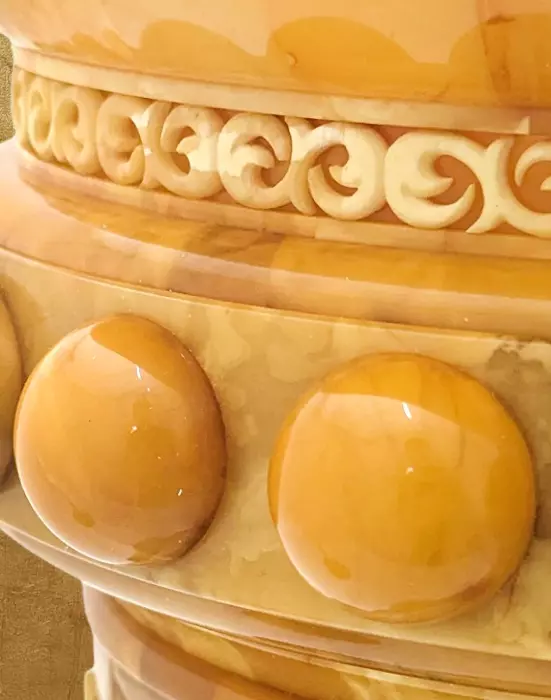
The dark carved base is made of wood and decorated with traditional ornaments. It serves as a contrasting foundation, on which the light surface of the mammoth bone looks especially expressive. The decorative carving of the stand gives the composition stability and solemnity, while emphasizing its museum character.
In Chinese and Eastern symbolism, the mammoth tusk is often associated with the greatness of nature, ancient wisdom and the power of the earth. Its scale and rarity make such objects not only works of art, but also unique natural relics. In the composition "Eternal Greatness" this idea is expressed especially clearly: the ancient material becomes a symbol of the continuity of time and the greatness of the world.
"Eternal Greatness" embodies the idea of the power of time and natural perfection. This work not only demonstrates the rarity and beauty of the mammoth tusk, but also recalls the millennial path of matter that has passed through the epochs and has become part of modern art.