






























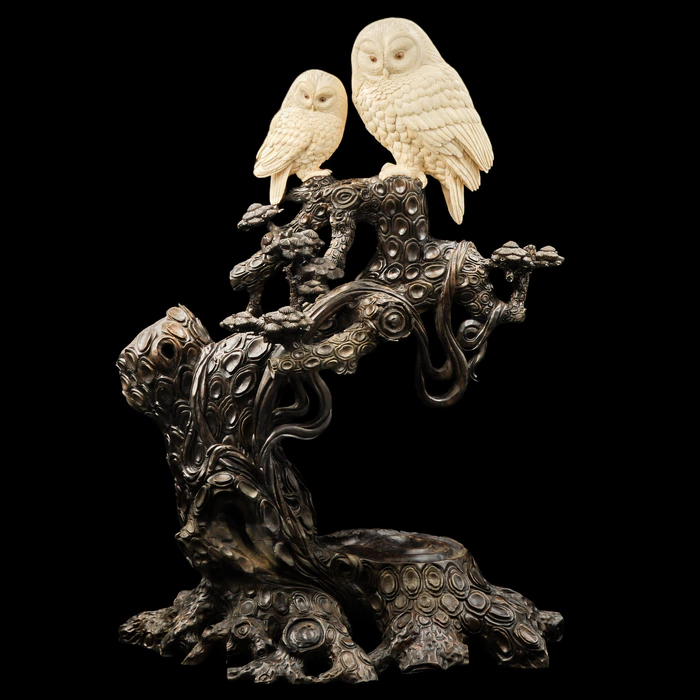
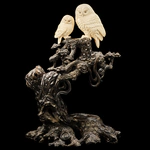
Composition of a mammoth tusk "Owls"
19 890 000 ₽
0
Add a gift label
Engraving on the nameplate 1500 ₽
Delivery options
Worldwide
Delivery by a transport company in the shortest possible time
VIP air delivery
Delivery rates
About this product
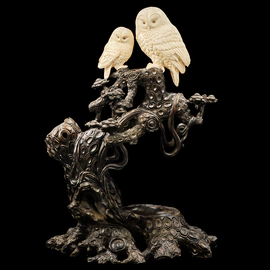
The composition of the Owl mammoth tusk embodies the image of wise calmness and inner knowledge, which in Eastern philosophy is considered one of the highest forms of power. In the Chinese artistic tradition, the owl symbolizes attentiveness, discernment and the ability to see the hidden essence of things. This bird is awake in the silence of the night, when the world is at peace, and therefore its image is associated with wisdom, contemplation and a deep understanding of life.
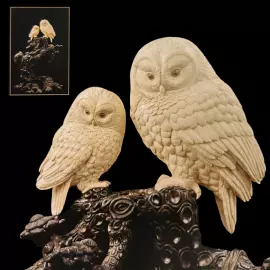
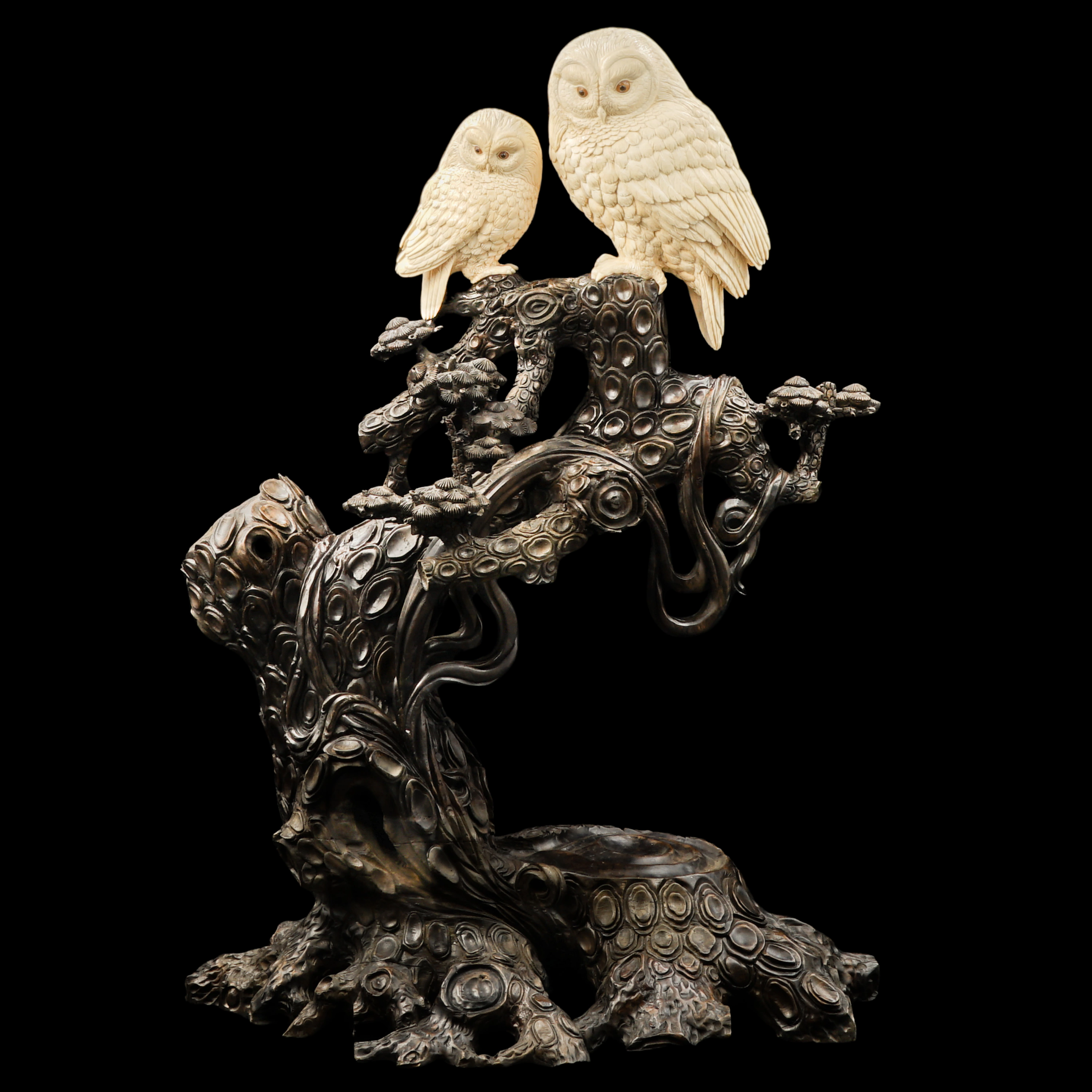
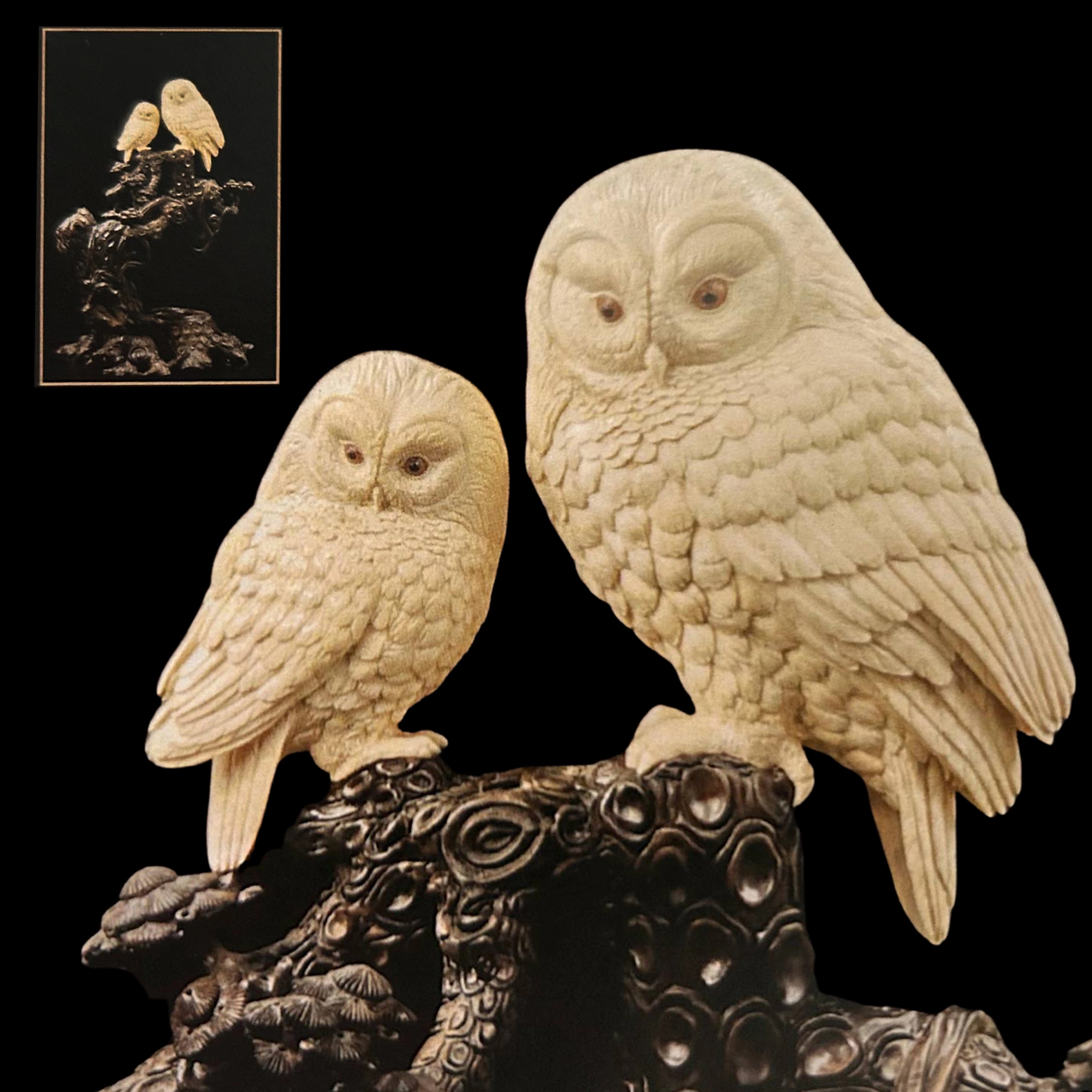
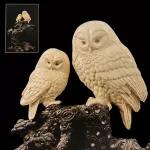
Two owls perched on the curved branch of an ancient tree. Their figures seem to be caught in a moment of quiet observation of the world. The big bird sits confidently and majestically, its gaze is directed forward and filled with calm strength. Nearby is a second owl, lighter and more graceful in shape, like an attentive companion and a continuation of the same wise energy. Together they create a sense of harmonious union and silent dialogue.
In Chinese symbolism, the image of two birds is often associated with harmony and mutual support. It can be a symbol of spiritual guidance, the transfer of experience, or just a quiet unity in which each figure complements the other. Their presence on the same branch is a reminder of balance and harmony, which creates true stability.
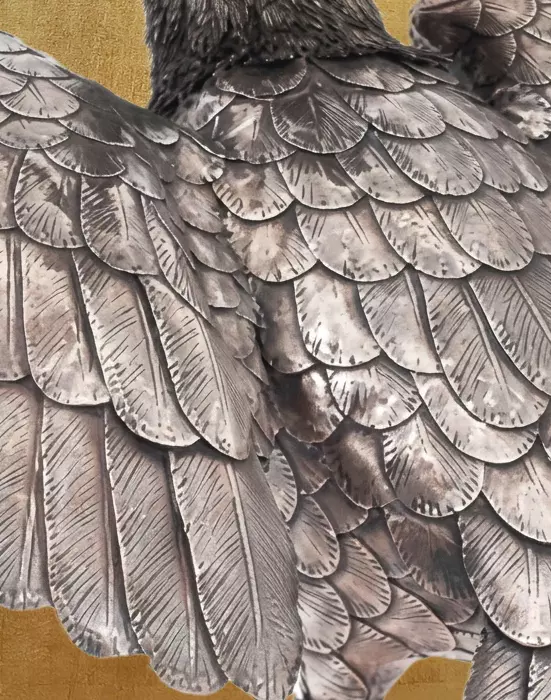
The fine carving on the mammoth tusk conveys the rich texture of the feathers and the softness of the lines. Every detail is made with jewelry precision: neat rows of feather plates, expressive eyes, smooth curves of wings. The contrast of the light texture of the tusk and the dark shape of the base enhances the feeling of depth and creates the impression of a living presence.
This composition seems to recall the ancient truth of Eastern wisdom: the true light of knowledge is born in silence. Where a person knows how to observe, listen and understand the world, harmony and calm power arise, allowing them to see further and deeper than the ordinary gaze allows.
Characteristics
- Country of manufacture:
- China
- Material:
- the mammoth tusk, The ebony tree
- Technique of execution:
- Beijing bone carving
- Sizes:
- 72 × 50 × 74 cm.
- Weight:
- 7.86 kg.
Similar products