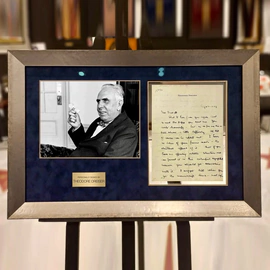
Theodore Dreiser is an American writer, one of the greatest representatives of realism and naturalism in American literature. He is known for his novels depicting the complex social reality of the United States at the beginning of the 20th century and the psychology of his characters. His most famous works are "Sister Kerry", "The Financier" and "Titan". Dreiser wrote about monetary power, the pursuit of success, and the moral decay of American society.
Theodore Dreiser, being a proponent of realism and naturalism, often used real events and characters in his novels, based on his personal observations and experiences. For example, his novel "Sister Carrie" is partly based on the story of his sister, who became an actress.
He was not shy about describing the dark sides of life, his characters are not idealized heroes, but real people with their own advantages and disadvantages. Dreiser strove for maximum verisimilitude in portraying reality, without fear of shocking his readers. This approach made him one of the most significant writers of his time and had a strong influence on the development of American literature.
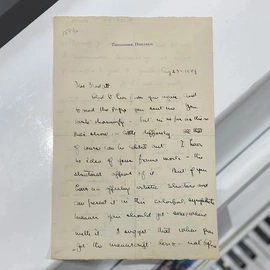
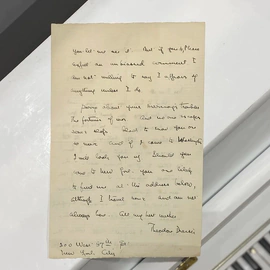
The text of the letter:
«Aug 23 – 1928
Dear [...]:
Glad to hear from you again. [...] to read the pepers you [...].You write charmingly – but [...] a little differently. All that of cource can be edited [...] I have no idea of your [...] – has structural appeal of it. But if you have an [...] artistic structure and can [...] you would get. [...] I suggest: [...] when you get the manuscript done – [...] you let me see it. But if you do, Please expect an inbiased comment. I [...] It say I afford it anytime unless I do.
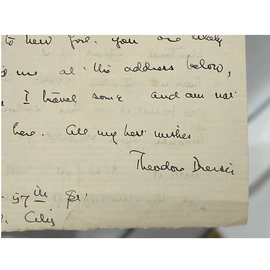
[...] about your manuscript [...] The fortune of you. [...] Glad to know you are to hear that if I come to Washington. I will [...] You are able to find me at the address below, although I have some [...] always here. See my best wishes
Theodore Dreiser
200 Wash. Y7
New York City»
The text of the letter (translated into Russian):
"August 23, 1928
Dear [...]!
I am glad to hear from you again. [...] read the newspapers that you [...]. You write charmingly, but [...] a little differently. All this, of course, can be edited. [...] I have no idea about your [...] – whether it has structural appeal. But if you have [...] artistic structure and opportunity [...], you could succeed. [...] I suggest: when you finish the manuscript, [...] let me see it. But if you decide to do this, please be prepared for an unbiased comment. I [...] can't afford to say anything if I don't think it's true.
[...] regarding your manuscript [...]. I wish you good luck. [... I am glad to know that if I come to Washington, I will be able to meet with you. You can find me at the address below, although I don't always come here. With best wishes,