








Top.Mail.Ru
Biscuit porcelain sculpture "Sculpture Red Army Soldier" in a gift box
Imperial Porcelain Factory Imperial Porcelain Factory
Art. : 131-939
Available in stock
128 100 ₽
The discount under the loyalty program does not apply to the article 131-939
Add a gift label
Engraving on the nameplate (1500 ₽)
Wrapping
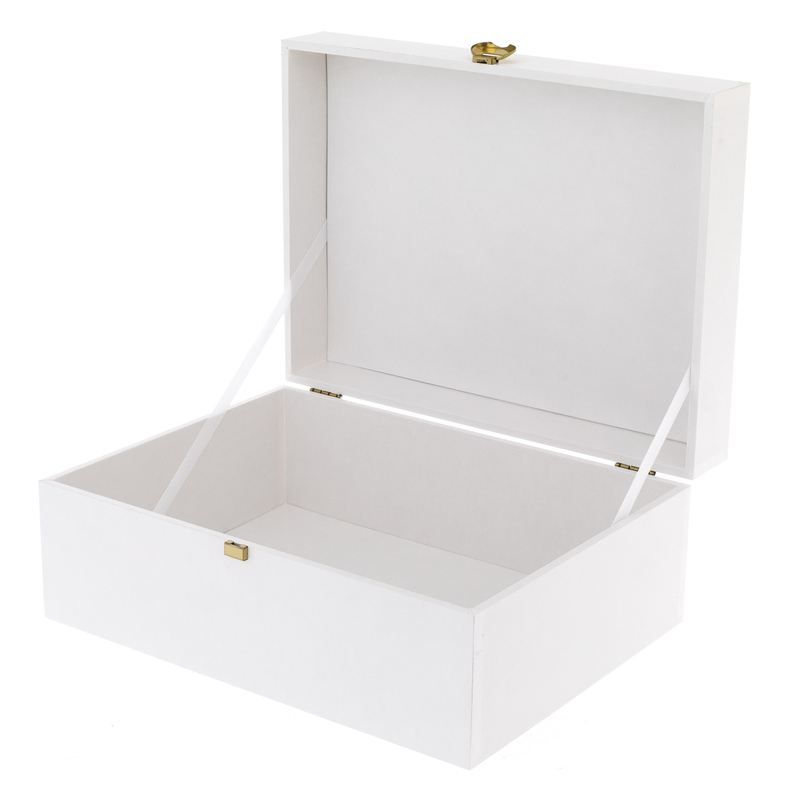
Box 35 x 26 x 15 cm (5000 ₽ )
Delivery options
Moscow :
Worldwide :
  • Delivery by a transport company in the shortest possible time
  • VIP air delivery
  • Delivery rates
About this product
Art. : 131-939

Unique historical figures and images continue to inspire the artists and sculptors of the Imperial Porcelain Factory to create new works. In 2022, the plant, together with the Suvorov Museum, launched a series of sculptures dedicated to outstanding Russian commanders and soldiers. The sculptural image of Sagittarius was created by Alexey Nicheporchuk, who specializes in recreating images of outstanding personalities of culture and art in porcelain. The figure depicts a Red Army soldier of the Workers' and Peasants' Red Army.

"The creation of the Workers' and Peasants' Red Army in early 1918 necessitated the development of a new unified military uniform, visually different from the uniform of the Russian Army. At the beginning of 1919, new insignia were introduced — an asterisk cockade on the headdress and rank insignia on the left sleeve. The complex of military uniforms shown in the figure was typical for 1922-1924, when there was a transition from Civil War to peacetime. The most recognizable element of the uniform of this time is a summer headdress (officially a helmet, unofficially a "budennovka") made of linen tent cloth or cotton fabric of light gray or similar color. The summer helmet had two visors, front and back, as well as a chin strap. A cloth star was sewn on the front
the colors of the branch of the armed forces and an asterisk cockade were attached on top. This headdress was replaced by a cap in 1924. The Red Army soldier was dressed in a light gray summer shirt without lining, with a stand-up collar, on which buttonholes were sewn according to the branch of the armed forces. On the chest of the shirt, chest flaps were sewn according to the type of troops, and sleeve insignia. Summer trousers made of light gray turnip. On his feet are leather boots and cloth wraps, which were used during the First World War. The ammunition includes a brown leather cavalry—style waist belt with a single-pin buckle, and a cartridge case for a Mosin rifle, model 1891, on the belt."*

For the execution of the sculpture, the author chose a biscuit – unglazed porcelain, which allowed him to work out the smallest details more carefully.

Unique historical figures and images continue to inspire the artists and sculptors of the Imperial Porcelain Factory to create new works. In 2022, the plant, together with the Suvorov Museum, launched a series of sculptures dedicated to outstanding Russian commanders and soldiers. The sculptural image of Sagittarius was created by Alexey Nicheporchuk, who specializes in recreating images of outstanding personalities of culture and art in porcelain. The figure depicts a Red Army soldier of the Workers' and Peasants' Red Army.

"The creation of the Workers' and Peasants' Red Army in early 1918 necessitated the development of a new unified military uniform, visually different from the uniform of the Russian Army. At the beginning of 1919, new insignia were introduced — an asterisk cockade on the headdress and rank insignia on the left sleeve. The complex of military uniforms shown in the figure was typical for 1922-1924, when there was a transition from Civil War to peacetime. The most recognizable element of the uniform of this time is a summer headdress (officially a helmet, unofficially a "budennovka") made of linen tent cloth or cotton fabric of light gray or similar color. The summer helmet had two visors, front and back, as well as a chin strap. A cloth star was sewn on the front
the colors of the branch of the armed forces and an asterisk cockade were attached on top. This headdress was replaced by a cap in 1924. The Red Army soldier was dressed in a light gray summer shirt without lining, with a stand-up collar, on which buttonholes were sewn according to the branch of the armed forces. On the chest of the shirt, chest flaps were sewn according to the type of troops, and sleeve insignia. Summer trousers made of light gray turnip. On his feet are leather boots and cloth wraps, which were used during the First World War. The ammunition includes a brown leather cavalry—style waist belt with a single-pin buckle, and a cartridge case for a Mosin rifle, model 1891, on the belt."*

For the execution of the sculpture, the author chose a biscuit – unglazed porcelain, which allowed him to work out the smallest details more carefully.

Expand
Characteristics
Brand:
Country of manufacture:
Material:
Sizes: 10.7 × 9.8 × 27.7 cm .
Weight: 0.478 kg .
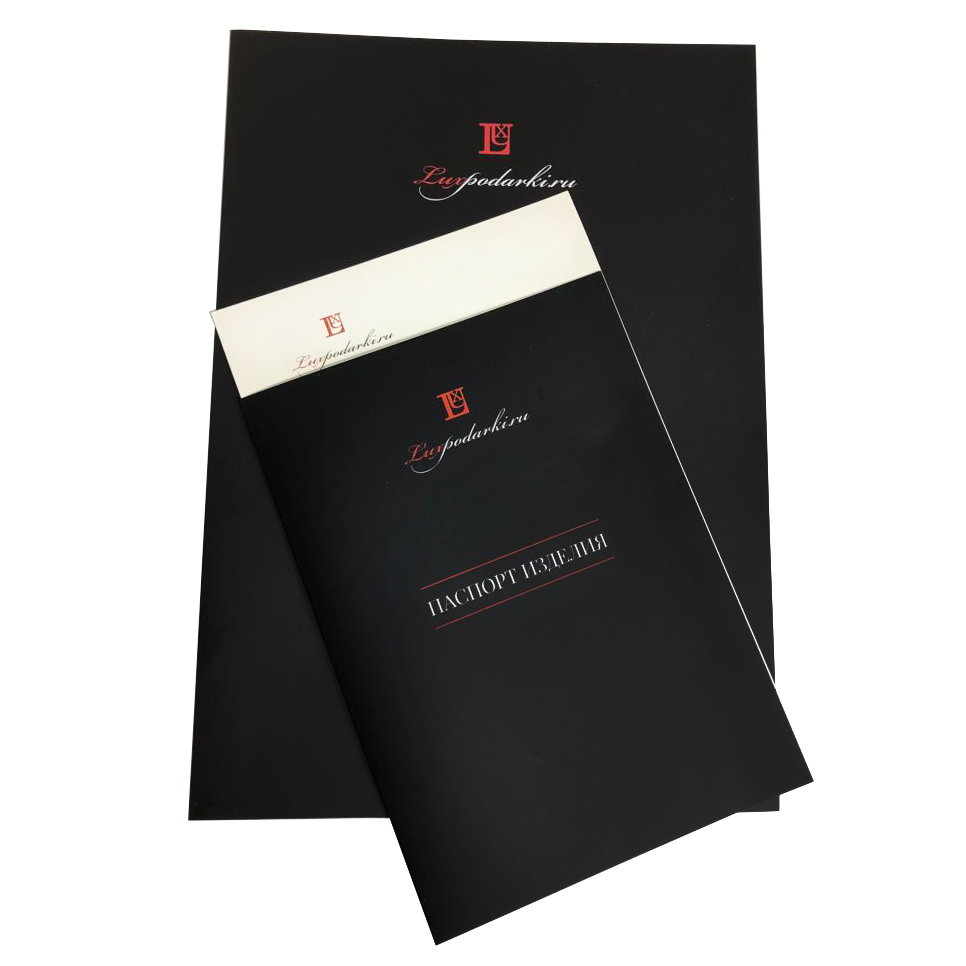
You will receive a passport with this product.

Similar products

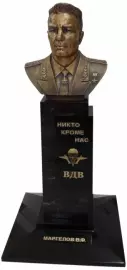
  Statuette "General of the Margelov Army" Statuette "General of the Margelov Army" The statuettes and sculptures are made by casting from bronze, an alloy of copper with other metals. Bronze products are characterized by durability, corrosion resistance and exquisite appearance. Bronze is able to convey the smallest elements and details, express the emotions of the character and perfectly embody the author's idea. At all times, bronze has been a symbol of nobility, aristocracy and impeccable taste. Antique bronze, artificially aged by patination, is very popular. Bronze products are capable of surviving centuries, and artistic casting from bronze has always been appreciated as a virtuoso art. Bronze sculptures and statuettes will decorate the interior and bring a touch of elegance and restrained luxury to it.
120 000 ₽
Clarify availablility
  Statuette "A. P. Chekhov" Statuette "A. P. Chekhov" The statuettes and sculptures are made by casting from bronze, an alloy of copper with other metals. Bronze products are characterized by durability, corrosion resistance and exquisite appearance. Bronze is able to convey the smallest elements and details, express the emotions of the character and perfectly embody the author's idea. At all times, bronze has been a symbol of nobility, aristocracy and impeccable taste. Antique bronze, artificially aged by patination, is very popular. Bronze products are capable of surviving centuries, and artistic casting from bronze has always been appreciated as a virtuoso art. Bronze sculptures and statuettes will decorate the interior and add a touch of elegance and restrained luxury.
28 000 ₽
Clarify availablility
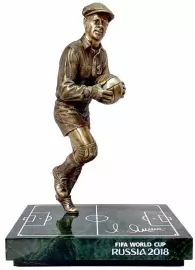
  Statuette "Yashin" Statuette "Yashin" The statuettes and sculptures are made by casting from bronze, an alloy of copper and other metals. Bronze products are distinguished by their durability, corrosion resistance and exquisite appearance. Bronze is able to convey the smallest elements and details, express the emotions of a character and perfectly embody the author's idea. At all times, bronze has been a symbol of nobility, aristocracy and impeccable taste. Antique bronze, artificially aged by patination, is very popular. Bronze products can survive centuries, and artistic casting from bronze has always been appreciated as a virtuoso art. Bronze sculptures and statuettes will decorate the interior and add a touch of elegance and restrained luxury.
150 000 ₽
Clarify availablility
Gourji Statuette "Girl with a paddle" Statuette "Girl with a paddle" Cabinet sculpture "Woman with an oar". In 1936, the famous Soviet sculptor Ivan Shadr devoted a lot of effort and time to work on the original for subsequent plaster copies. A very real gymnast from CSKA, Zoya Bedrinskaya, posed for him. Shadr was the first Soviet sculptor to install his "Girl with an Oar" (an 8-meter statue made of tinted concrete) in the Gorky Central Park. The cabinet sculpture "Girl with an oar" is nothing more than a scaled-down copy of the famous work of the famous sculptor in which the traditional ideas about the Soviet athlete are quite in tune with the classical proportions of her figure.Two cabinet sculptures by Gourji "The Pilot" and "The Girl with the paddle" clearly reflect the aesthetic preferences of the champions of socialist realism, which took its first steps precisely in the early thirties. During these years, Soviet fine art returned to the ideals of antiquity: sculpture and decor that resemble ancient Roman or ancient Greek samples.Miniature sculptures "Pilot" and "Girl with an oar" with silver plating were produced for the Gourji brand in Europe and exactly repeat all the smallest details of the original sculptures.
30 000 ₽
Available in stock
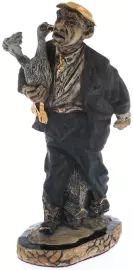
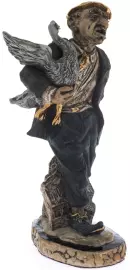
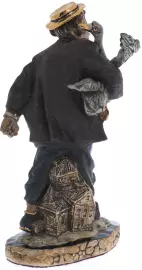
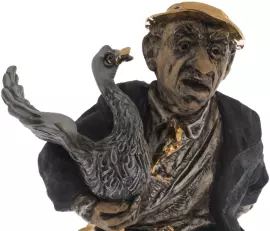
  Porcelain statuette "Panikovsky" Porcelain statuette "Panikovsky" A statuette based on the novel "The Golden Calf" by Ilf and Petrov. "There, the crew of the Antelope saw a strange picture. A man with a white goose under his arm was running bent over from the square towards the highway. With his left hand, he held a hard straw hat on his head. A large crowd was running after him, shouting. The man who was running away often looked back, and an expression of horror could be seen on his handsome actor's face. Panikovsky is running! Balaganov shouted."
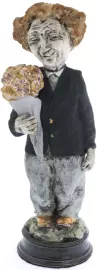
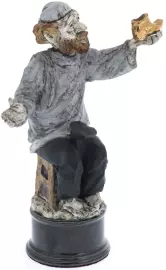
70 000 ₽
Available:
Lubyanka
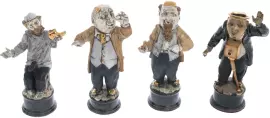
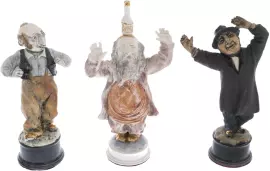
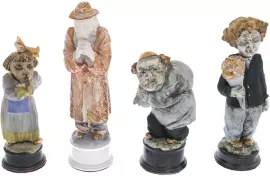
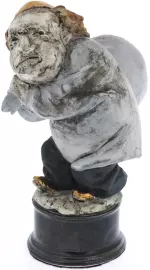
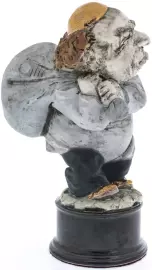
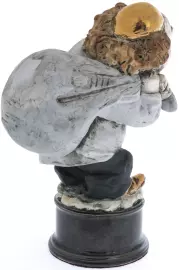
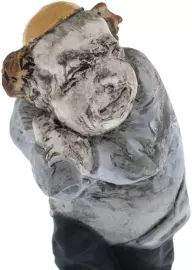
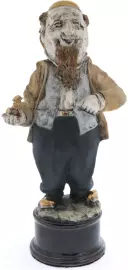
  Porcelain figurine "The Jew Banker" Porcelain figurine "The Jew Banker" Whiter than frost and snow, more ringing than jade – the poet from the Celestial Empire, who sang porcelain, did not skimp on epithets! Among the great inventions of China, porcelain claims to be, if not the most important, then the most beautiful. The secret of making porcelain dishes was kept in the strictest secrecy. Attempts to find her out were punishable by death. However, first exported to Asian countries, and by the XVI century to Europe, porcelain was valued above gold. Scientists and masters from all over the world struggled to reveal his secret. The complex technology of mixing porcelain mass, which includes kaolin, quartz and mica, and no less complex roasting are just the basics learned from the Chinese. Japanese, Florentine, and Prussian porcelain manufactories added something of their own to this base, obtaining, although different from the prototype, but beautiful porcelain in its own way.
24 000 ₽
Clarify availablility
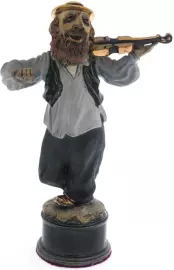
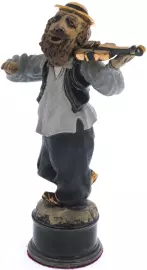
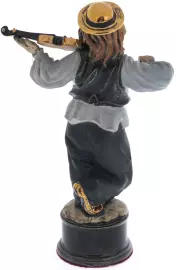
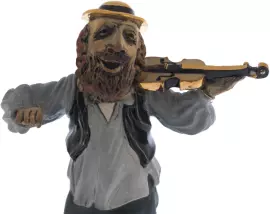
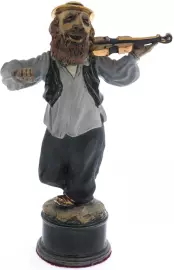
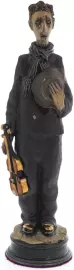
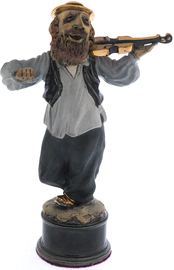
  Porcelain figurine "The Jewish violinist" Porcelain figurine "The Jewish violinist" Whiter than frost and snow, more ringing than jade – the poet from the Celestial Empire, who sang porcelain, did not skimp on epithets! Among the great inventions of China, porcelain claims to be, if not the most important, then the most beautiful. The secret of making porcelain dishes was kept in the strictest secrecy. Attempts to find her out were punishable by death. However, first exported to Asian countries, and by the XVI century to Europe, porcelain was valued above gold. Scientists and masters from all over the world struggled to reveal his secret. The complex technology of mixing porcelain mass, which includes kaolin, quartz and mica, and no less complex roasting are just the basics learned from the Chinese. Japanese, Florentine, and Prussian porcelain manufactories added something of their own to this base, obtaining, although different from the prototype, but beautiful porcelain in its own way.
24 000 ₽
Available:
Lubyanka
  Porcelain figurine "Jew jeweler" Porcelain figurine "Jew jeweler" Whiter than frost and snow, more ringing than jade – the poet from the Celestial Empire, who sang porcelain, did not skimp on epithets! Among the great inventions of China, porcelain claims to be, if not the most important, then the most beautiful. The secret of making porcelain tableware was kept in the strictest secrecy. Attempts to find her out were punishable by death. However, porcelain, first exported to Asian countries, and by the XVI century to Europe, was valued above gold. Scientists and masters from all over the world struggled to reveal his secret. The complex technology of mixing porcelain mass, which includes kaolin, quartz and mica, and no less complex roasting are just the basics learned from the Chinese. Japanese, Florentine, and Prussian porcelain manufactories added something of their own to this base, obtaining, although different from the prototype, but beautiful porcelain in its own way.
24 000 ₽
Clarify availablility
Product passport

A passport is attached to products that cost more than 10,000 ₽:

Delivery rates
Moscow
Pickup from the gallery free
In the next day (2 June) 300 ₽
On the day of the order (1 June) 400 ₽
Within 2 hours (1 June) Check with the manager
Evening delivery (1 June) Check with the manager
Beyond the Moscow Ring Road
up to 6 km from MKAD (1 June) 600 ₽
from 6 to 10 from MKAD (1 June) 900 ₽
Over 10 km from MKAD (1 June) Check with the manager
To other cities
VIP, by courier (today)(1 June, today) from 3 000 ₽ (check with the manager)
The transport company according to the tariff of the TC
SDEK - Pick-up points, courier delivery to the door Check with the manager
Delovye Linii - Pick-up points, courier delivery to the door Check with the manager
Russian Post - to the post office (Pick-up points), courier delivery to the door Check with the manager

Courier delivery is carried out when ordering for a total amount of 5000 ₽

Available in galleries
 
Engravement of the nameplate
30
30
30
30

How is it more convenient for you to contact us?