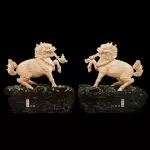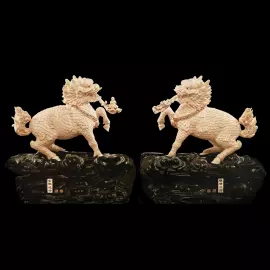




















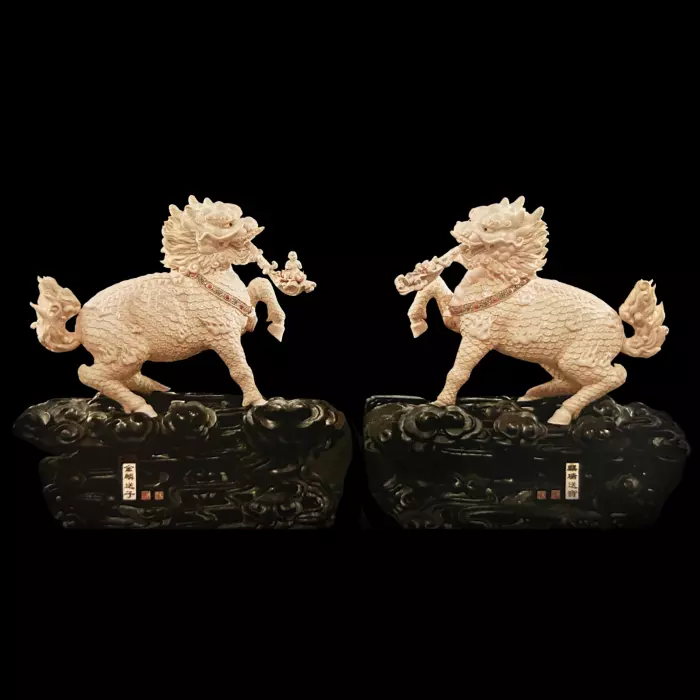
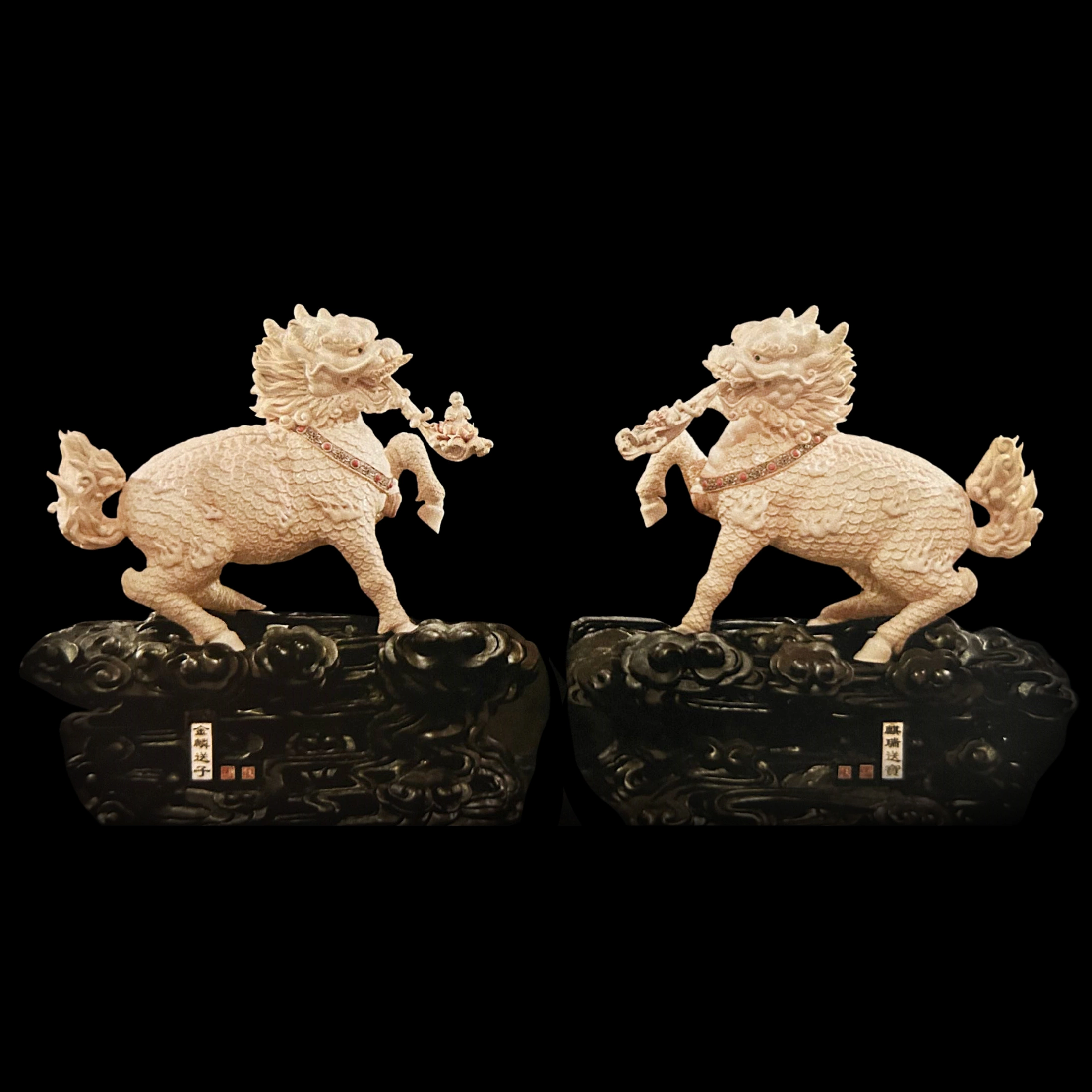
Mammoth tusk composition "Golden Qilin brings a son"
35 100 000 ₽
0
Add a gift label
Engraving on the nameplate 1500 ₽
Delivery options
Worldwide
Delivery by a transport company in the shortest possible time
VIP air delivery
Delivery rates
About this product
The mammoth tusk composition "The Golden Qilin brings a Son" embodies one of the oldest benevolent themes of Chinese culture. In the center of the image is the mythical Qilin creature, a noble celestial animal that appears only in the epochs of justice and harmony. His appearance was considered a sign of heavenly blessing, and in folk tradition he became a symbol of happy offspring and procreation.
According to an ancient legend, a Qilin brings a baby to those families who are destined to have a worthy heir. Therefore, the story "Qilin brings a son" has been decorating the imperial chambers, palaces of the nobility and the homes of wealthy families who want blessings for the birth of children and the prosperity of the family for centuries.
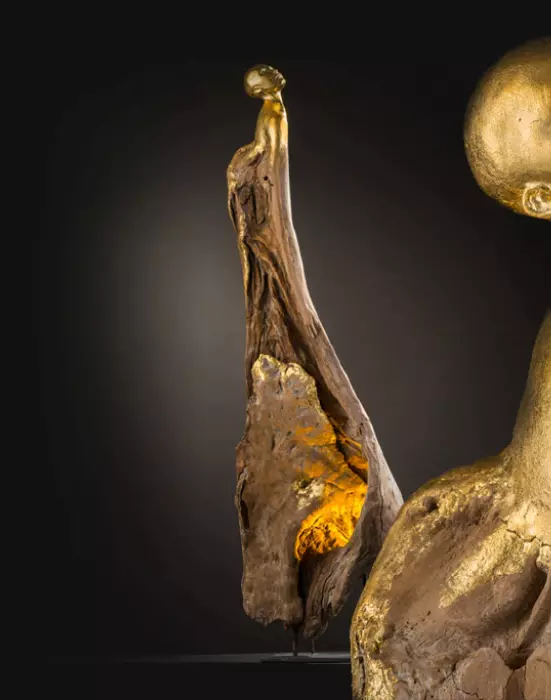
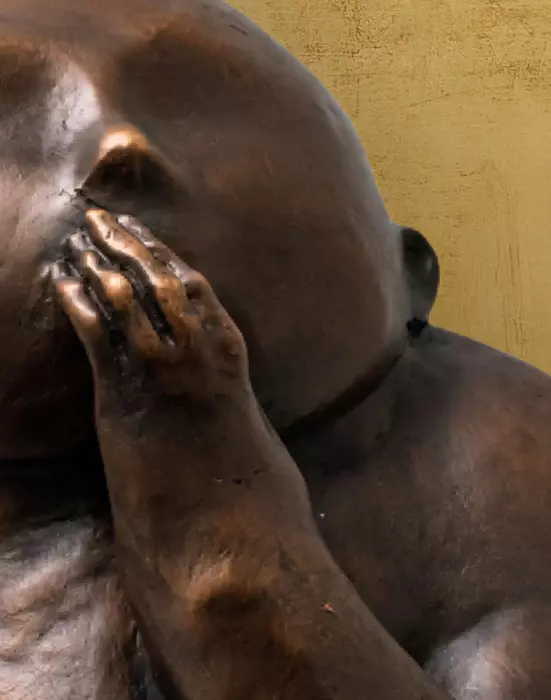
The composition features two majestic qilins facing each other. Their powerful bodies are covered with a scaly pattern resembling dragon armor, and their heads combine the features of a dragon, lion, and deer — characteristic features of this mythical creature. In the mouth of each qilin is a baby figurine, a symbol of the heavenly gift sent to the family.
The paired composition enhances the meaning of the symbol. In Chinese culture, pairs denote harmony and balance, the union of the forces of yin and yang. Two qilins, as if guarding a blessing, create the feeling of a solemn ritual — the moment when heavenly grace comes to the human world.
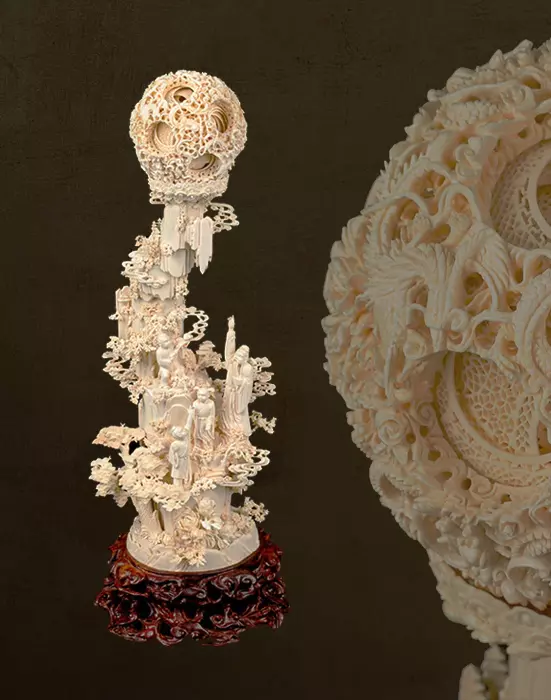
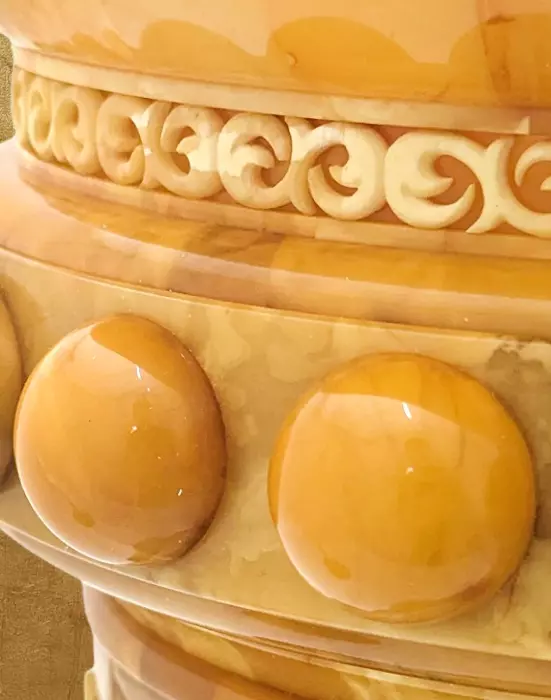
Masterful mammoth tusk carving reveals a wealth of artistic details: the carefully crafted texture of scales, expressive faces of mythical creatures, decorative belts and movement dynamics. The figures are mounted on carved wooden bases with traditional ornaments, giving the composition monumentality and depth.
This work is perceived as a symbol of a happy fate, family continuation and well-being. A Qilin carrying a baby expresses an ancient human hope for heritage, prosperity and harmony of generations — that life will continue in a new destiny blessed by heaven.
Characteristics
- Country of manufacture:
- China
- Material:
- the mammoth tusk, The ebony tree
- Technique of execution:
- Beijing bone carving
- Sizes:
- 56 × 24 × 56 cm.
- Weight:
- 9 kg.
Similar products