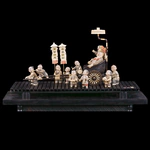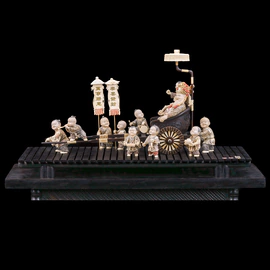





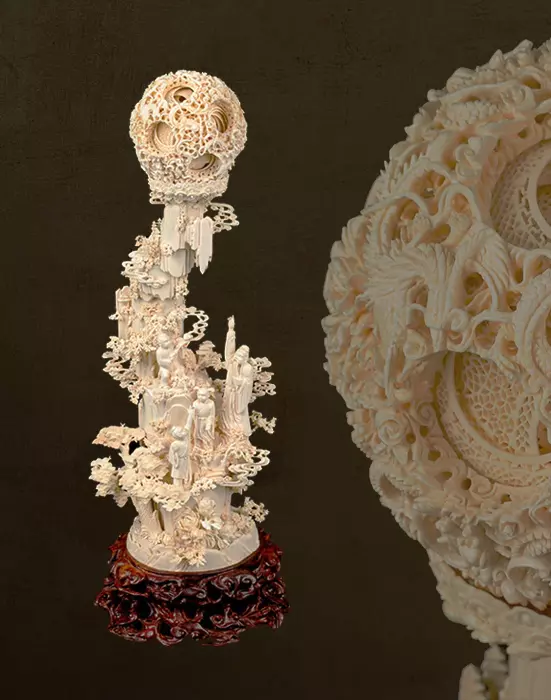










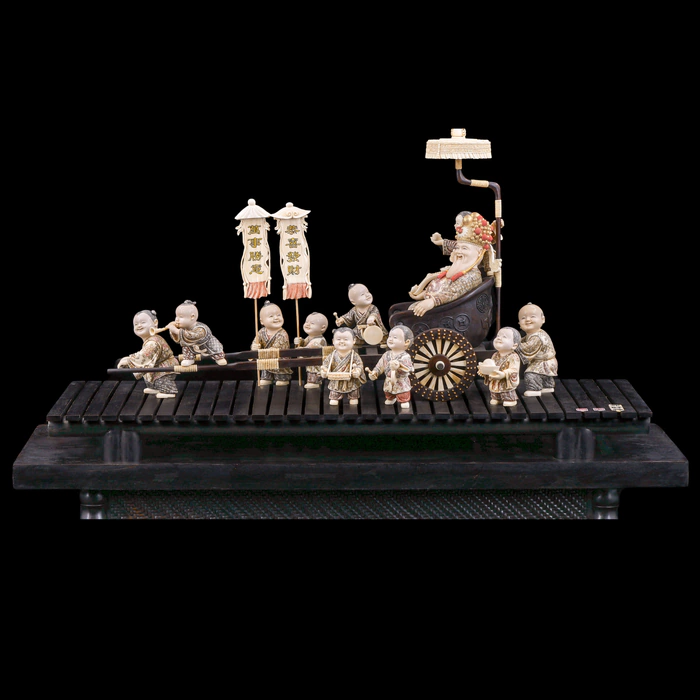
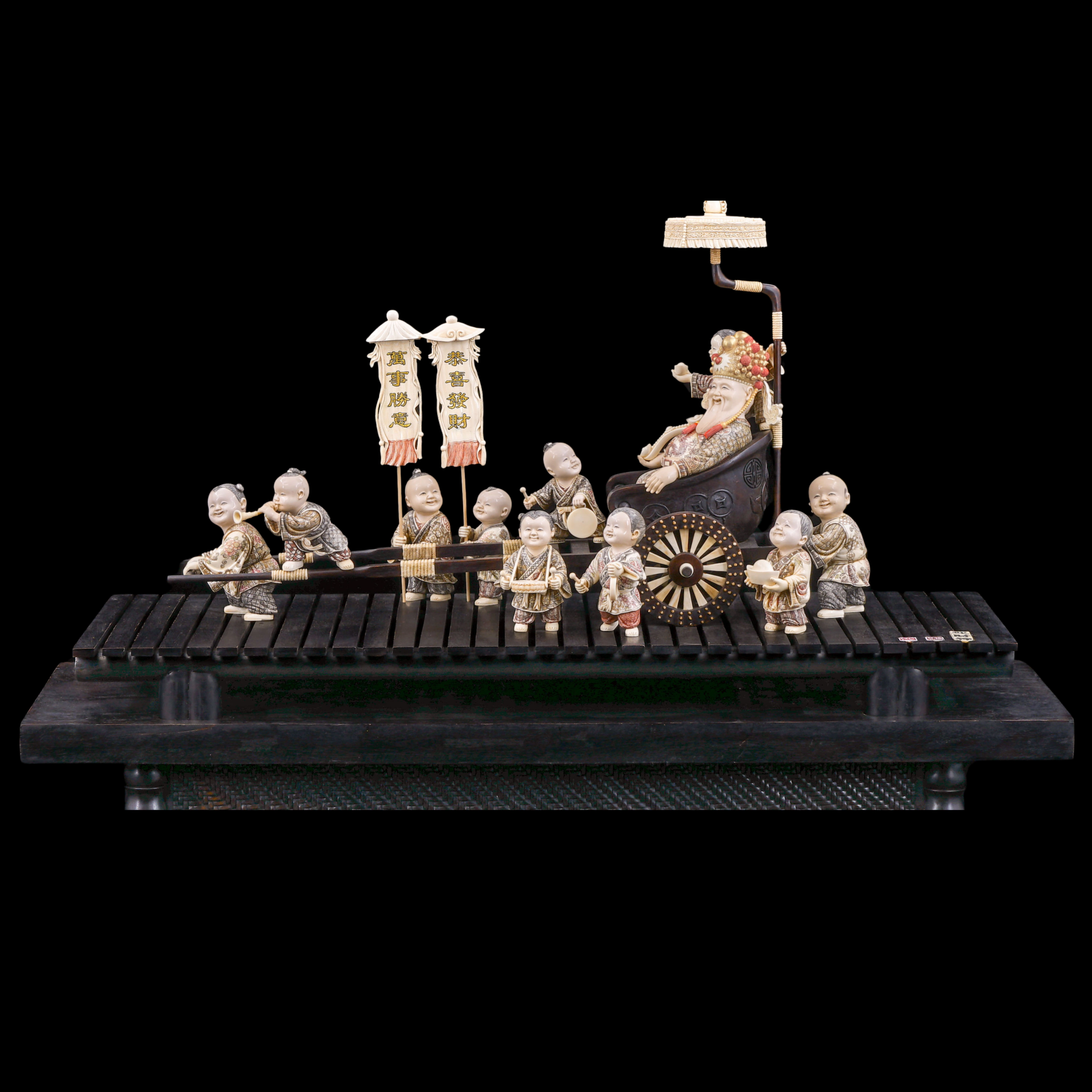
Mammoth tusk composition "Meeting the God of Wealth"
10 530 000 ₽
0
Add a gift label
Engraving on the nameplate 1500 ₽
Delivery options
Worldwide
Delivery by a transport company in the shortest possible time
VIP air delivery
Delivery rates
About this product
The mammoth tusk composition "Meeting the God of Wealth" embodies one of the most joyful and symbolically intense themes of Chinese traditional culture. Caishen, the God of Wealth, is depicted in the center of the stage, revered as the patron saint of prosperity, prosperity and good luck. His arrival always symbolizes the beginning of a period of prosperity, so the meeting of the deity is considered a happy omen for home and family.
The masterful carving of a mammoth tusk reveals an entire narrative scene. The God of wealth sits in a festive chariot decorated with decorative elements and topped with a ceremonial canopy. His image is conveyed with a soft smile and calm grandeur, which emphasizes not only the power over material goods, but also the wisdom of the patron saint. The figure is surrounded by children, traditional symbols of joy, vitality and procreation. Their lively movements, playing and enthusiastic gestures create the feeling of a solemn procession filled with happiness and expectation of good luck.
Banners with benevolent hieroglyphs are of particular importance. In Chinese culture, such inscriptions express wishes for prosperity, success in business, and wealth. They seem to proclaim the coming of the blessing, accompanying the God of wealth in his triumphant appearance.
Each figure is executed with amazing detail: finely crafted faces, folds of clothing, miniature objects and elements of the chariot create the feeling of a living scene. The master managed to convey not only the appearance of the characters, but also the atmosphere of the holiday — the moment when luck enters the house.
This composition is not just a work of decorative and applied art, but a kind of symbol of well-being. In Chinese philosophy, it is believed that the image of the meeting of the God of Wealth attracts prosperity, harmony and success. Therefore, such works are traditionally placed in homes and offices as a sign of blessing, prosperity and a favorable fate.
Characteristics
- Country of manufacture:
- China
- Material:
- the mammoth tusk, The ebony tree
- Technique of execution:
- Beijing bone carving
- Sizes:
- 90 × 30 × 58 cm.
- Weight:
- 2.7 kg.
Similar products