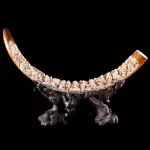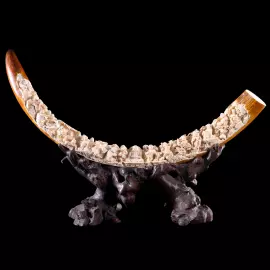




























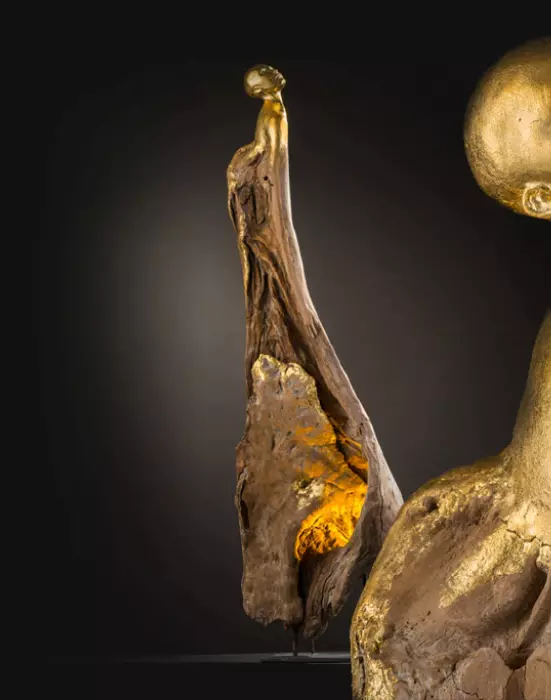











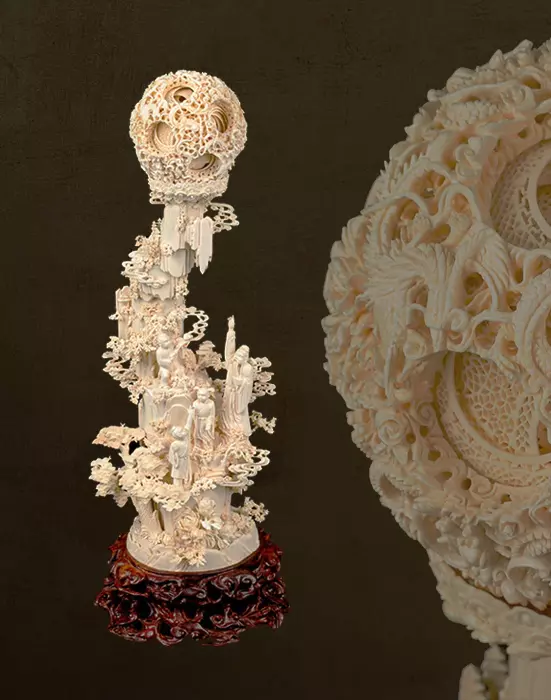



















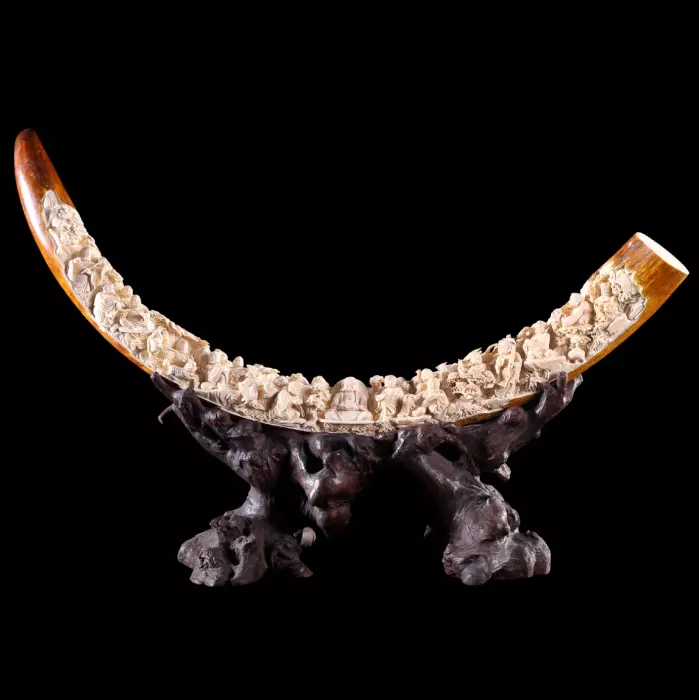
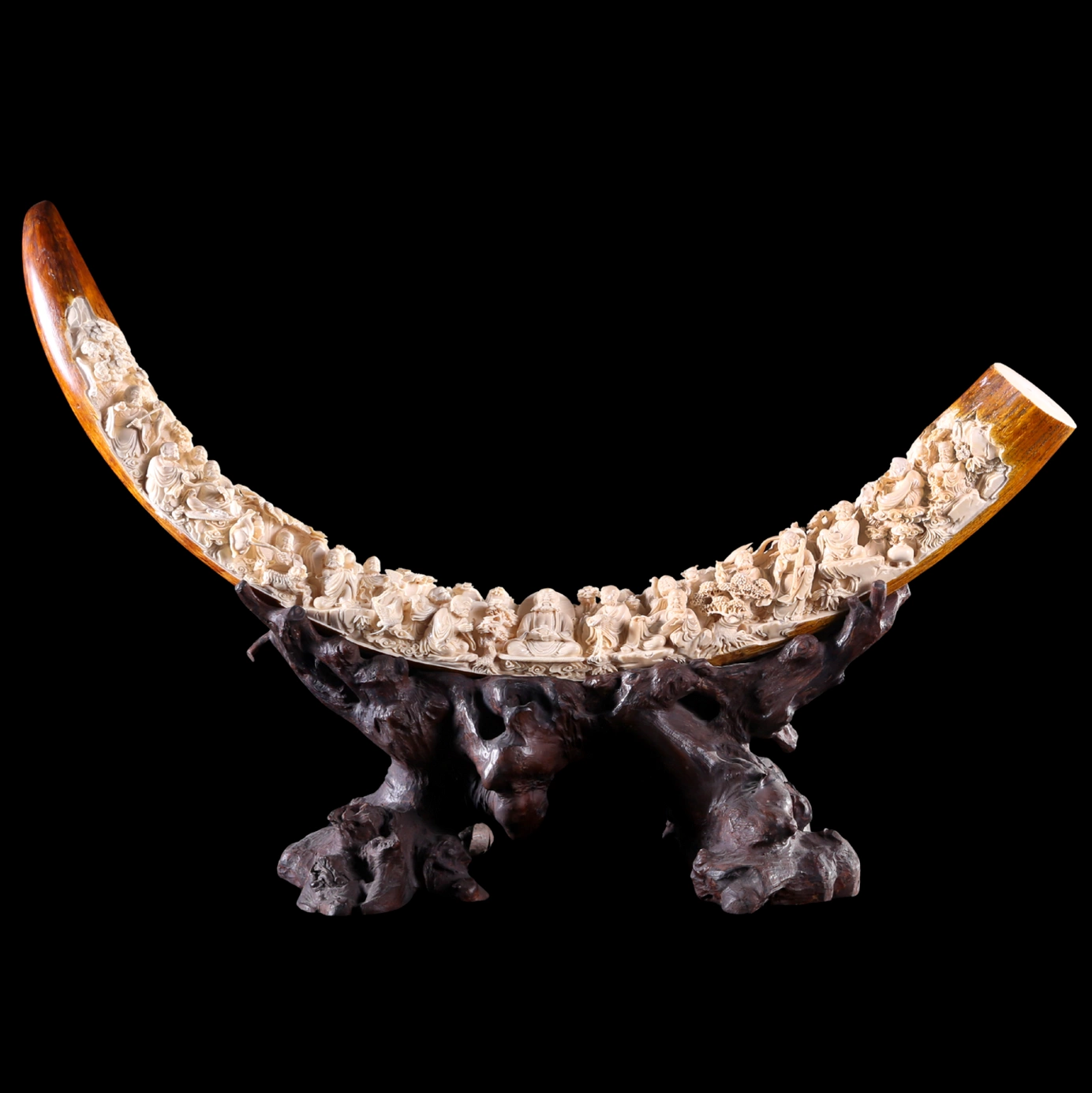
The mammoth tusk composition "Eighteen Manifestations of Bodhidharma" is a complex and profound work in which the natural form of the material is combined with the philosophical tradition of the East. The curved tusk reveals itself as a continuous narrative space where each figure takes its place in a single spiritual system, reflecting various states and aspects of enlightenment.
Along the inner surface there is a stage with many characters — masters, disciples, hermits, each of whom embodies a separate manifestation of Bodhidharma. The central figure, highlighted by a calm pose and inner concentration, sets the compositional and semantic center. The rhythm of the figures unfolds around her: some are immersed in meditation, others are in motion or in dialogue, creating a sense of continuous spiritual journey and knowledge transfer.
The carving is characterized by a high degree of detail: the folds of clothes, facial expressions, hand gestures, attributes and symbolic elements accompanying each figure are conveyed. The plastic of the composition is arranged in such a way that the eye moves along the arc of the tusk, gradually revealing new scenes and states, as if reading a visual treatise.
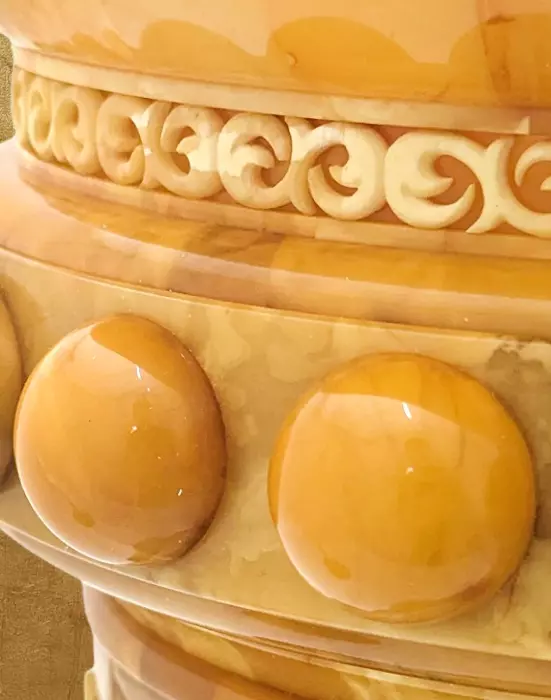
The natural gradient of the tusk's shades — from the warm amber edge to the light carved surface — enhances the feeling of depth and time, emphasizing the natural origin of the material. This transition is perceived as a boundary between the outside world and the inner space of spiritual search.
"Eighteen Manifestations of Bodhidharma" is not only a decorative art object, but also a philosophical composition combining the rarity of the material, the skill of the carver and deep symbolism. The work focuses on contemplation and inner dialogue, revealing the theme of the path, transformation and the versatility of spiritual experience.