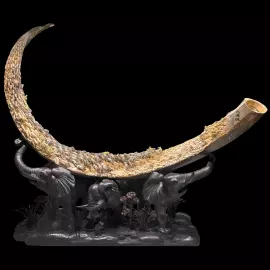














































































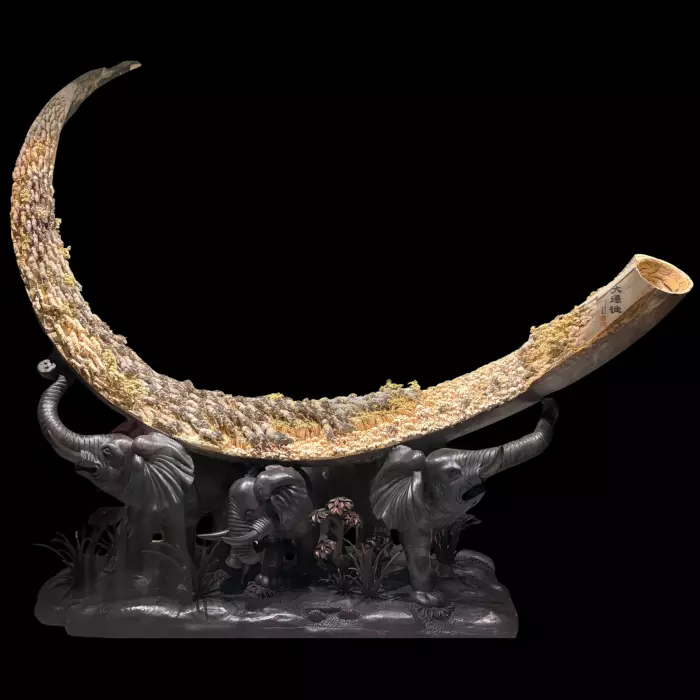
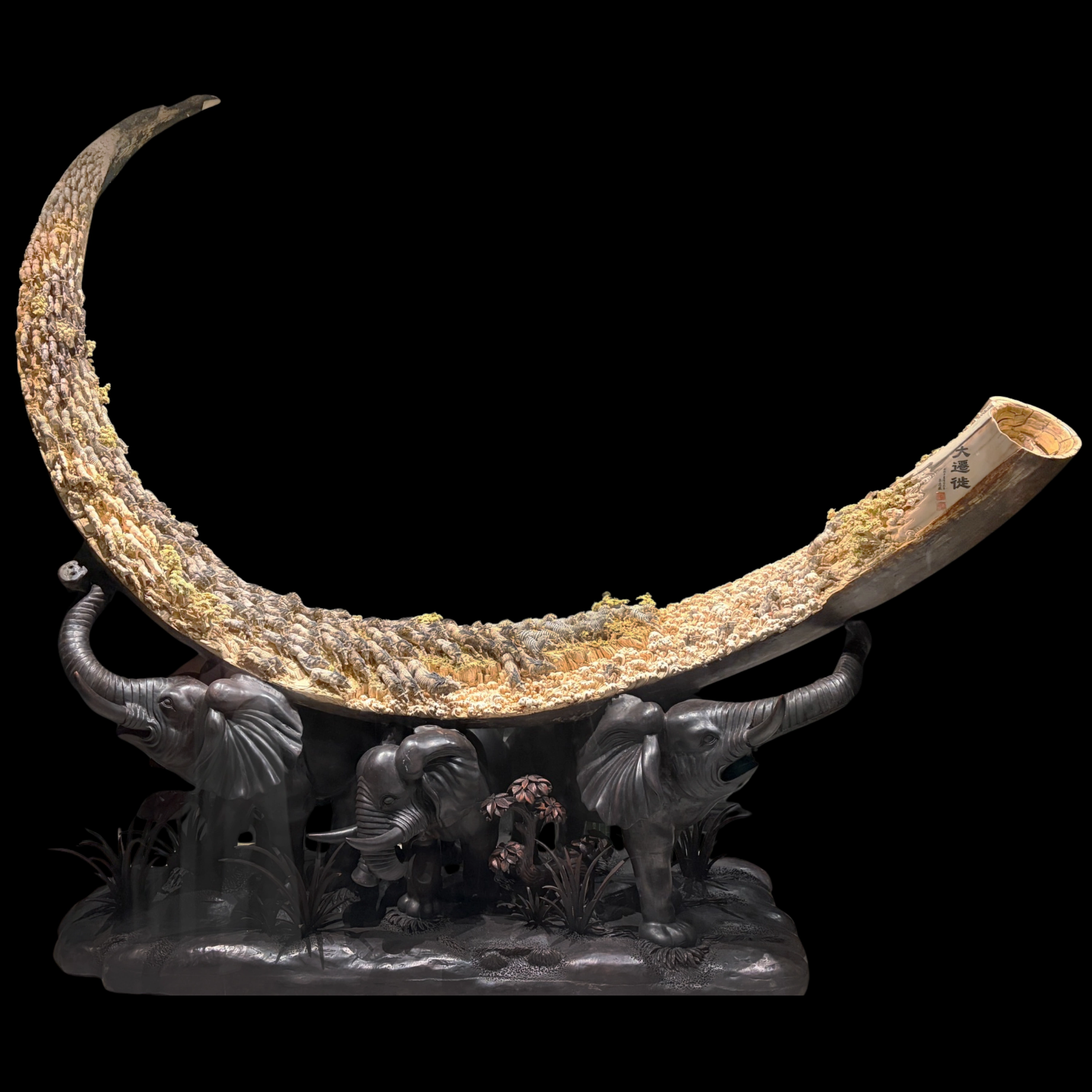
Mammoth tusk composition "The Great Migration"
1 053 000 000 ₽
0
Add a gift label
Engraving on the nameplate 1500 ₽
Delivery options
Worldwide
Delivery by a transport company in the shortest possible time
VIP air delivery
Delivery rates
About this product
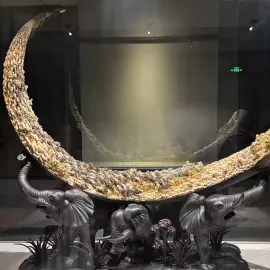
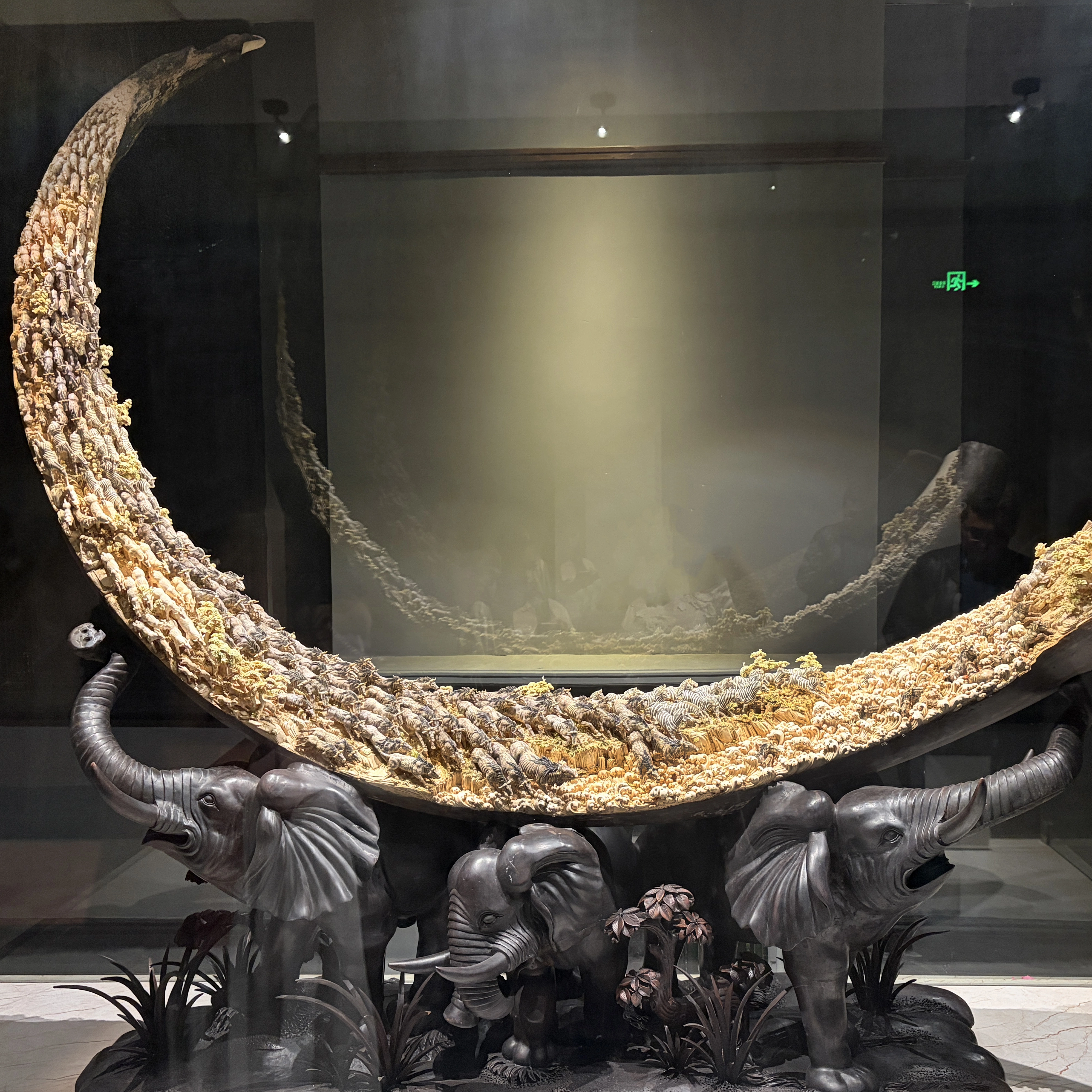
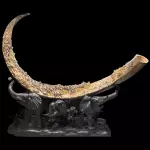
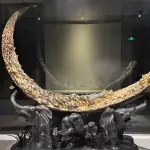
The mammoth tusk composition "The Great Migration" is a large—scale work created from a single tusk of the glacial epoch, the natural arc of which has been transformed into the rushing line of the great river. The curved, moon-like shape sets the direction of movement and becomes an artistic image of the path followed by herds of wild animals. A dramatic mass migration scene unfolds in this curved space: zebras, gazelles, antelopes and rhinoceros birds rush forward, united by the instinct of survival. The light texture of the ancient tusk highlights the relief of waves, foam streams and tense silhouettes of animals, creating a feeling of continuous movement.
In front of the herd, crocodiles and hippos lurk in the stormy waters, ready to attack; behind — leopards and hyena-like dogs chasing the weakened. Sculptural plastic art conveys both the cruelty and the grandeur of natural law: the struggle for existence is revealed without embellishment, but it also contains the powerful energy of life. The master emphasized tense muscles, sharp turns of bodies, swirling streams of water — every detail enhances the feeling of danger and drama. The dark carved base with figures of elephants supporting an array of tusks gives the composition stability and symbolic depth, linking the theme of migration with the image of the memory of the earth and the power of the family.
The meaning of the work goes beyond the zoological plot. The "Great Migration" is interpreted as a metaphor for the path of life: competition between living beings is a constant law of nature, and the only way not to be displaced is continuous progress, perseverance and will. The sculpture speaks of courage, endurance and the ability to overcome dangers while maintaining inner strength. This work combines the natural drama and philosophy of human destiny, affirming the idea of resilience, movement and inextinguishable vital energy.
Tusk length: 410 cm
Thread thickness: 27 cm
Characteristics
- Country of manufacture:
- China
- Material:
- the mammoth tusk, The ebony tree
- Technique of execution:
- кантонская резьба по кости
- Sizes:
- 218 × 90 × 213 cm.
- Weight:
- 118 kg.
Similar products