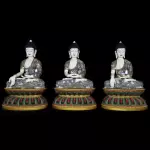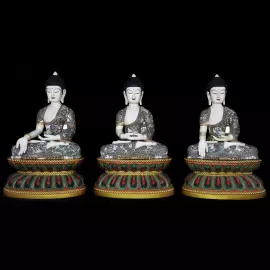




















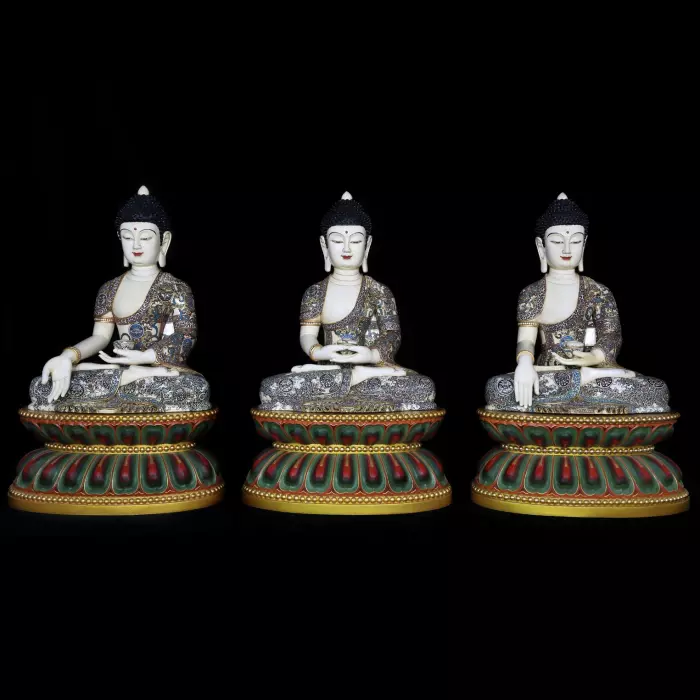
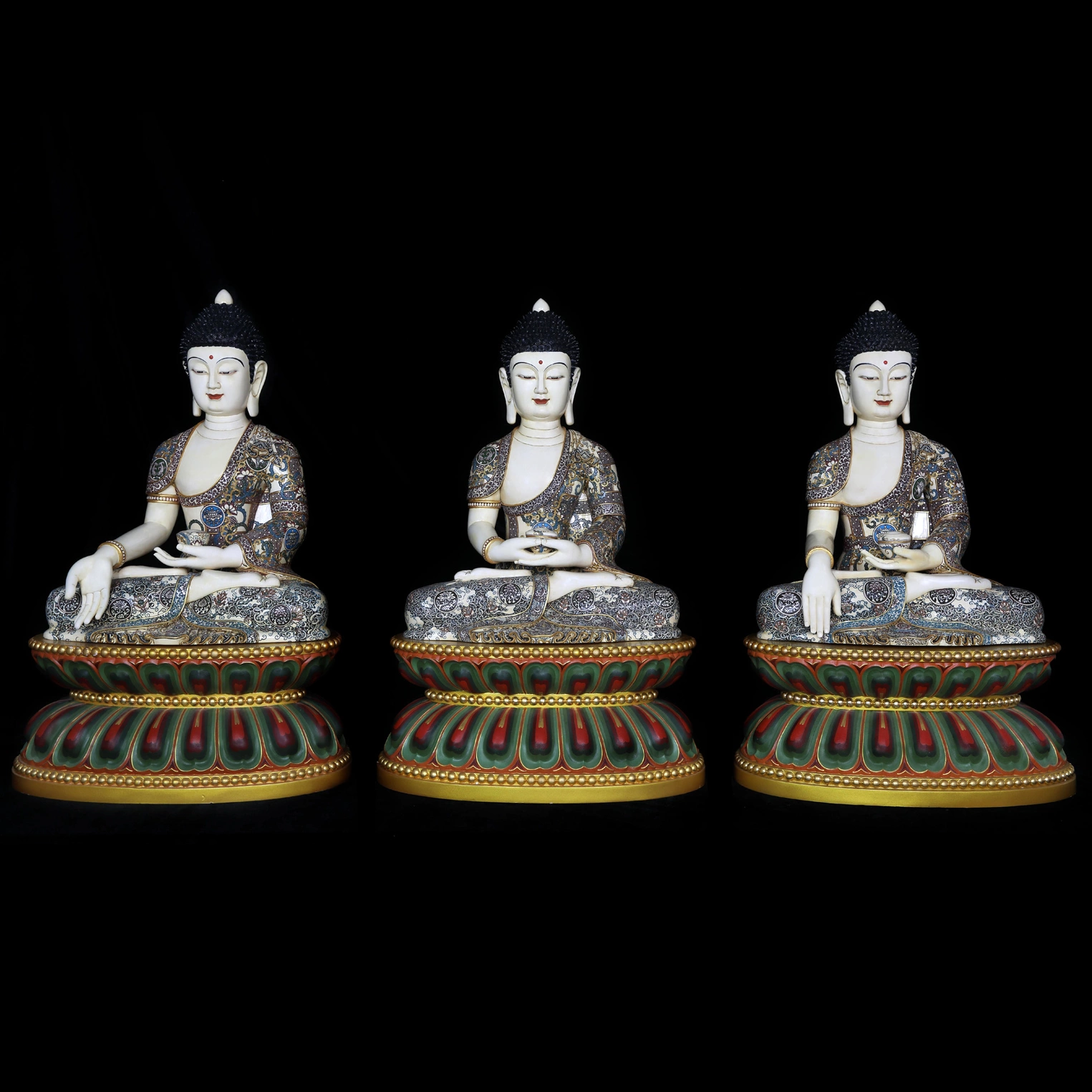
The mammoth tusk composition "Three Buddhas" is a harmonious artistic embodiment of one of the profound ideas of Buddhist philosophy — the unity of time and the spiritual path. The sculptural group is made of mammoth bone, a rare natural material with a noble light texture that allows the master to convey exceptional precision of lines, smoothness of shapes and refinement of decorative details.
The composition combines three images of the Buddha, symbolizing the three times of the world's existence — the past, present and future. Such a triad is an important spiritual symbol of the Buddhist tradition and reminds of the continuity of the teachings passed down through the centuries.
The central figure represents Shakyamuni Buddha, the historical teacher and founder of Buddhism. His image is associated with the moment of enlightenment and the transmission of the teachings on the path of liberation from suffering. The figure is depicted in a meditative pose, conveying a state of inner balance and spiritual concentration.
On the left is the Buddha of the past, Dipankara, the spiritual predecessor of Shakyamuni. In the Buddhist tradition, it was he who predicted the appearance of the future Buddha and thus connected the spiritual line of teaching through time.
The Buddha of the future, Maitreya, is depicted on the right, a symbol of hope and the coming spiritual renewal of the world. His image is associated with the expectation of a new stage of the spiritual awakening of mankind.
Each figure has a calm, focused expression on his face. Half-closed eyes convey a state of deep meditation, and soft features create a sense of benevolent wisdom and inner light.
The robes of the Buddhas are covered with intricate ornaments resembling rich temple fabrics. Fine carving allows you to see the smallest patterns, folds and decorative elements, which creates the impression of lively movement of the fabric and the depth of artistic execution.
All three figures are placed on a throne made of an open lotus, an ancient symbol of spiritual purity and enlightenment. The multi-tiered pedestals are made in rich red, green and gold shades, which enhances the solemnity and sacredness of the composition.
The Three Buddhas combine the rarity of ancient materials, the virtuoso skill of carvers and the deep philosophical symbolism of the Buddhist tradition. The sculpture group is perceived as an image of the eternity of spiritual teaching, where the past, present and future combine in a single harmony of wisdom and enlightenment.