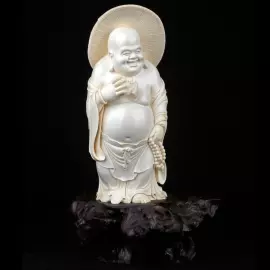
The mammoth tusk composition "Happiness before the Eyes" embodies one of the most recognizable and beloved images of the Eastern tradition — the laughing Buddha, a symbol of abundance, joy and carefree well-being. This character is associated with the image of Buddha Maitreya, the future teacher, whose appearance is associated with an era of happiness and harmony. His smile and open, cheerful energy are perceived as a sign that true well-being is already present in a person's life.
The very name "Happiness before the eyes" reflects an important philosophical idea: happiness does not need to be looked for far away — it is nearby, in simple things and in the correct perception of the world. In Chinese culture, this image is reminiscent of the ability to see joy in the present moment without putting it off for the future.
A figure with a rounded body and a calm, good-natured smile symbolizes fullness of life, abundance and inner freedom. A large belly is traditionally considered a sign of prosperity and the ability to "contain" the joys of the world, as well as accept life as it is. The rosary in your hand indicates a connection with spiritual practice, reminding you that true happiness is born from an inner state, not just from external circumstances.
In Chinese symbolism, the laughing Buddha is also associated with good luck, prosperity and protection of the home. His image is often placed in space as a source of beneficial energy that attracts joy and harmony. It is believed that his presence helps to improve mood, relieve tension and create an atmosphere of comfort and prosperity.
"Happiness before the eyes" is an image that combines simplicity and depth, material abundance and spiritual lightness. The composition combines the rarity of a mammoth tusk, purity of form and expressive plasticity, creating a work filled with warmth, kindness and a sense of living, real happiness.