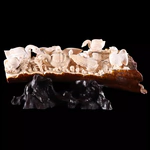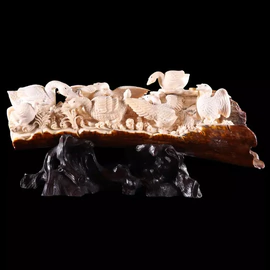



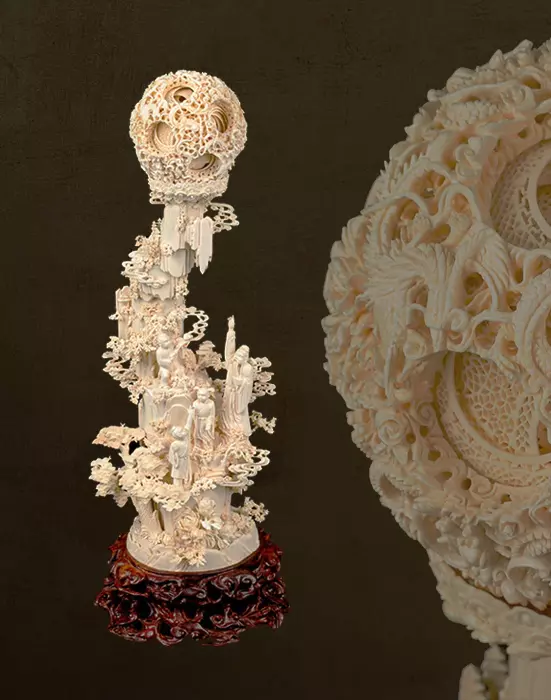
















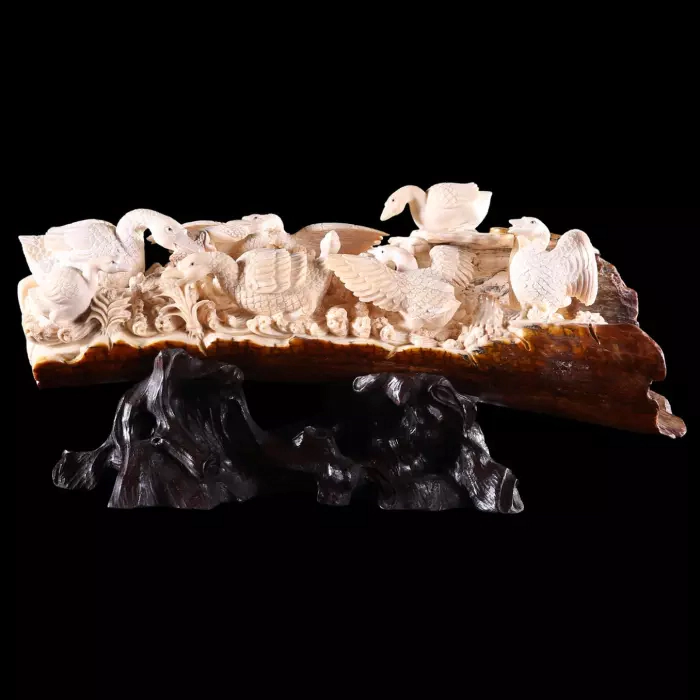

The mammoth tusk composition "The offspring of a gander in joyful harmony" is made from a single fragment of a tusk, which preserves natural curves and a rich palette of shades — from light milky to deep warm amber at the base. The natural structure of the material becomes part of the artistic design, creating the feeling of a living, organically formed scene. The sculptural group is placed on a massive carved base of dark wood, emphasizing the light plastic of the bone and enhancing the contrast of the composition.
The plot unfolds through the image of a goose family — adult birds and their offspring are united in a single space filled with movement and calm harmony. In Eastern symbolism, geese are associated with loyalty, family ties and consistency, and the presence of offspring enhances the importance of continuity and well-being of the family. Here, each figure is included in the overall action: some birds are in motion, others are at rest, creating a balance of dynamics and stability. The scene is perceived as a reflection of an orderly and prosperous life, where every being takes its place.
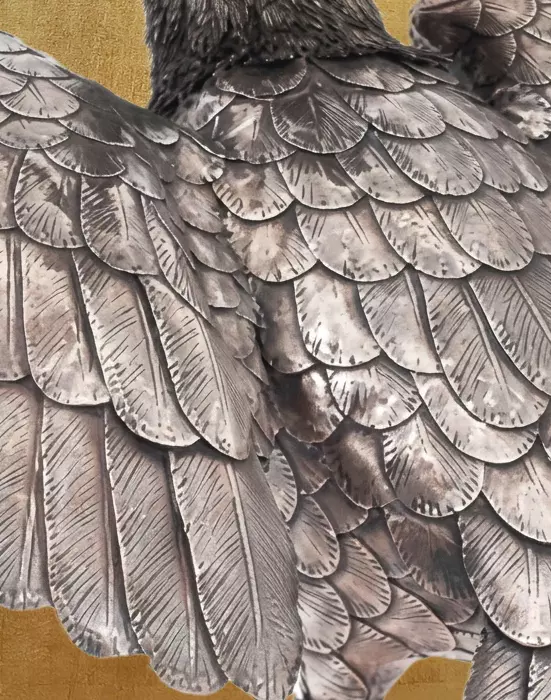
The mastery of Cantonese carving is evident in the fine elaboration of details.: the feathers, the plastic of the wings, the position of the heads and the characteristic movements of the bodies are carefully transferred. The multi-layered relief and saturation of the composition create depth, so that the gaze gradually reveals all the richness of the scene. Special expressiveness is given by the use of natural transitions of the color of the tusk, enhancing the volume and accentuating the key elements.
"The offspring of the goose in joyful harmony" carries the image of family harmony, mutual support and sustainable well-being. This work creates an atmosphere of calm and inner balance, symbolizing the strength of bonds and the natural joy of living together.