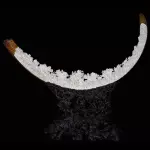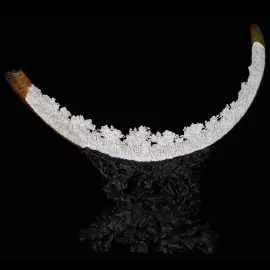










































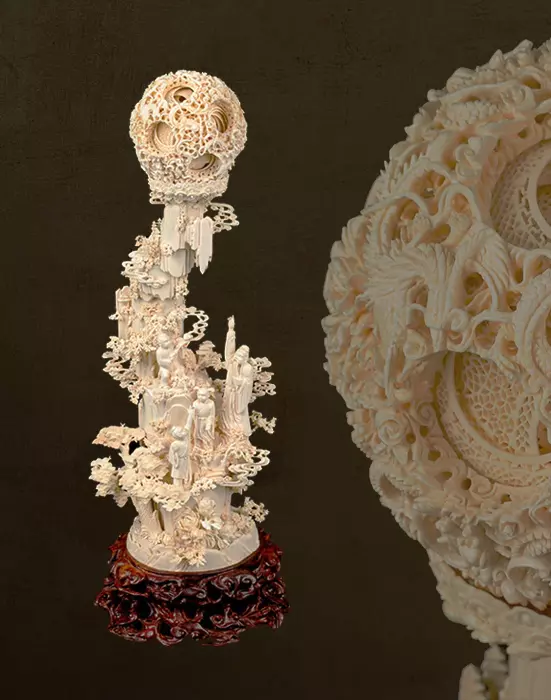




















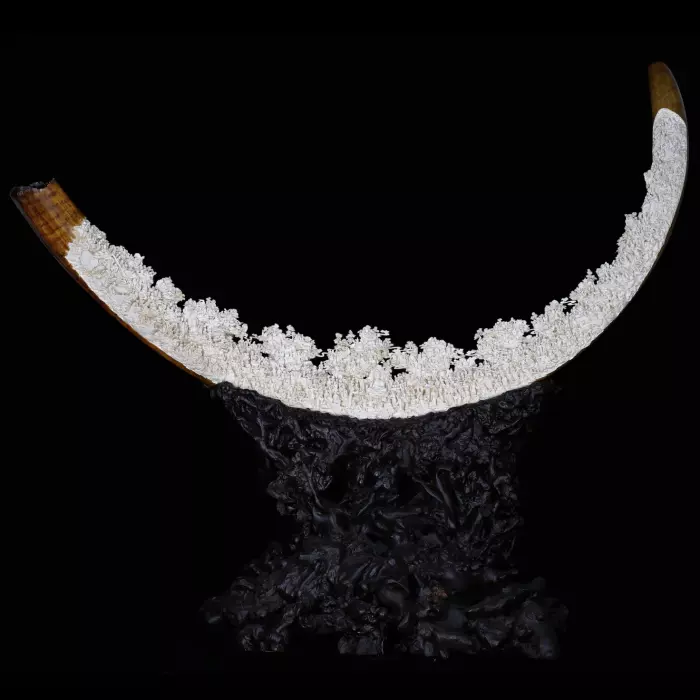
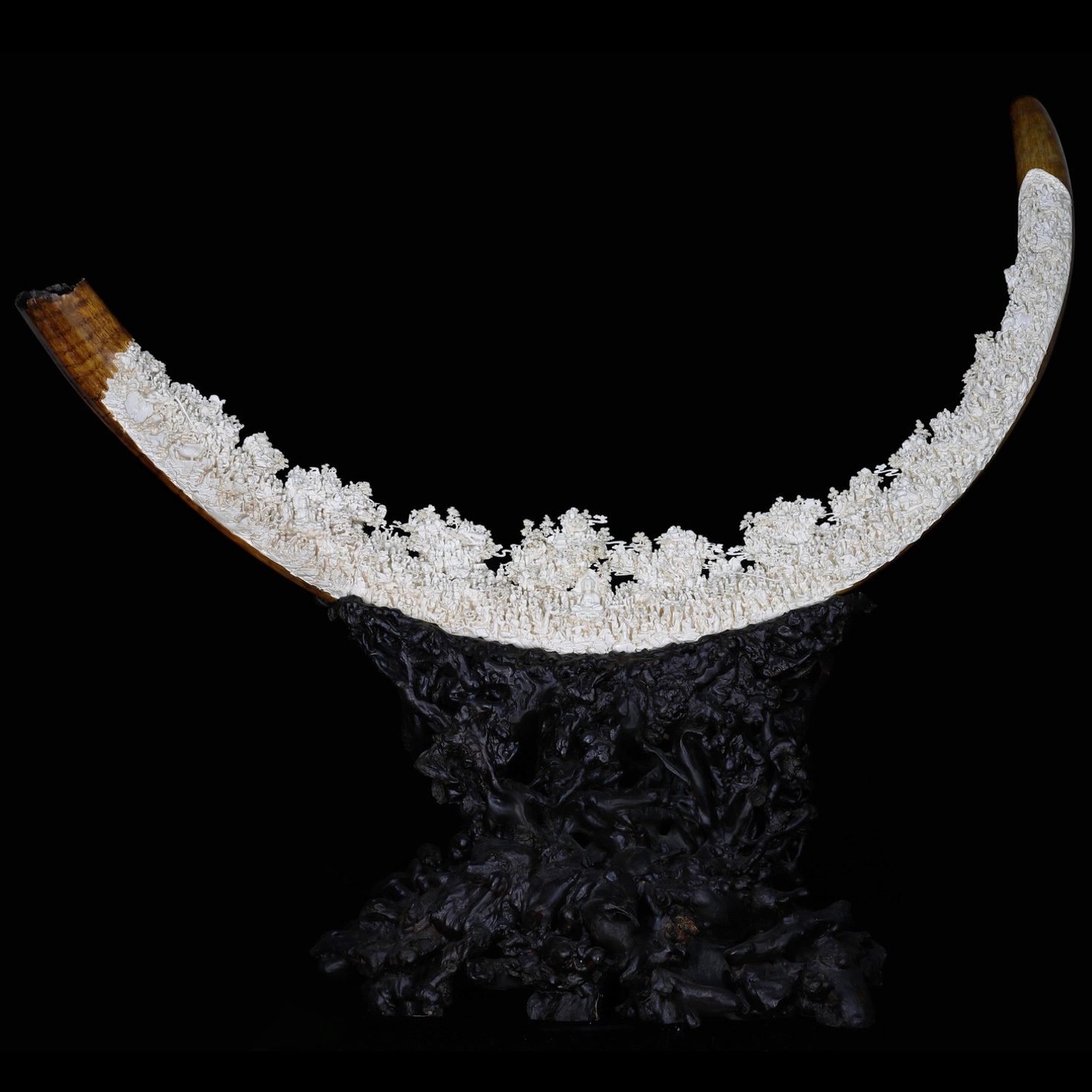
The mammoth tusk composition "Five Hundred Arhats" is a monumental piece of artistic carving that combines ancient natural materials and the deep philosophical tradition of Buddhist art. The basis of the work is a large mammoth tusk with a natural bend, transformed by the master into a wide arc resembling a vault of heaven or a mountain range on which the whole spiritual world unfolds.
Along the inner side of the tusk is a complex multi-figure composition made using the finest relief carving technique. The surface of the bone is covered with many miniature figures of arhats, enlightened disciples of the Buddha who achieved spiritual perfection. Each figure has its own personality: the poses of meditation, conversation, prayer, wandering and teaching are distinguishable. Thanks to this, the whole scene is perceived as a living spiritual assembly filled with movement and inner harmony.
Arhats are placed among mountain landscapes, temples, trees and stone terraces. Architectural elements, pagodas and bridges connect the individual scenes, creating a sense of an endless monastic world where each figure takes its place in the spiritual hierarchy. The master uses the natural shape of the tusk as a compositional base, turning its curve into a symbolic line of sacred mountains.
The plot of "Five Hundred Arhats" occupies a special place in the Buddhist tradition. It symbolizes the spiritual community of the Buddha's disciples who have achieved enlightenment and continue to pass on the teachings to the next generations. Artistically, this theme takes on the scale of an epic panel, in which each figure is part of a single spiritual space.
"Five Hundred Arhats" is not just a decorative composition, but a complex philosophical image combining a religious plot, a virtuoso carving technique and the majestic shape of an ancient tusk. The work is perceived as a rare artistic monument, where ancient history, spiritual tradition and the skill of the carver combine in a single, monumental image.