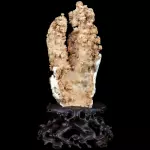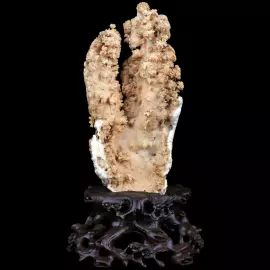






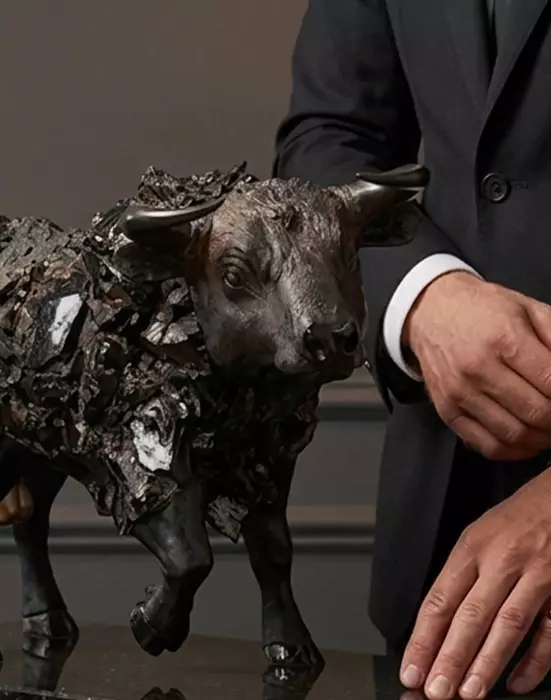






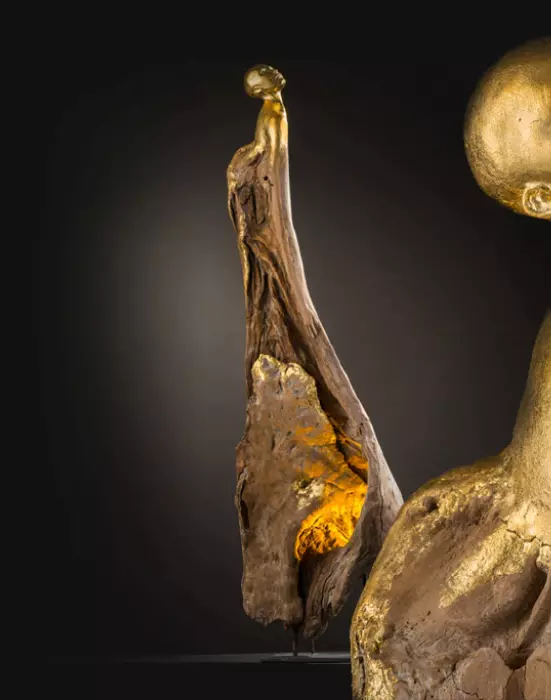

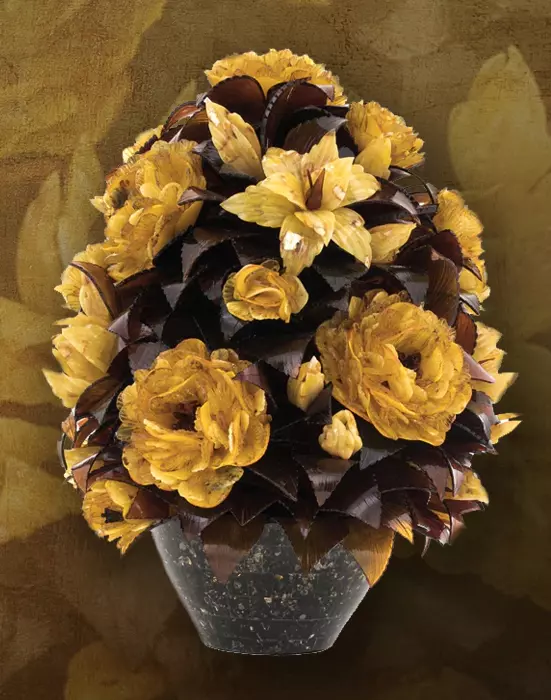







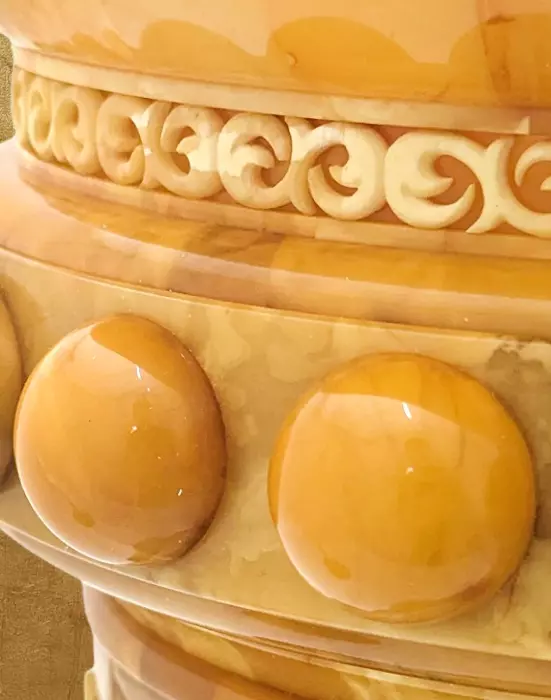
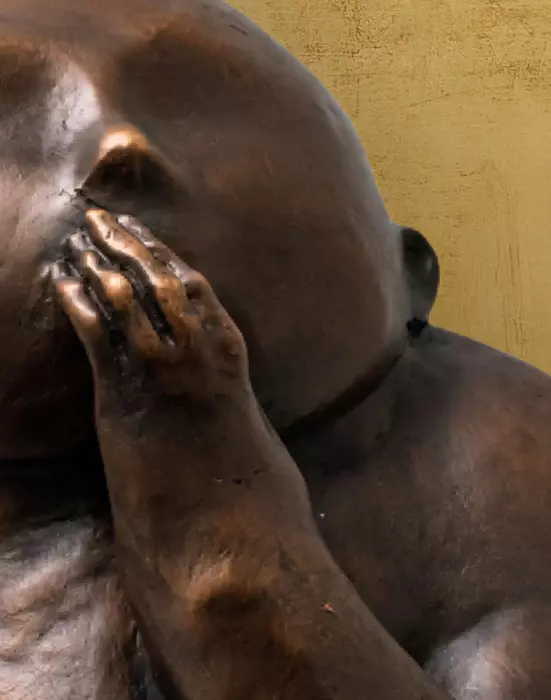









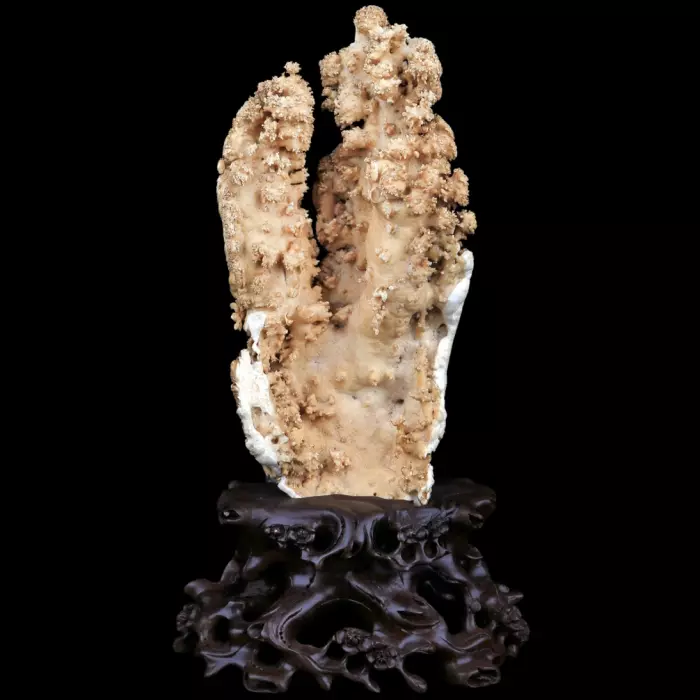
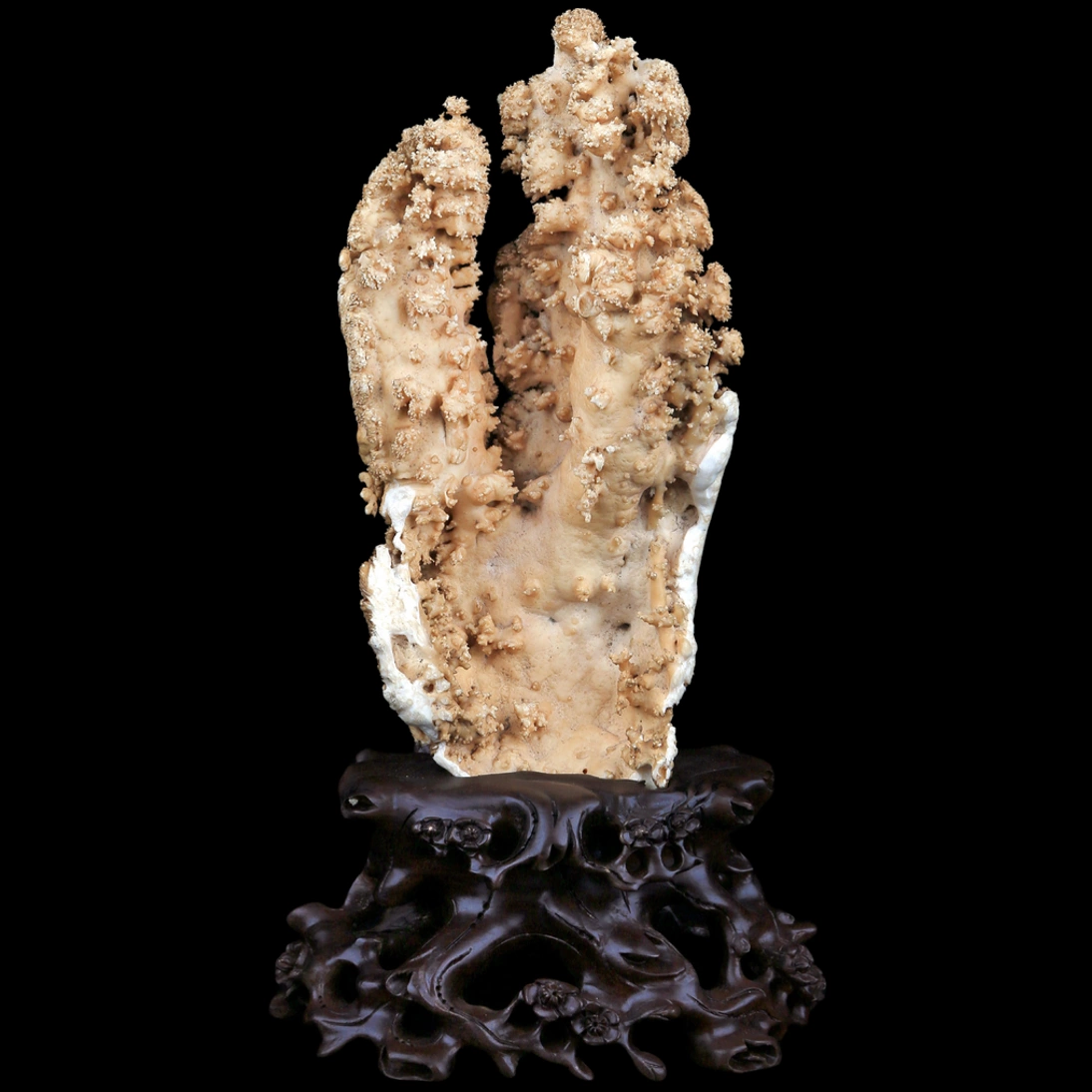
The mammoth tusk composition "Petrified Dental Pulp" is a rare phenomenon in which the natural form itself becomes the main artistic statement. In front of the viewer is the inner world of ancient material, revealed without unnecessary interference, like a fragment of time, frozen and exposed in its true structure.
Such formations in Chinese aesthetics are perceived as a manifestation of the force of nature, capable of creating complex and expressive forms without human intervention. They are often compared with "scientific stones" — natural objects valued for their uniqueness, asymmetry and internal energy. Such forms symbolize naturalness, spontaneity and depth, inaccessible to artificially created objects.
The texture of the surface, saturated with protrusions and growths, evokes associations with mountain landscapes, islands or ancient rocks formed under the influence of time and the elements. In the Chinese tradition, such images are associated with the idea of eternity and continuous change, where destruction and creation are part of the same process.
Of particular importance is the principle of "tzu zhan" — naturalness, which values not the ideal form, but authenticity and uniqueness. It is such objects that become objects of contemplation, allowing you to focus, slow down and feel the depth of time contained in the material.
"Petrified dental pulp" is not just a rare natural phenomenon, but an object of philosophical perception, reflecting the power of nature, the passage of time and the beauty of natural form. The composition combines the uniqueness of the mammoth tusk and minimal intervention by the master, creating a work filled with inner energy, depth and a sense of ancient, almost pristine harmony.