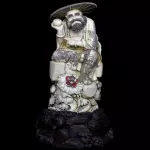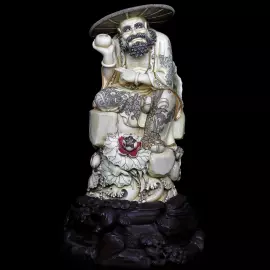


















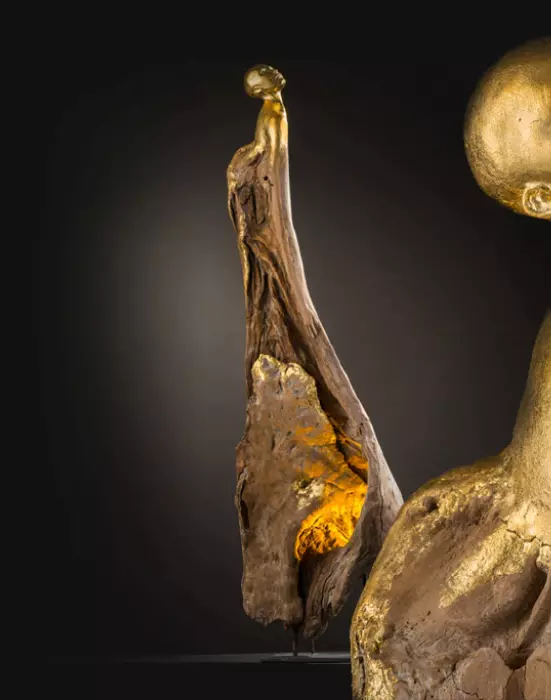





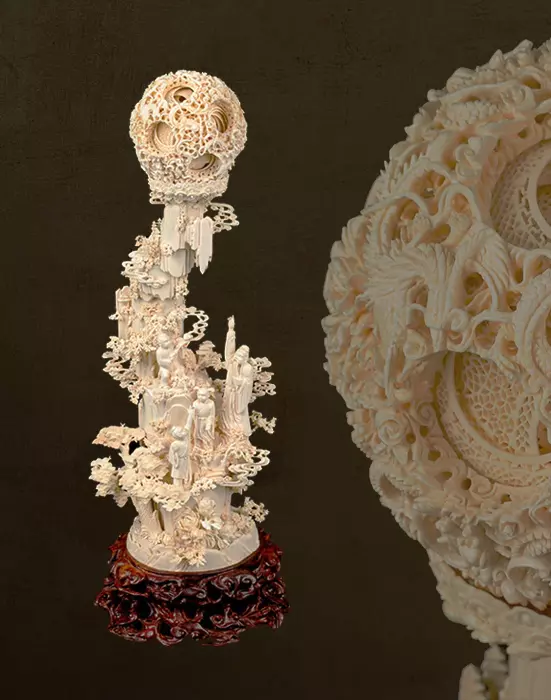















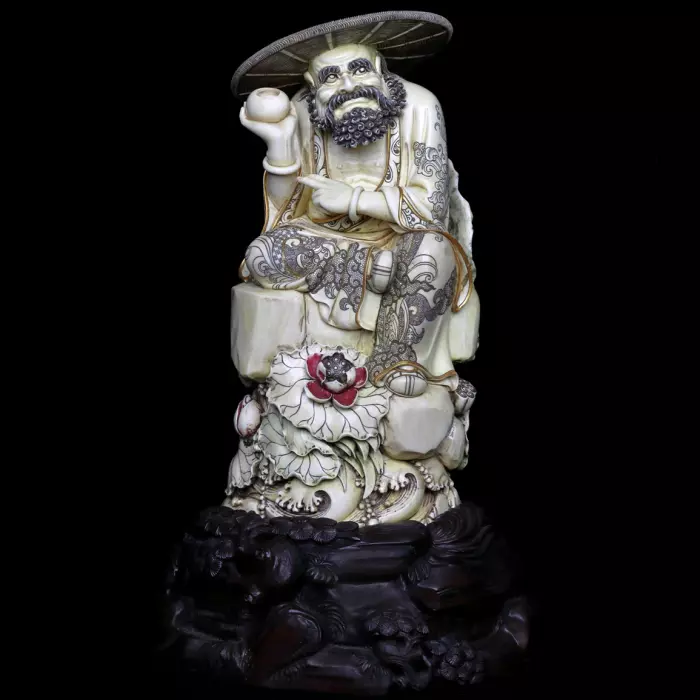
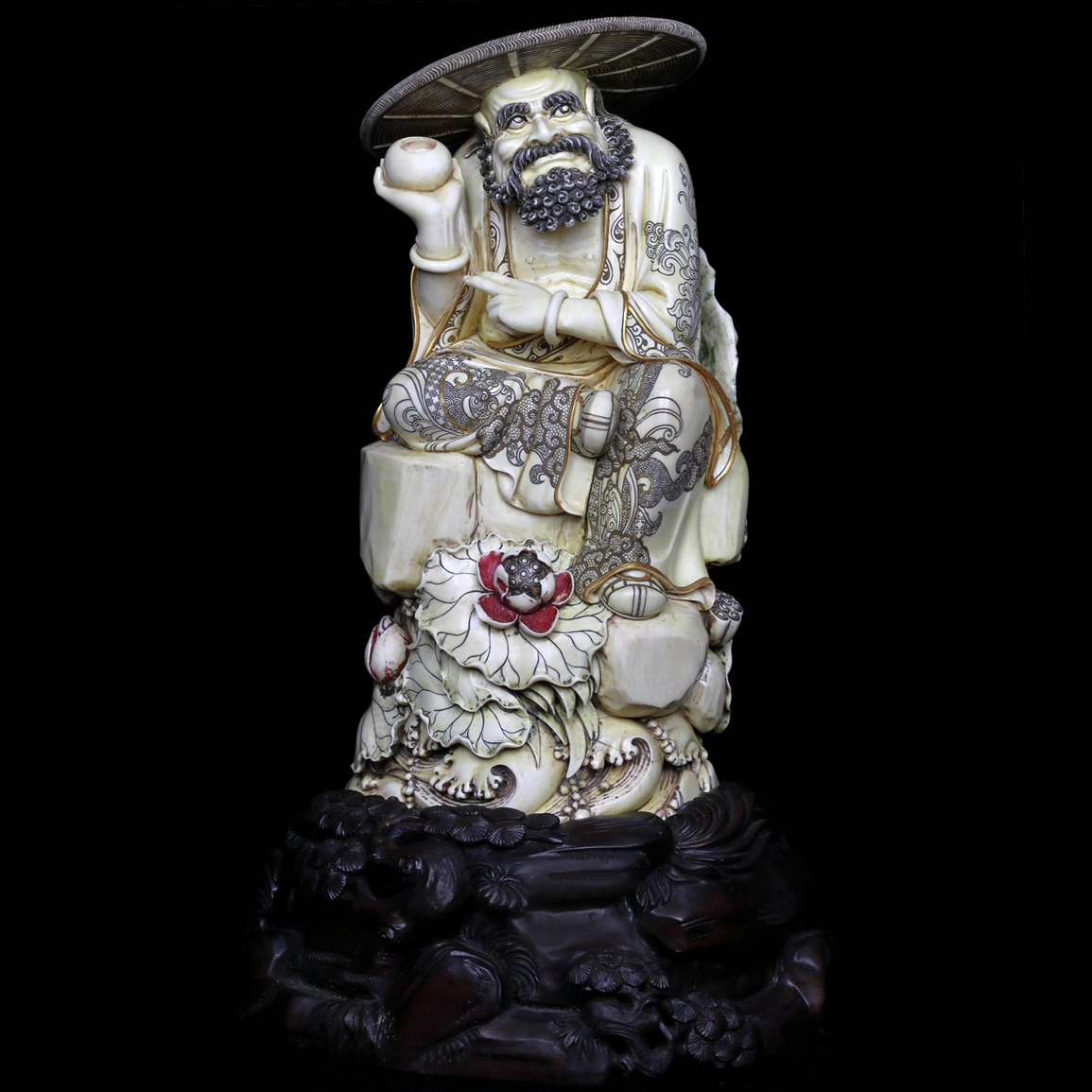
The mammoth tusk composition "Carrying the Begging Bowl: Portrait of an Arhat" refers to the image of an arhat, one of the key characters in the Buddhist tradition, who achieved liberation from suffering and completed the path of spiritual search. Arhats are perceived as the guardians of knowledge and the living embodiment of discipline, inner strength and enlightened consciousness, who have kept in touch with the world for the sake of instructing others.
The begging bowl held by the figure has a deep symbolic meaning. In Buddhist culture, it means giving up material attachments and accepting life as it is. This is not just an object, but a sign of the path — the ability to be content with what is necessary, to maintain humility and at the same time inner independence. In this context, alms acts as an exchange: the world provides food for the body, and the arhat provides spiritual guidance.
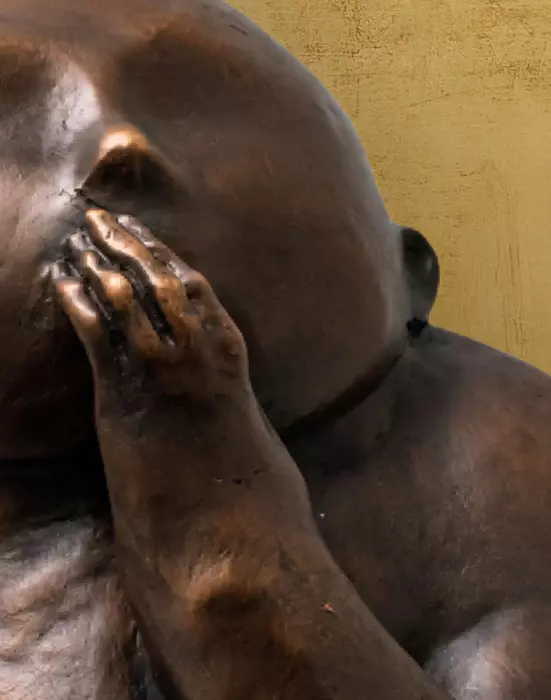
The facial expression, combining rigor and gentle irony, conveys a special state of consciousness characteristic of arhats in oriental art. In the Chinese tradition, they are often portrayed not as idealized, but as lively, even a little eccentric — the way people become when they are freed from conventions and social roles. This highlights the idea of genuine freedom that transcends the external order.
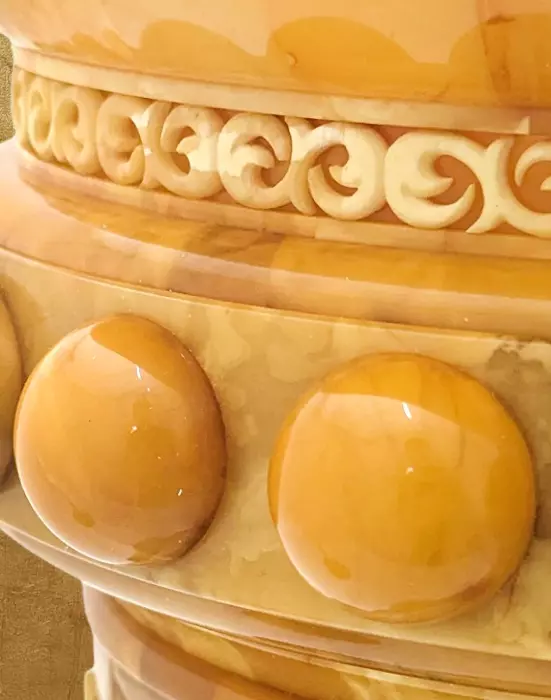
Clothes with ornaments and the pose of the figure complement the image of inner balance and concentration. Even in static, one feels the movement of thought, a path that has already been traveled and is simultaneously continuing in others.
The "begging bowl bearer" is an image of humility, wisdom, and independence from worldly desires. The composition combines the rarity of a mammoth tusk, intricate carvings and deep philosophical symbolism, creating a work filled with calm power, inner freedom and a sense of a completed spiritual path.