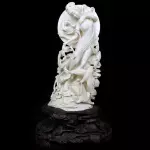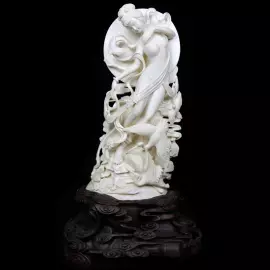




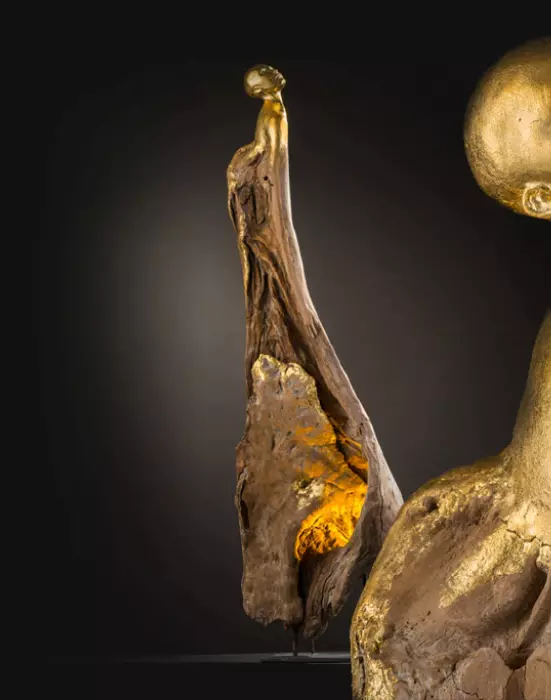

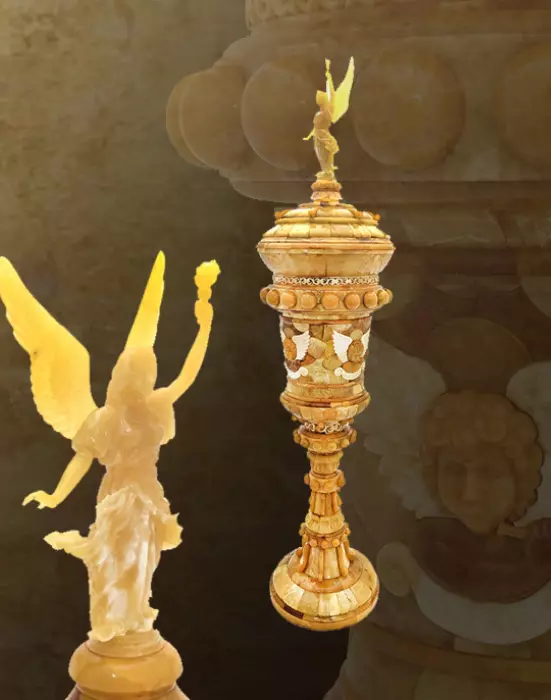















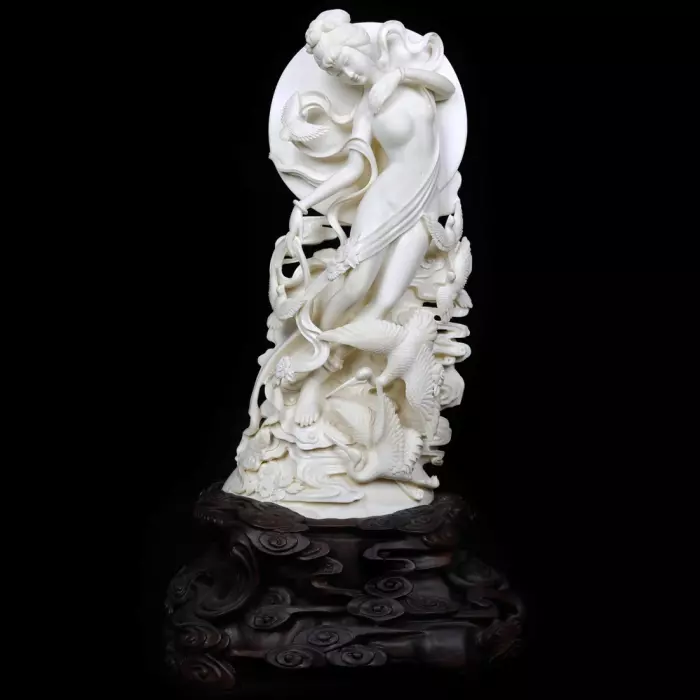
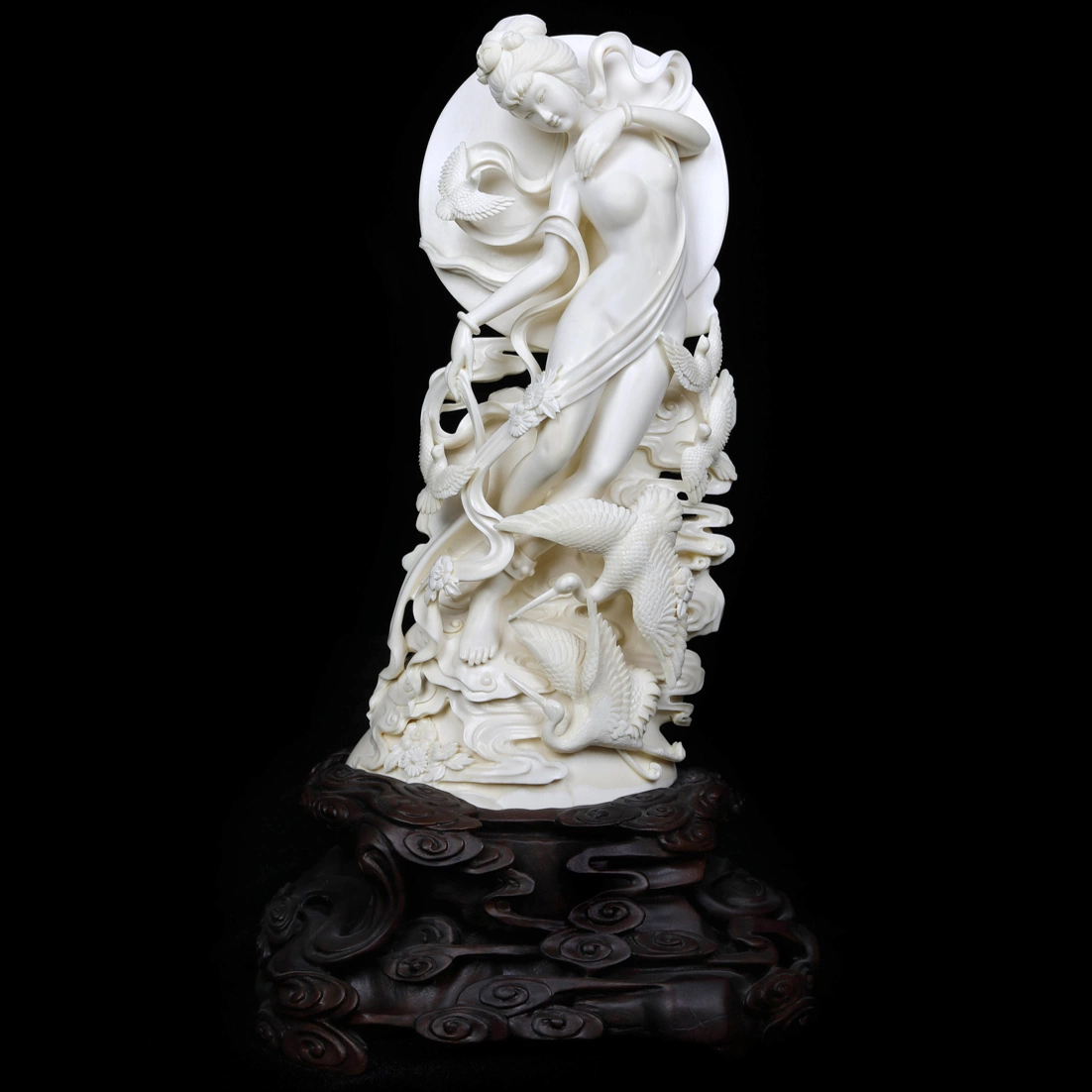
The mammoth tusk composition "Heavenly Dancer" refers to the image of the apsaras, celestial maidens present in the Buddhist and Chinese artistic traditions as symbols of purity, harmony and spiritual inspiration. Their movements are perceived not as a dance in the earthly sense, but as a manifestation of heavenly energy, light and free, existing outside of time and the gravity of the material world.
The figure, curved in a smooth, almost weightless rhythm, conveys the idea of unity of body and spirit. In Chinese culture, such plastic surgery is associated with inner harmony, where every movement is a continuation of breathing and a state of consciousness. This is not just the beauty of the form — it is an expression of balance, in which there is no tension, but only the natural flow of qi energy is present.
The image of cranes accompanying the dancer enhances the symbolism of the composition. The crane in the Chinese tradition is one of the main signs of longevity, spiritual elevation and connection with heaven. It is believed that it is on cranes that immortals ascend to the higher worlds, therefore their presence next to the heavenly virgin indicates a transition, transformation and approach to the state of immortality.
Flying ribbons and fluttering fabrics have a special meaning: in Eastern symbolism, they denote the flow of energy, movement between worlds and the continuity of being. These elements connect the figure with the surrounding space, creating the feeling that it is not standing, but floating, disappearing into the air and light.
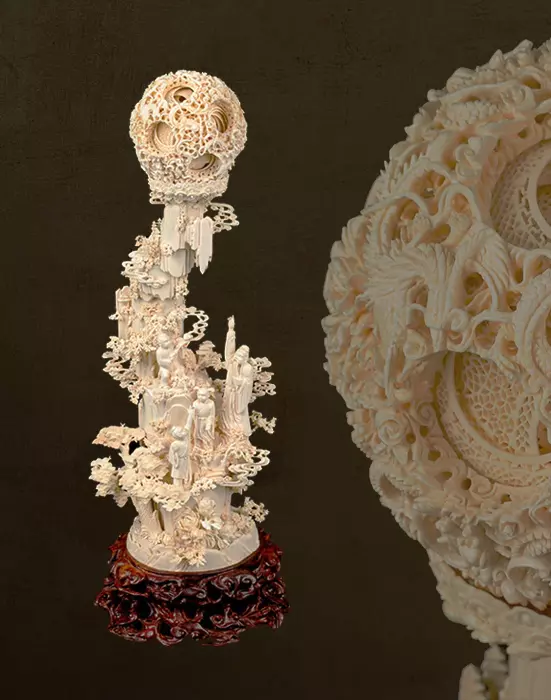
The "Heavenly Dancer" is an image of refined beauty, spiritual freedom, and a sublime state in which the boundaries between man and heaven disappear. The composition combines the rarity of a mammoth tusk, virtuoso carving and deep cultural symbolism, creating a work filled with lightness, harmony and a sense of endless movement.