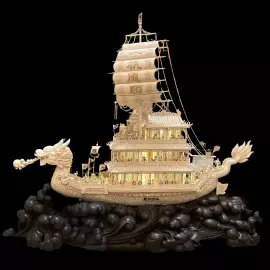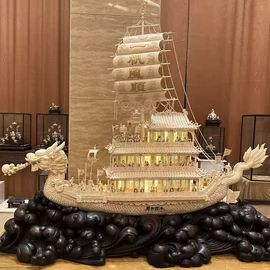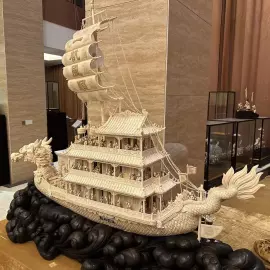













































































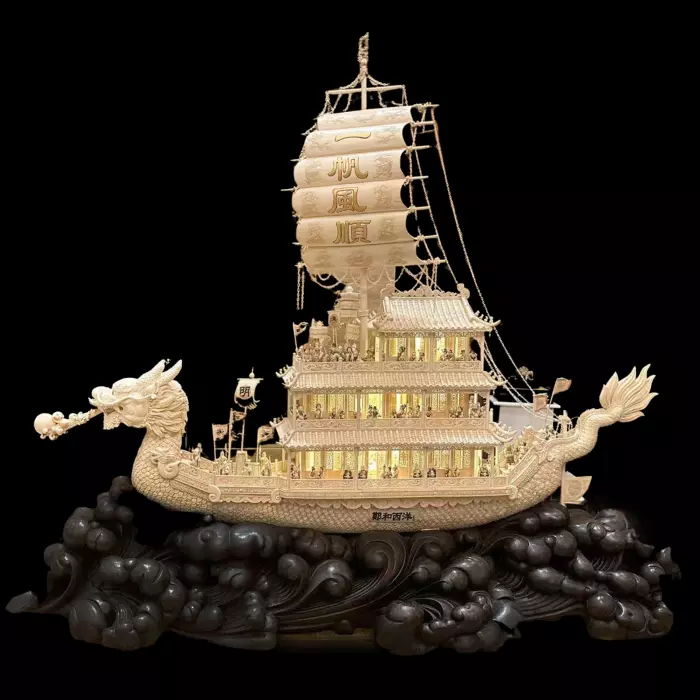
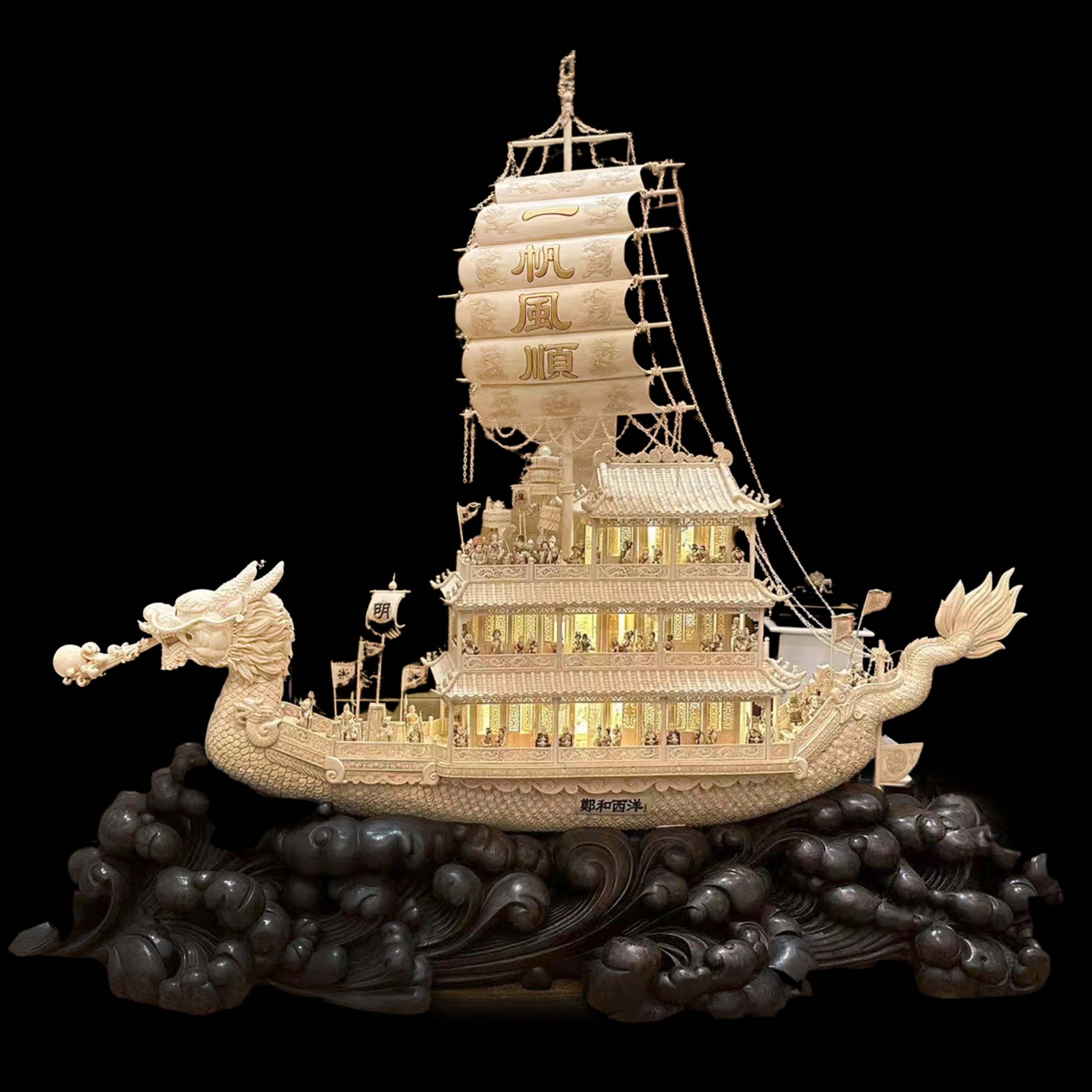


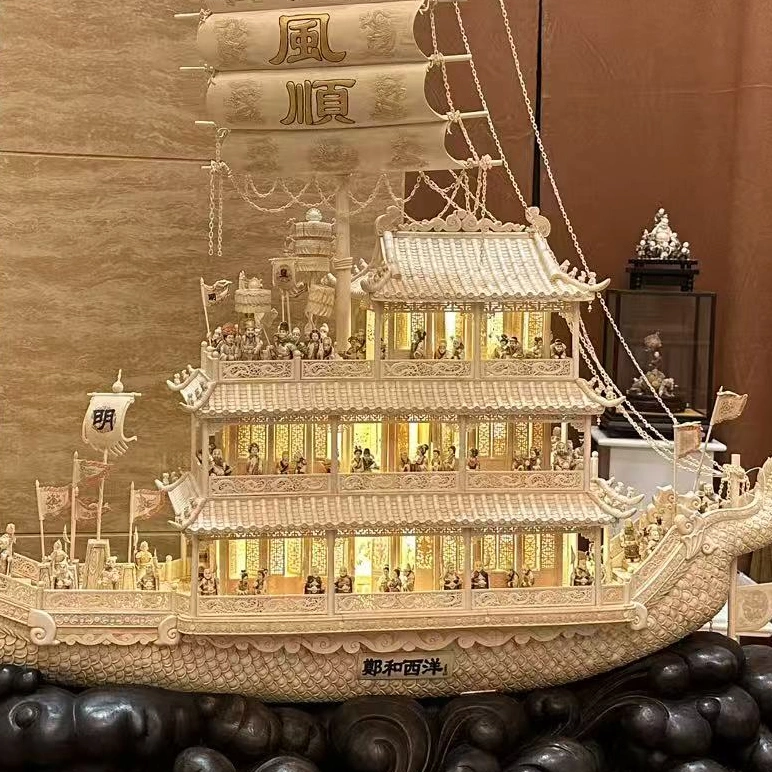
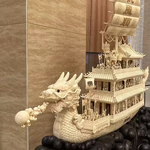
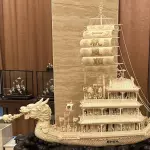
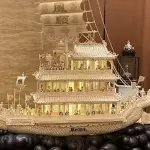
The mammoth tusk composition "Zheng He's Sea Voyages" is dedicated to one of the most outstanding pages of China's maritime history. The work pays tribute to the memory of the great admiral of the Ming era, Zheng He, whose expeditions at the beginning of the XV century became a symbol of maritime power, diplomacy and cultural exchange.
At the beginning of the 15th century, a huge fleet led by Zheng He set off from China on a series of long-distance sea voyages. In twenty-eight years, seven great expeditions have been completed, covering the western Pacific Ocean and the waters of the Indian Ocean. The sailors have laid dozens of sea routes connecting China with the regions of Southeast Asia, India, Arabia and East Africa. In total, more than 70,000 nautical miles were covered, a distance comparable to several trips around the world. These voyages have played an important role in the development of trade, diplomatic relations and cultural exchange between civilizations.
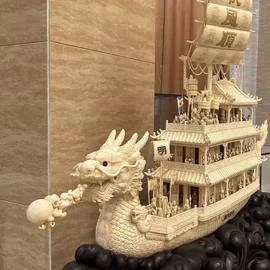
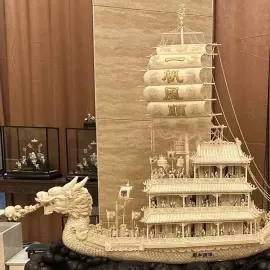
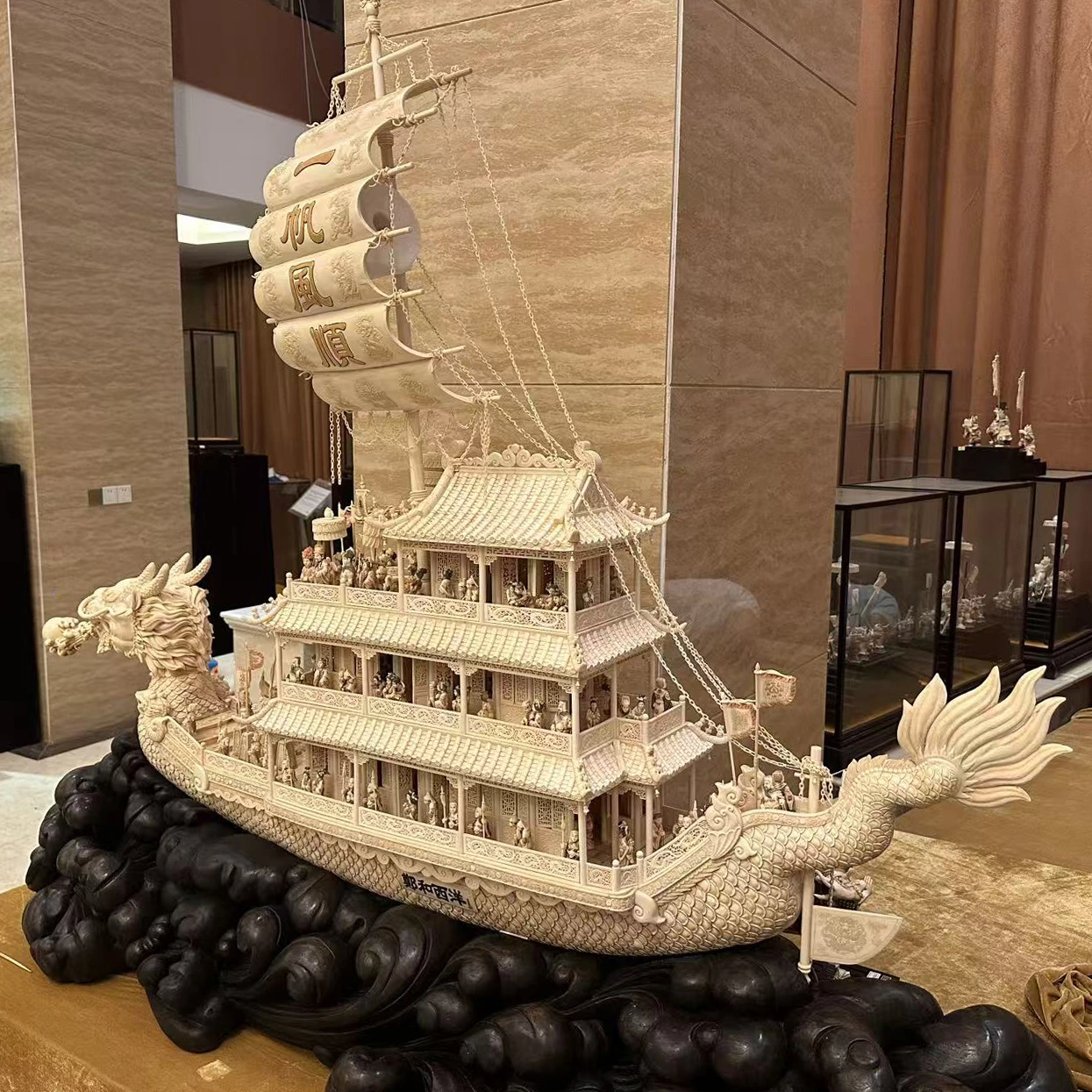
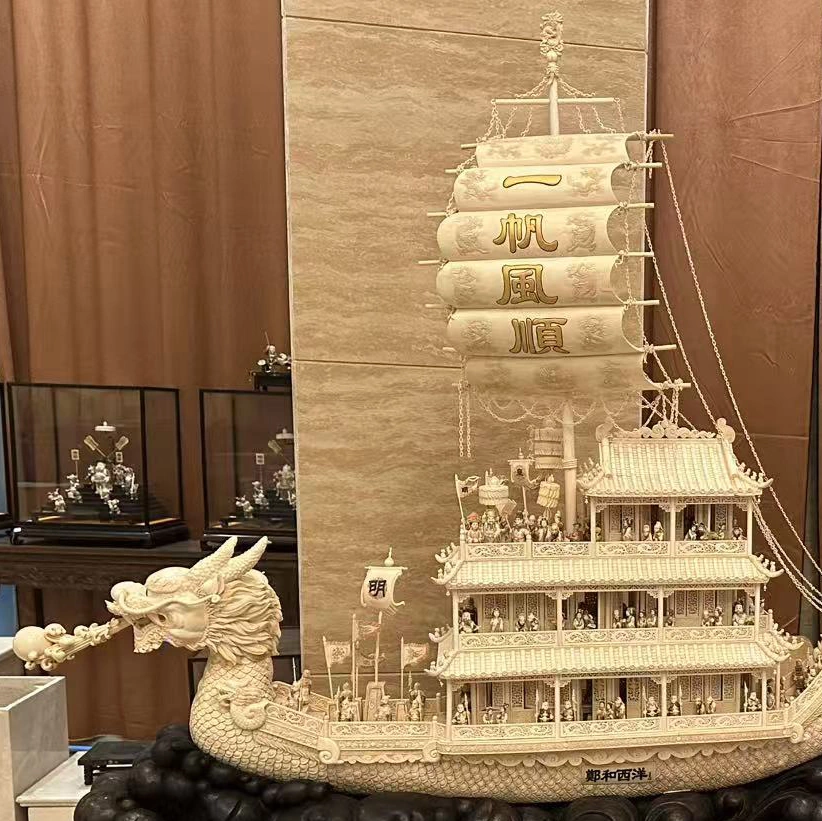
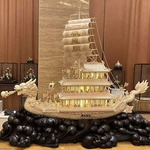
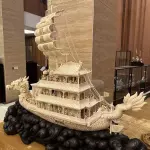
The sculptural composition embodies the spirit of these great journeys. The elegant ship is carved from a mammoth tusk and is made in the shape of a dragon ship cutting through the waves. The dragon in Chinese culture symbolizes strength, blessing and heavenly protection. His head stands proudly above the bow of the ship, as if guiding the ship through the ocean.
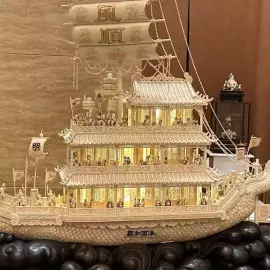
A multi-tiered pavilion stands on the deck, reminiscent of the architecture of imperial palaces. Through the open galleries, you can see numerous miniature figures of people — courtiers, sailors and noble passengers. Detailed roofs, balustrades and decorative elements create the impression of a real floating palace accompanying a diplomatic mission.
The finest elements of the carving are of particular artistic value. The ship is decorated with many exquisite details, including rotating chains, a complex carving technique known as "qingzhan". Such elements are cut from a single piece of material and demonstrate the highest level of skill of the artist.
The base of the composition is made in the form of seething sea waves, from which a dragon ship seems to rise. The contrast of the light mammoth bone and the dark carved base enhances the feeling of movement and the dramatic power of the sea.
This work is perceived not only as an outstanding work of decorative art, but also as a symbol of the era of great discoveries. Zheng He's Sea Voyages embodies the idea of an open world in which sea roads connect cultures and peoples, and human courage and skill pave the way to new horizons.