


















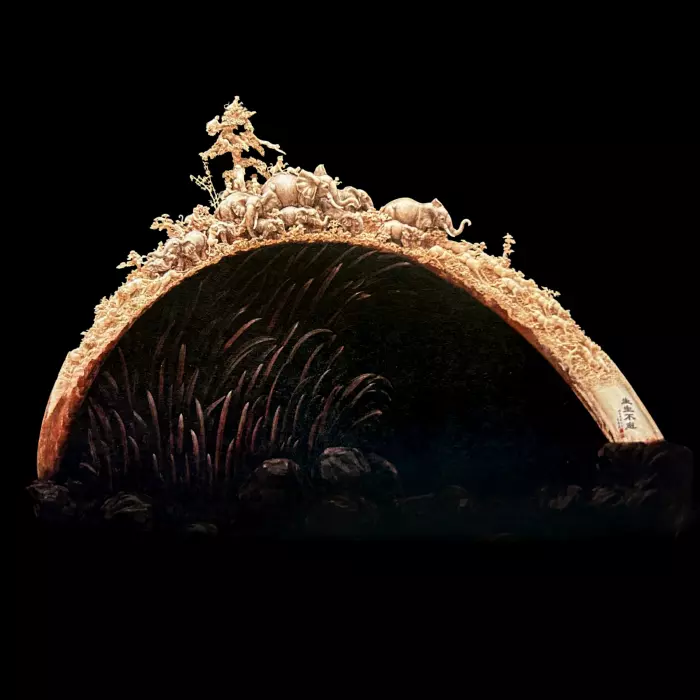
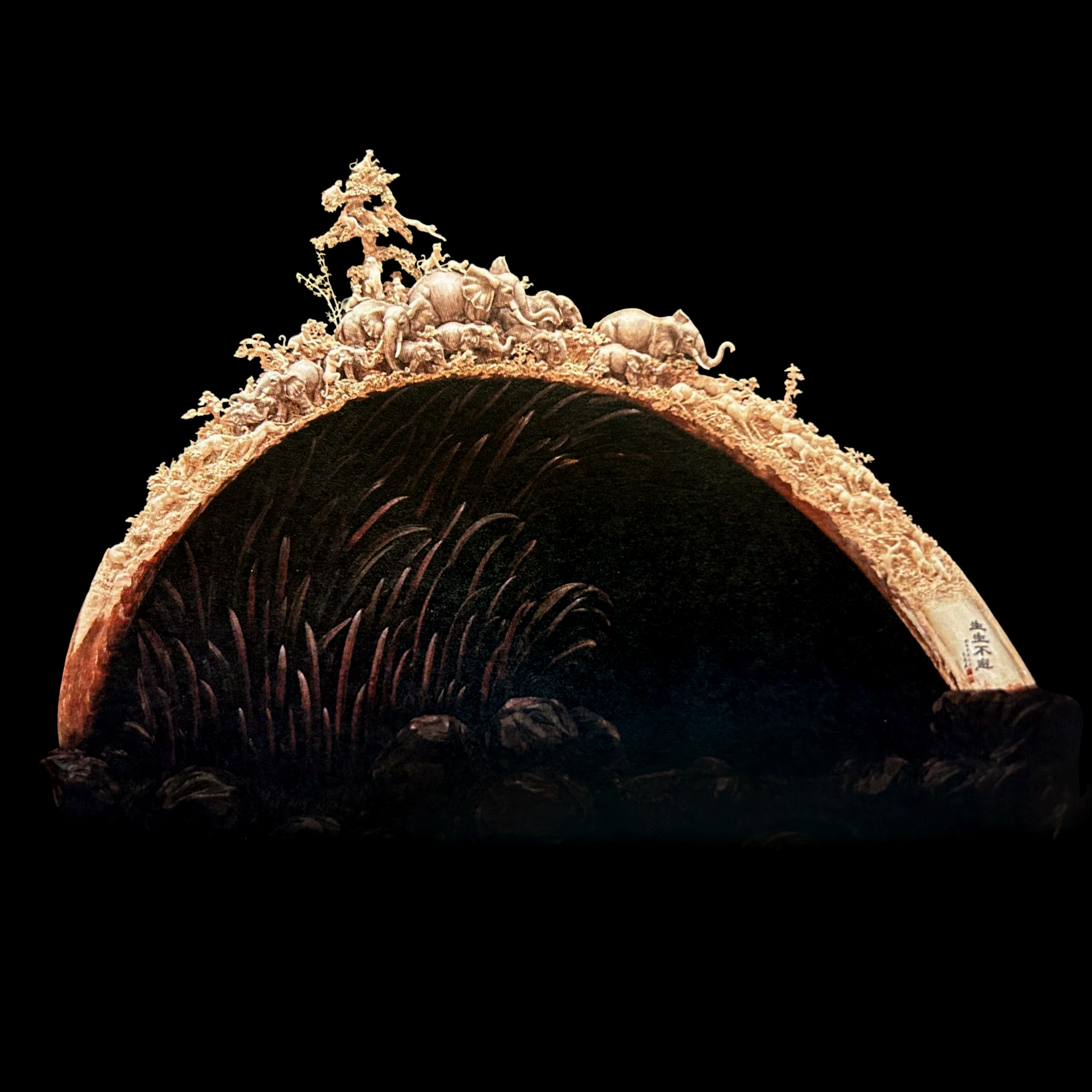
Mammoth tusk composition "The Cycle of Life"
80 730 000 ₽
0
Add a gift label
Engraving on the nameplate 1500 ₽
Delivery options
Worldwide
Delivery by a transport company in the shortest possible time
VIP air delivery
Delivery rates
About this product
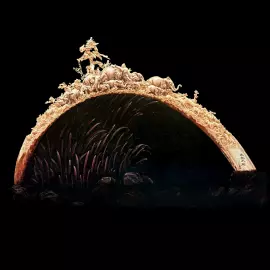
The mammoth tusk composition "The Cycle of Life" reveals the philosophical idea of the continuity of nature and the interconnectedness of all living beings. Along the upper line of the curved tusk, there is a scene with a family of elephants moving among trees and a mountain landscape. Adult animals and young baby elephants are depicted in the natural rhythm of life — some go ahead, others follow them, creating a sense of continuous journey and generational change.
The elephant in Eastern symbolism is associated with wisdom, stability and strength, and the image of the herd emphasizes the idea of continuity and protection of the family. The composition is built in such a way that the natural arc of the tusk turns into a kind of bridge of time: from the beginning of the life path to its continuation. Trees, rocks and plant forms form a living natural landscape where animals exist in harmony with the surrounding world.
The dark base enhances the expressiveness of the light relief, creating a deep contrast and emphasizing the plasticity of the carving. As a result, the composition is perceived as an artistic reflection on the cyclical nature of life — about birth, development and continued existence. The ancient material, which has survived thousands of years, in this work becomes a symbol of the eternity of nature and the continuous movement of time.
Tusk length: 268 cm
Thread thickness: 48 cm
Characteristics
- Country of manufacture:
- China
- Material:
- the mammoth tusk, The ebony tree
- Technique of execution:
- Cantonese bone carving
- Sizes:
- 189 × 50 × 132 cm.
- Weight:
- 43 kg.
Similar products