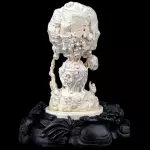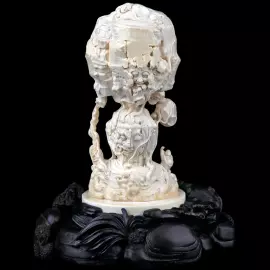





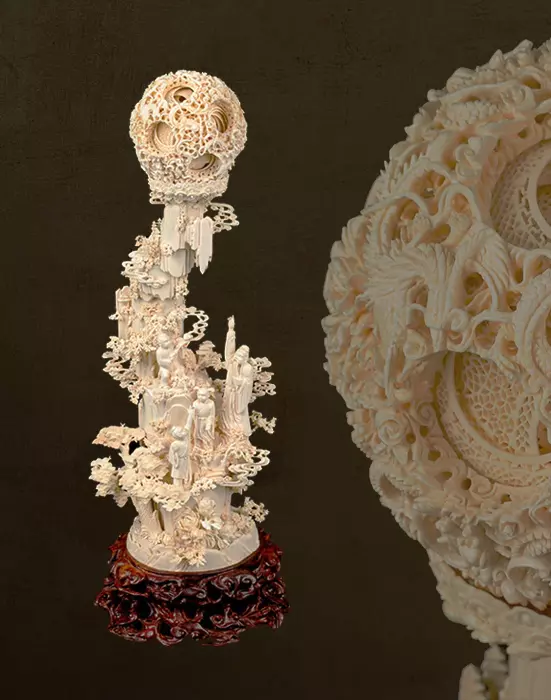
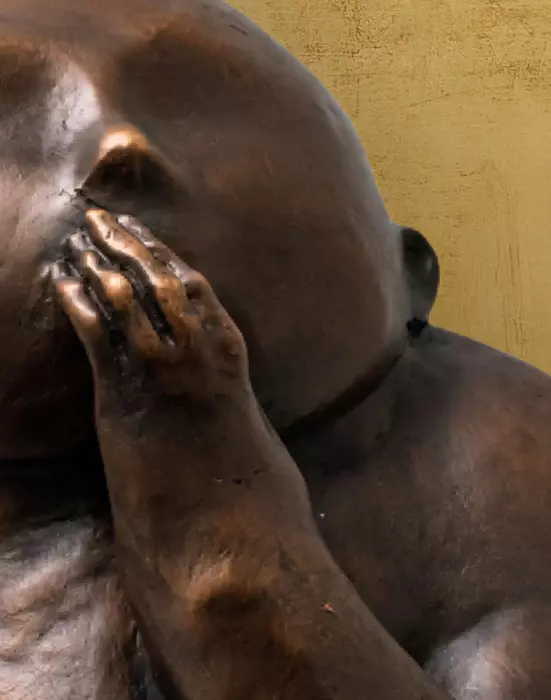












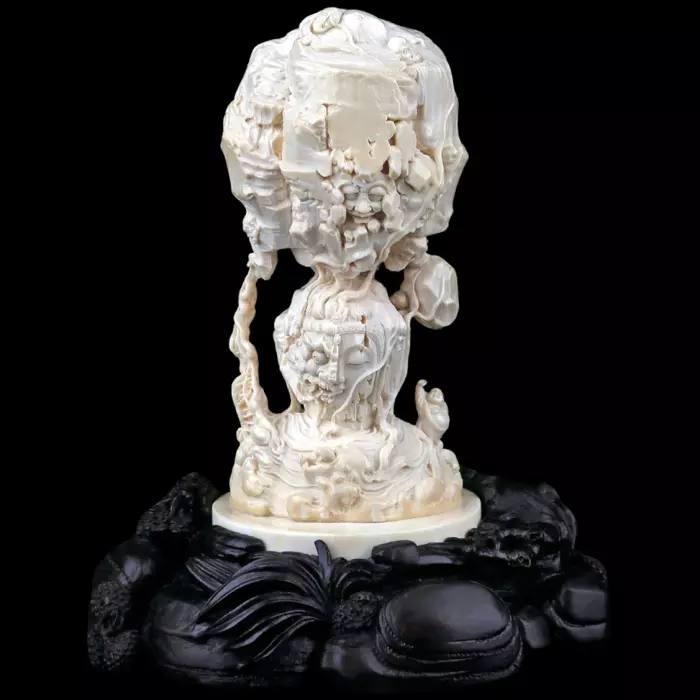
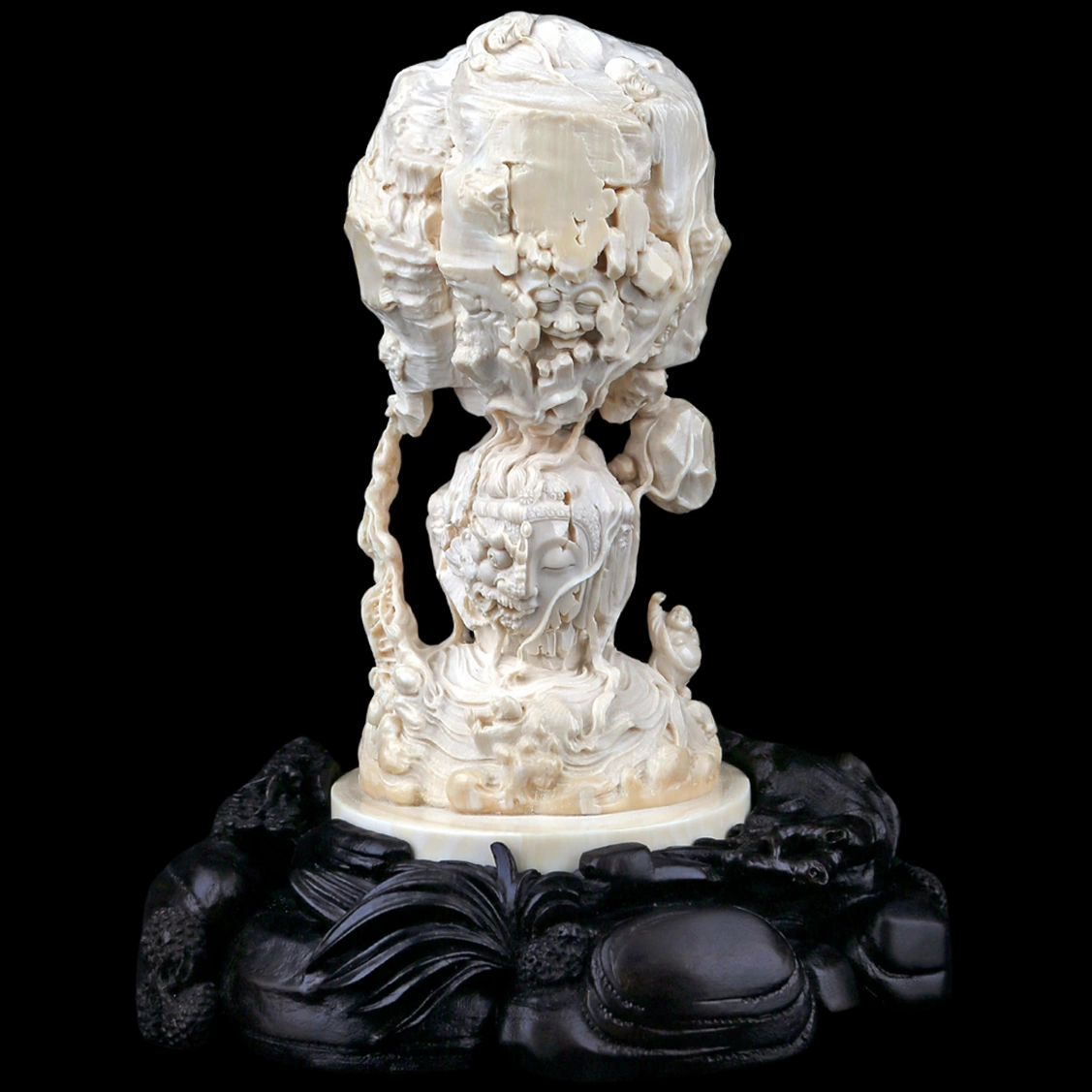
The mammoth tusk composition "The Stone of Three Lives" is a rare piece of carving in which philosophical depth is combined with virtuoso plasticity of form. Made from a single fragment of a mammoth tusk, the work reveals the natural texture of the material, preserving its vibrant structure and soft radiance. The base made of dark carved wood enhances the contrast and gives the composition completeness, turning it into a collector's item aimed at connoisseurs of symbolic art and oriental aesthetics.
The plot goes back to the ancient Chinese idea of the "stone of three lives" — a symbol of the connection between the past, present and future. According to the philosophical tradition, this image reflects the continuity of the human path, where each life is a continuation of the previous one. In the composition, this idea is conveyed through a complex multilevel structure: in the interweaving of forms, faces, figures and natural elements are guessed, as if arising from a single source and returning to it again. The master uses the Cantonese carving technique, creating a fluid effect where the boundaries between images dissolve and each detail becomes part of a single flow.
Plastic surfaces attract special attention: smooth transitions, soft lines and fine details create a sense of movement, despite the static nature of the material. The composition is perceived as a frozen moment of transformation — like time imprinted in the material. This shows the key idea: life is inseparable, forms replace each other, but the essence remains the same.
The "Stone of Three Lives" is not just a decorative object, but a philosophical statement addressing the theme of fate, memory and continuity. Work brings a sense of depth and tranquility, creating a special space around oneself in which the material and the spiritual exist in harmonious balance.