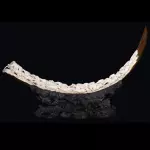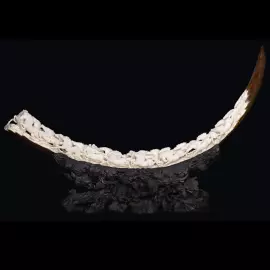



















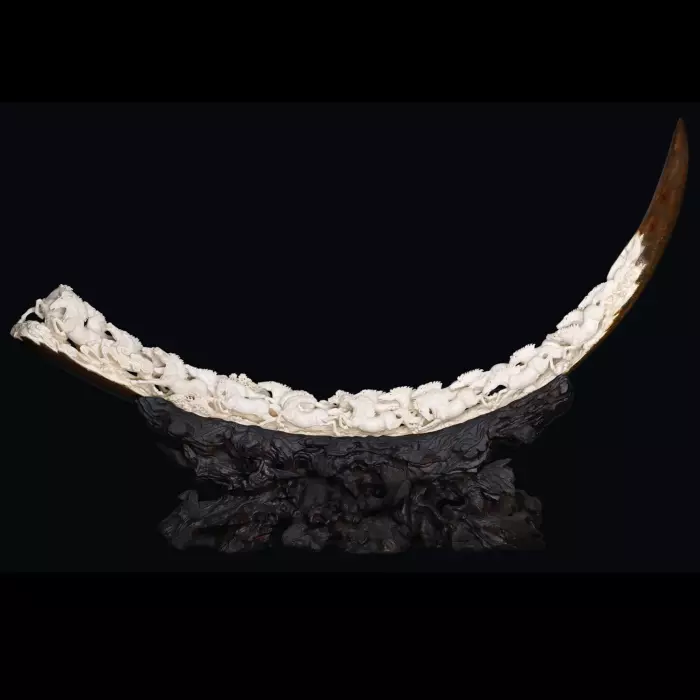
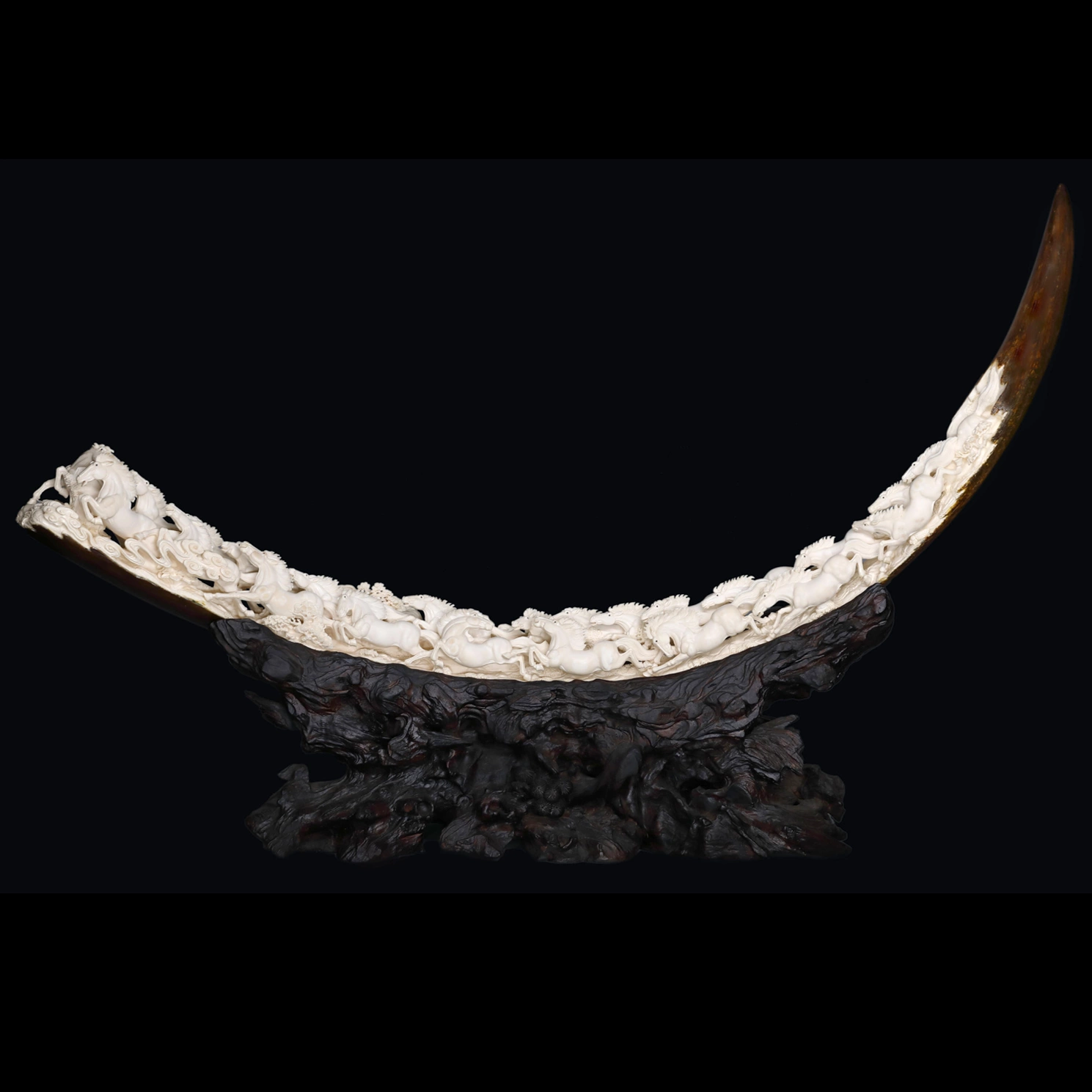
The mammoth tusk composition "The Rumble of Ten Thousand Hooves" is a large-scale work of art in which the natural form of the material is transformed into a dynamic and intense scene. It is based on a single, expressively curved tusk that preserves the natural transitions of shades — from light milky to rich amber-brown at the ends. The carving organically follows the shape of the material, emphasizing its movement and creating a feeling of continuous flow. The massive base of dark root wood enhances the contrast and adds monumentality to the composition.
The plot unfolds along the entire length of the tusk, where many galloping horses are depicted in rapid motion. The image of a herd captured by a single impulse symbolizes power, freedom, striving for a goal and unstoppable energy. In the Eastern tradition, the horse is associated with success, career growth and overcoming obstacles, and the multiplicity of figures enhances the importance of rapid advancement and large-scale success. Here, each figure is included in the overall movement, forming a single rhythm that resembles a growing rumble — the very "rumble" that is included in the name.
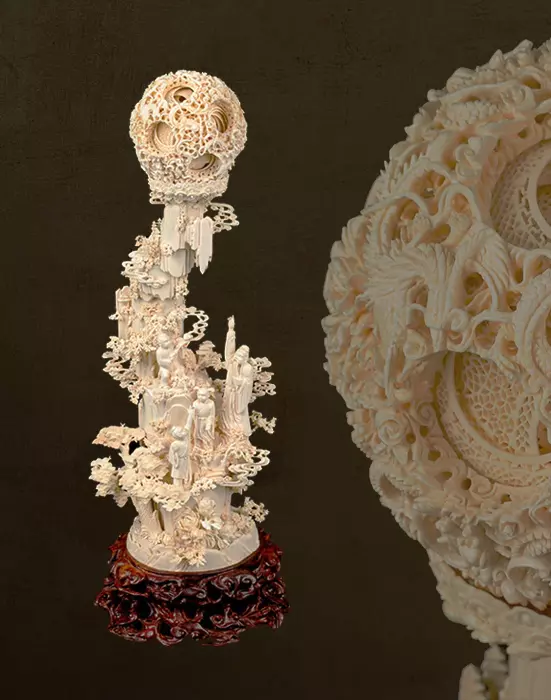
The craftsmanship of Cantonese carvings is evident in a high degree of detail and intricate composition.: the musculature, manes, dynamics of poses and the direction of movement are carefully worked out. The multi-layered relief creates depth, making the scene appear voluminous and lively. The horses seem to come out of the plane of the tusk, and the play of light on the carved surfaces enhances the feeling of speed and tension.
"The Roar of ten thousand hooves" embodies the idea of powerful forward movement, energy that knows no barriers, and the rapid achievement of goals. This work fills the space with a sense of strength, confidence and scale, becoming a symbol of victory, pressure and continuous development.