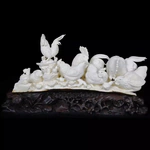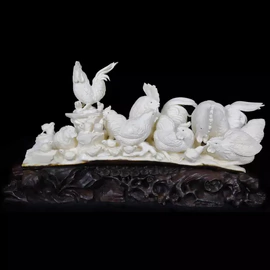


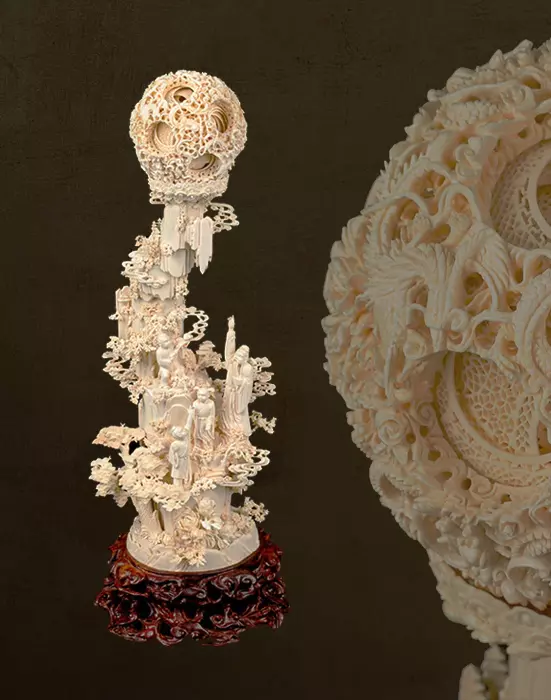
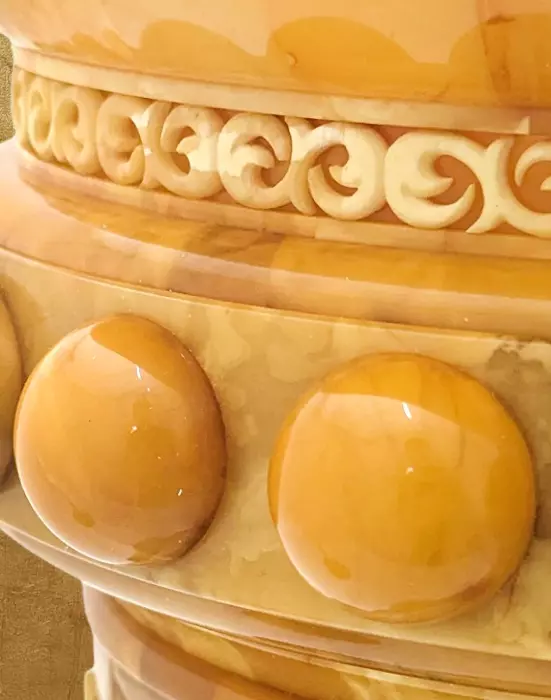
















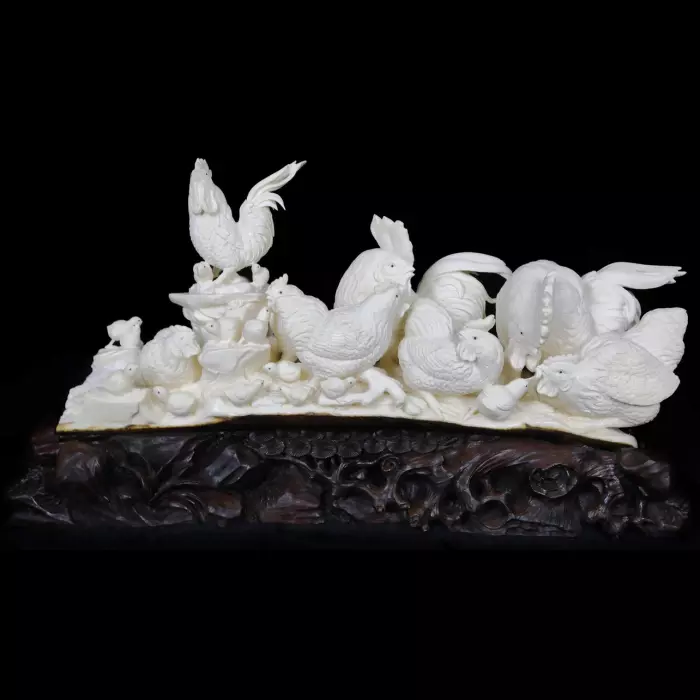

The mammoth tusk composition "Where Harmony Begets Abundance" is a complex multi-figure scene embodying the idea of natural balance and well-being. The base is made of a single mammoth tusk with a soft, noble texture and natural shades — from milky white to warm cream. The sculptural group is placed on a massive stand made of dark wood with deep carvings, reminiscent of a natural landscape and creating a contrasting, expressive frame.
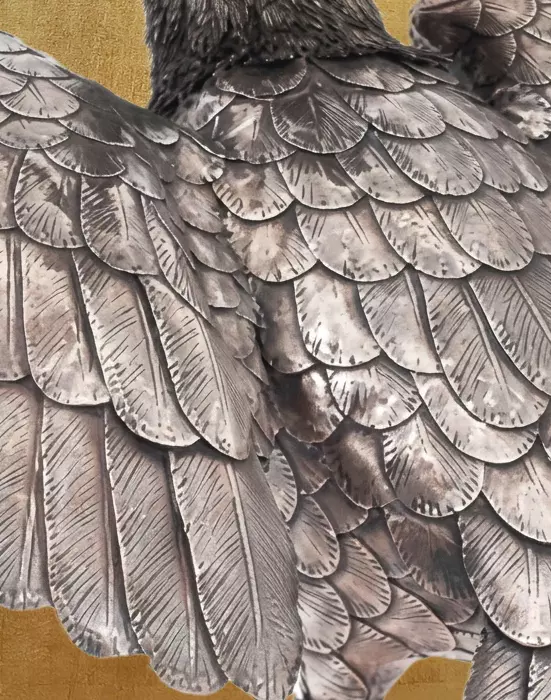
In the center of the composition is a rooster perched on a small hill, symbolizing vigilance, the beginning of a new day and vitality. Chickens and chicks are arranged around him, forming a whole, living scene of family unity and care. The plastic shapes convey a calm, measured movement: the birds seem to interact with each other, creating a sense of the natural flow of life. A lot of small details — from the texture of the feathers to the poses and turns of the heads — emphasize the individuality of each figure and enhance the realism of the composition.
The Cantonese carving technique is revealed in the filigree elaboration: the fine lines of the plumage, the soft transitions of the shapes, the depth of the relief create layering and visual saturation. The composition is perceived as a whole plot, which reveals itself upon careful examination — the gaze consistently moves from the central image to the surrounding elements, revealing new nuances and details.
"Where harmony breeds abundance" carries the symbolism of prosperity, family well-being and sustainable prosperity. In the Eastern tradition, the poultry scene is associated with order, fertility and stability, where each creature takes its place in the overall structure. This work acts not only as a decorative object, but also as a semantic accent of the interior, reflecting the idea of inner balance, from which abundance and confidence in the future are born.