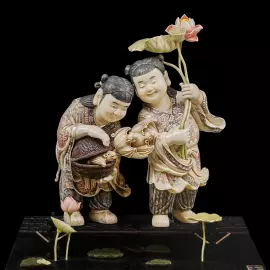

















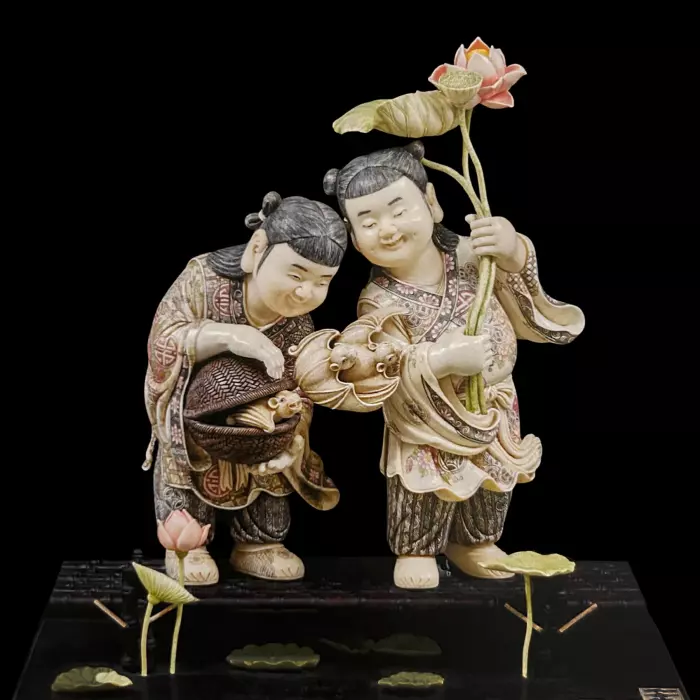
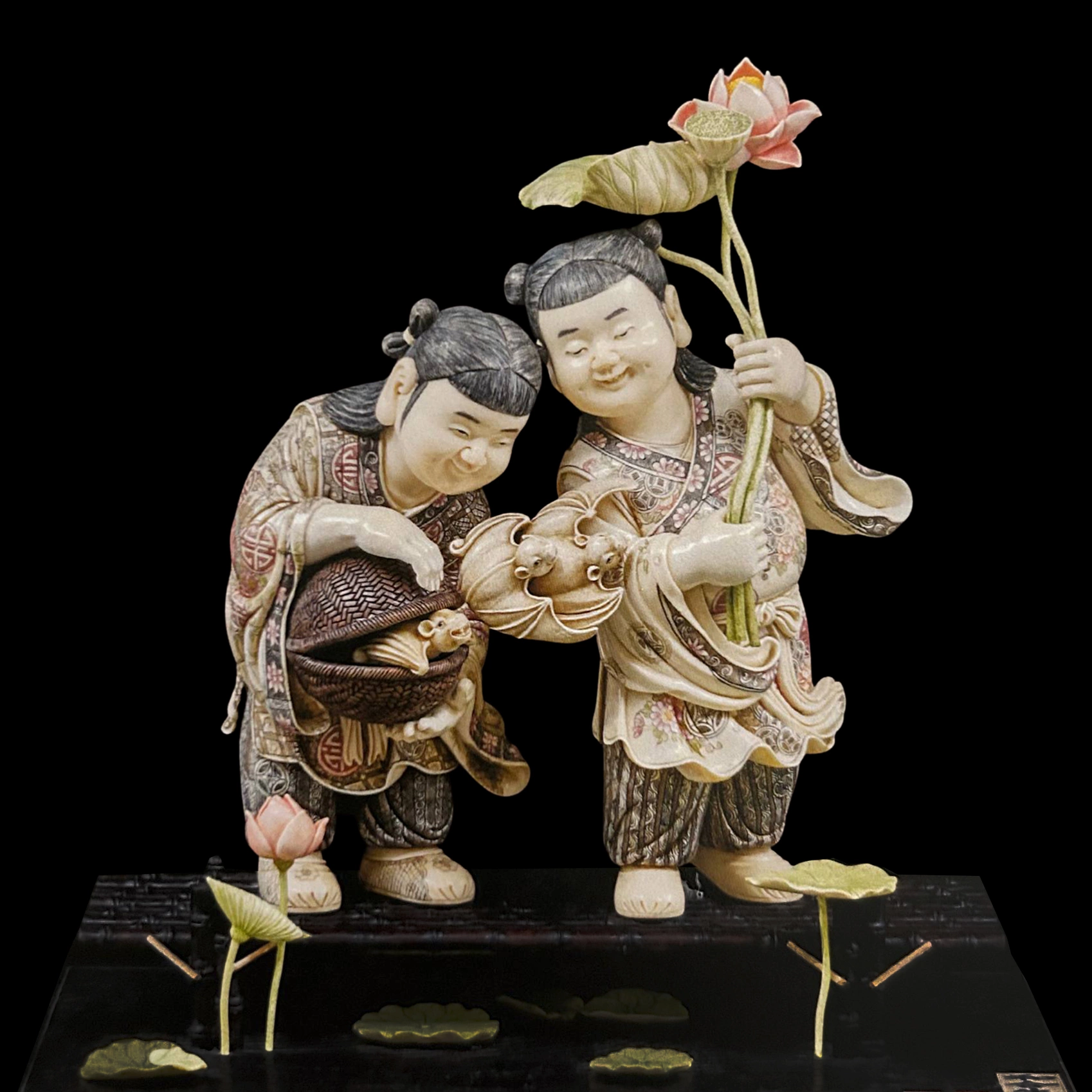
Mammoth tusk composition "Harmony breeds wealth"
14 040 000 ₽
0
Add a gift label
Engraving on the nameplate 1500 ₽
Delivery options
Worldwide
Delivery by a transport company in the shortest possible time
VIP air delivery
Delivery rates
About this product
The mammoth tusk composition "Harmony begets wealth" reveals one of the important principles of Eastern philosophy — the idea that true well-being is born from harmony, friendship and mutual support. In traditional Chinese culture, wealth is understood not only as material abundance, but primarily as a state of inner balance and harmony between people.
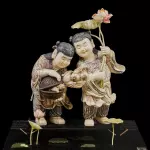
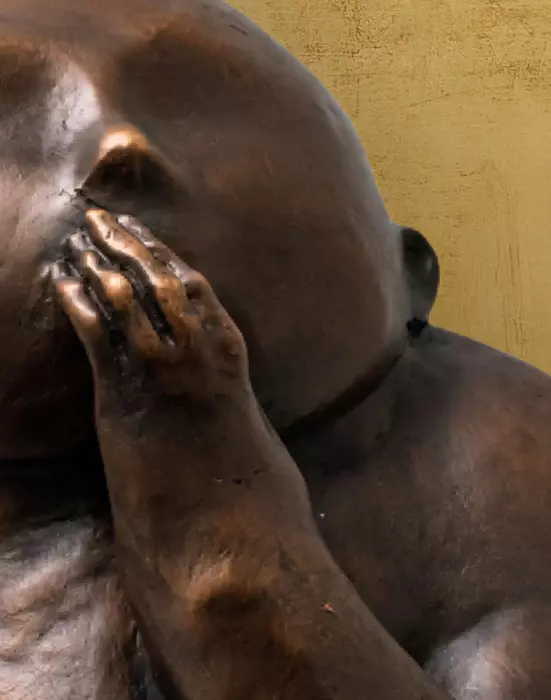
In the center of the composition are two children, whose faces are illuminated by calm joy and sincere curiosity. Their figures lean slightly towards each other, as if they share a common moment of discovery. One of them holds a basket with small frogs, an ancient symbol of good luck and prosperity, often associated with the influx of wealth and favorable changes. The second child holds out his hand, carefully observing the movement of a living being, as if passing on a small miracle of nature to his companion.
In the boy's hands stands a lotus stalk, one of the most revered images of Oriental symbolism. The lotus rises from the water clean and unharmed, embodying the idea of spiritual purity, harmony and continuous renewal of life. The flower and its large leaves create a kind of quiet natural vault over the children, under which a scene of friendship and harmony unfolds.
The whole composition is filled with a soft sense of calm and well-being. Light folds of clothing, attentive plastic gestures and warm facial expressions create the feeling of a living scene from everyday life, in which simple human consent becomes a source of real wealth. The light tusk of the mammoth allows the master to convey the finest details — from the patterns on the clothes to the texture of the basket and the lotus petals.
The work seems to recall the ancient wisdom of the East: when harmony reigns between people, the world itself begins to give abundance. Harmony attracts well-being as naturally as water nourishes a blooming lotus.
Characteristics
- Country of manufacture:
- China
- Material:
- the mammoth tusk, The ebony tree
- Technique of execution:
- Beijing bone carving
- Sizes:
- 47 × 30 cm.
- Weight:
- 10.51 kg.
Similar products