





















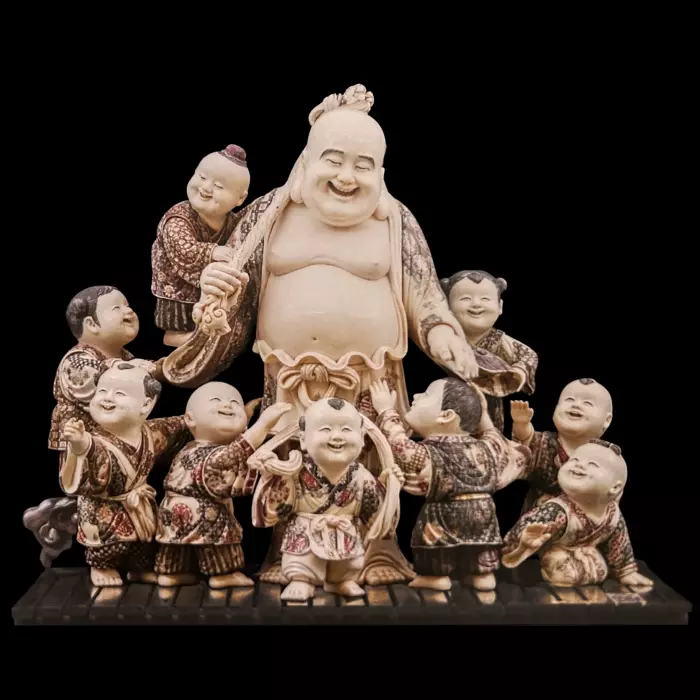
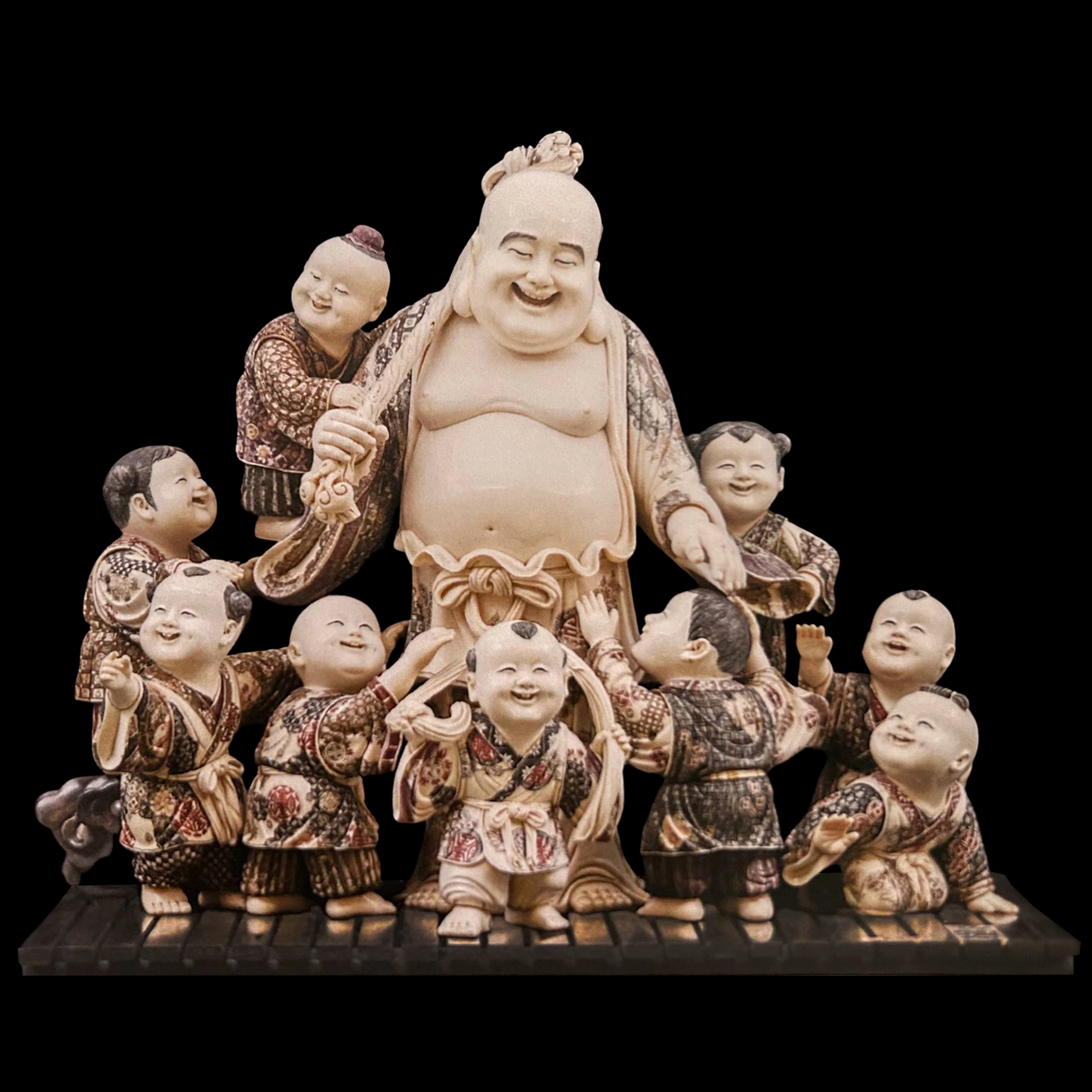
Mammoth tusk composition "Nine children frolic with a Buddha"
39 546 000 ₽
0
Add a gift label
Engraving on the nameplate 1500 ₽
Delivery options
Worldwide
Delivery by a transport company in the shortest possible time
VIP air delivery
Delivery rates
About this product
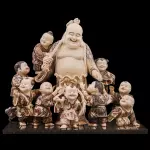
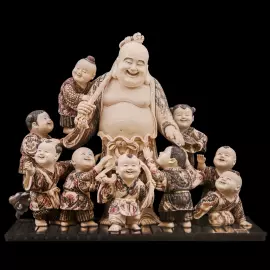
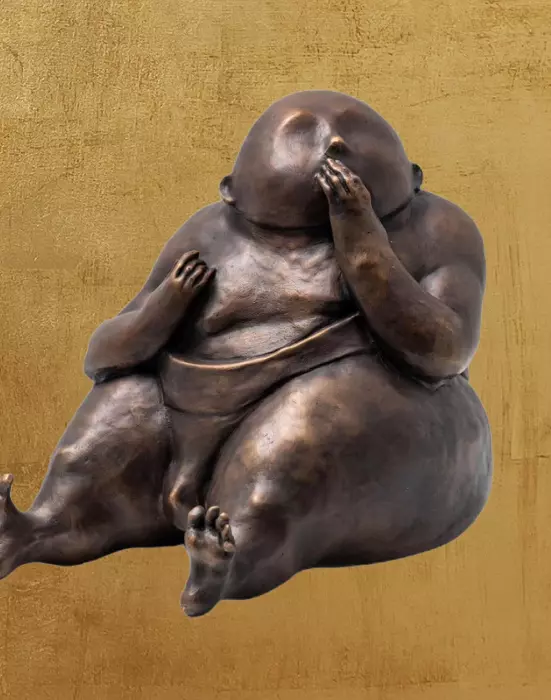
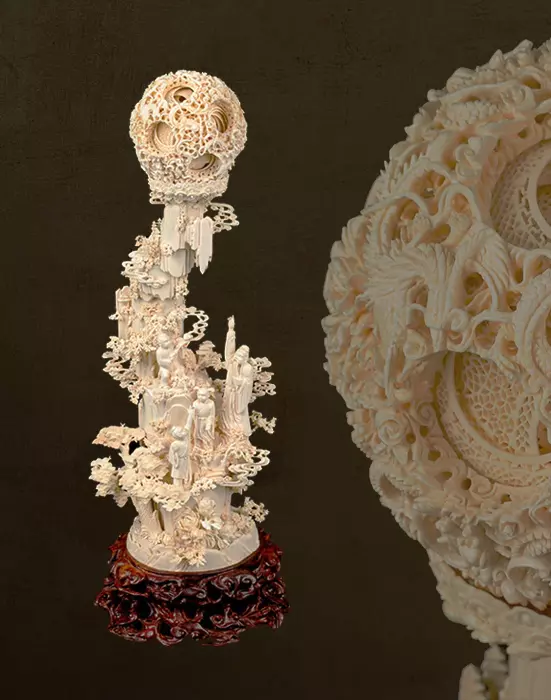
The mammoth tusk composition "Nine Children Frolic with a Buddha" embodies one of the most favorable themes of the Chinese symbolic tradition. In the center of the stage is the smiling Buddha Maitreya, the embodiment of the future Buddha, a symbol of joy, abundance and spiritual well—being. His calm and friendly smile radiates a sense of inner peace and harmony, as if reminding that true happiness is born from simplicity, kindness and an open heart.
Nine children are playing around him, creating an atmosphere of lively, joyful bustle. They reach out to the Buddha, hold on to his clothes, laugh, run and raise their hands, as if sharing their fun and carelessness. In Chinese culture, the image of children symbolizes procreation, vitality and the blessing of heaven. The number nine has a special meaning — it is considered the number of fullness, supreme well-being and longevity.
Such a plot carries deep benevolence. He expresses the dream of a big family filled with happiness, harmony and numerous offspring. The Buddha in the center of the composition acts as a source of blessing, around which life, joy and the future generation gather.
The special expressiveness is achieved thanks to the skill of carving on a mammoth tusk. Each child's figure is conveyed with an individual character: different facial expressions, hand movements, folds of clothing and the smallest details create the feeling of a real live scene. The central figure of the Buddha, gently towering over the children, gives the composition a sense of balance and inner light.
This work embodies the ancient philosophy of well-being, where happiness is measured not by wealth, but by family harmony, children's laughter and kindness of the heart. In the image of Buddha and frolicking children, the ideal of a life filled with joy, abundance and the blessing of fate is revealed.
Characteristics
- Country of manufacture:
- China
- Material:
- the mammoth tusk, The ebony tree
- Technique of execution:
- Beijing bone carving
- Sizes:
- 63 × 42 × 76 cm.
- Weight:
- 25.8 kg.
Similar products