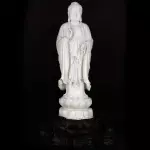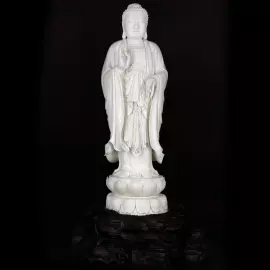





























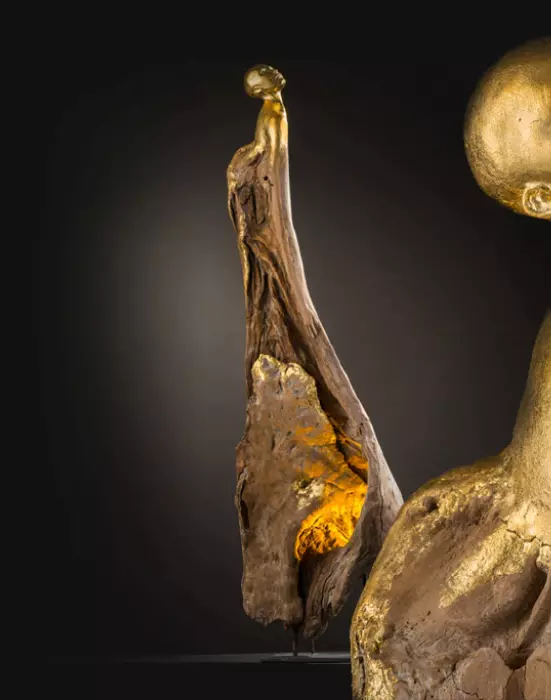







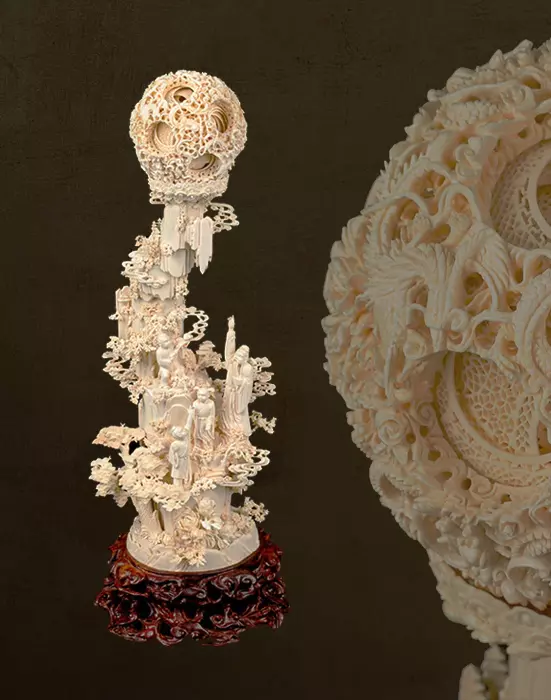
















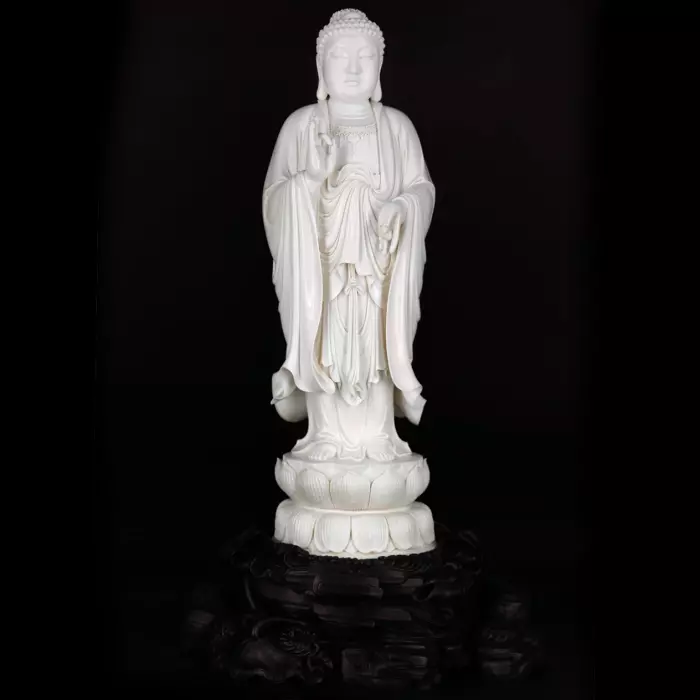
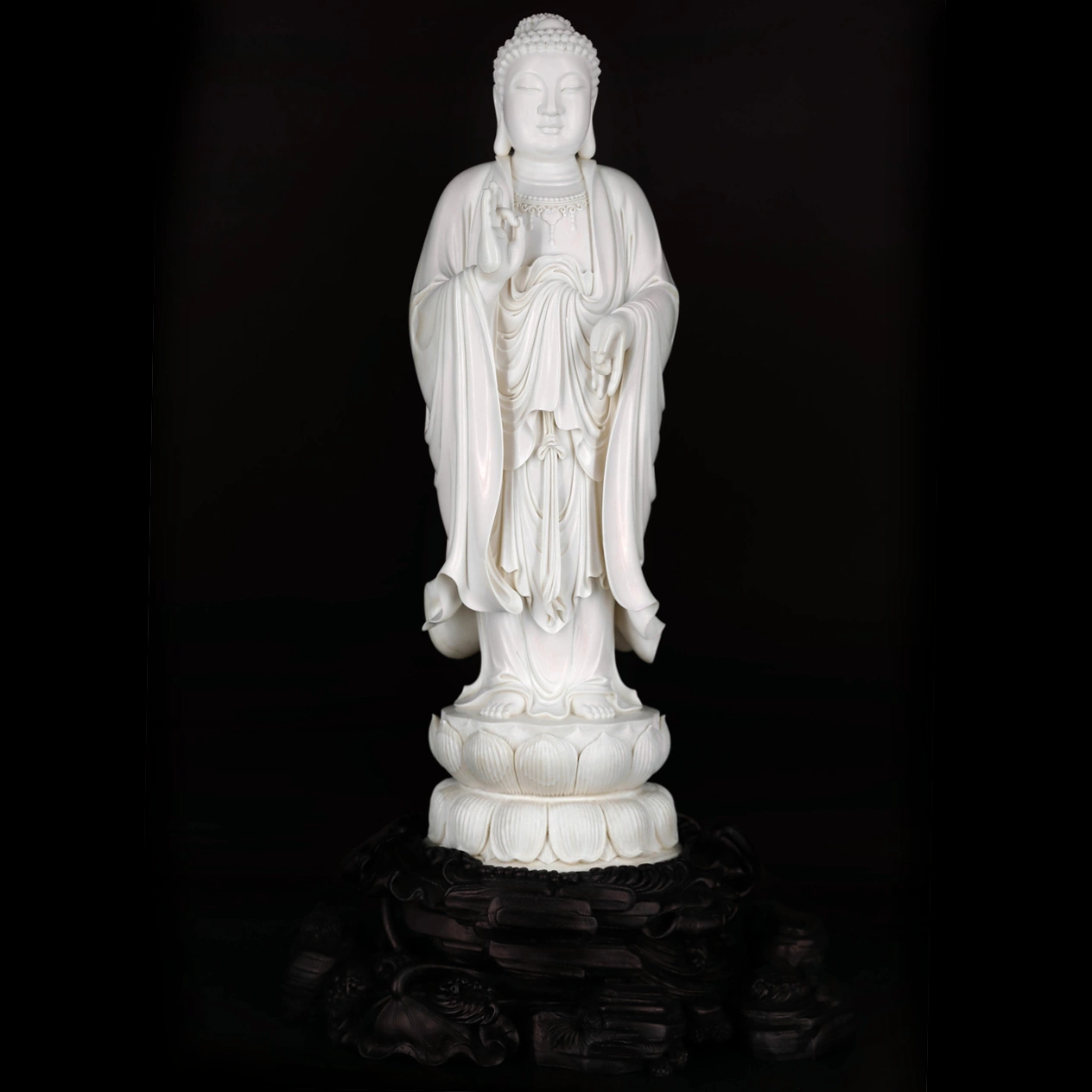
The mammoth tusk composition "Buddha on a Golden Lotus" embodies one of the central images of the Buddhist tradition — the state of enlightenment achieved through purification of consciousness and liberation from illusions. The figure of the Buddha, who is in peace and inner concentration, symbolizes absolute balance, in which worries, desires and contradictions disappear.
The lotus on which the Buddha stands is of key importance in Eastern symbolism. He grows out of muddy water, but remains spotlessly clean, representing the image of a person's spiritual path. In Chinese culture, the "golden lotus" reinforces this meaning by adding the idea of supreme value and perfection, a state to which consciousness aspires after achieving enlightenment.
A hand gesture resembling a mudra of blessing or teaching indicates the transmission of knowledge and protection. In the Buddhist tradition, such gestures are perceived as the language through which the Buddha addresses the world, guiding, soothing and supporting. This is not just an image, but a symbol of the living presence of the teaching, capable of influencing space and the inner state of a person.
The smooth lines of the clothes and the softness of the shapes create a feeling of fluidity and silence, in which the boundaries between the outside and the inside dissolve. In Chinese philosophy, such harmony is perceived as the highest state — when a person does not oppose the world, but is in complete agreement with it.
"Buddha on a golden lotus" is an image of purity, enlightenment and inner peace. The composition combines the rarity of a mammoth tusk, refined plastics and deep spiritual symbolism, creating a work filled with light, clarity and a sense of perfect harmony.