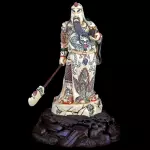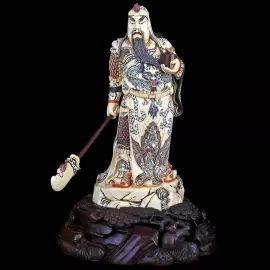




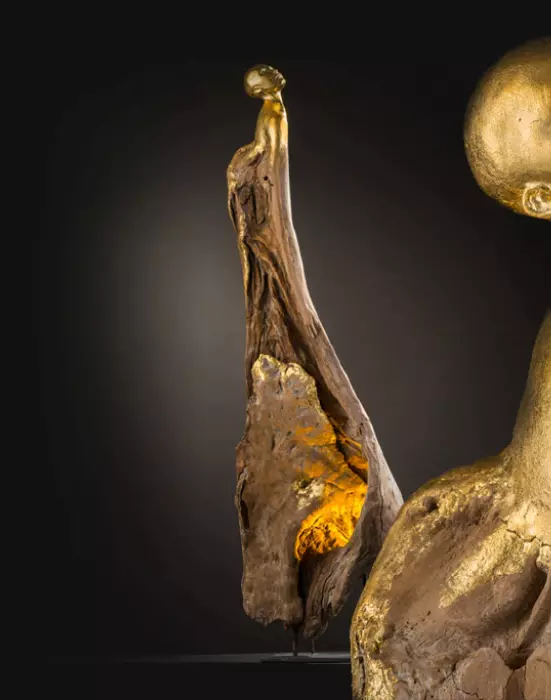
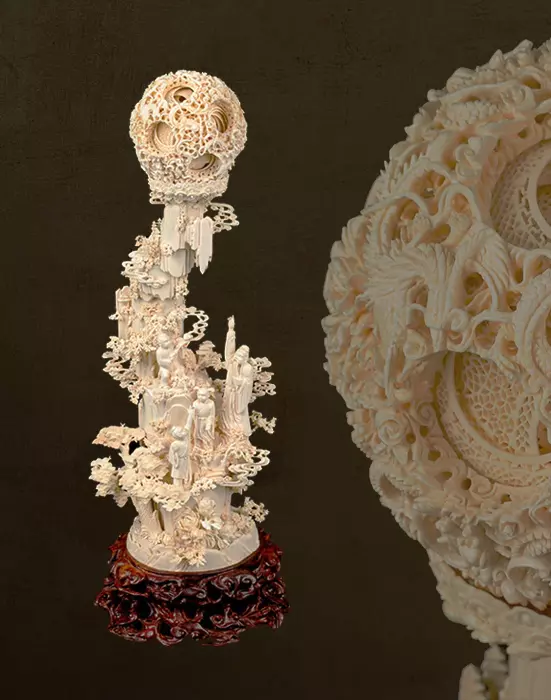
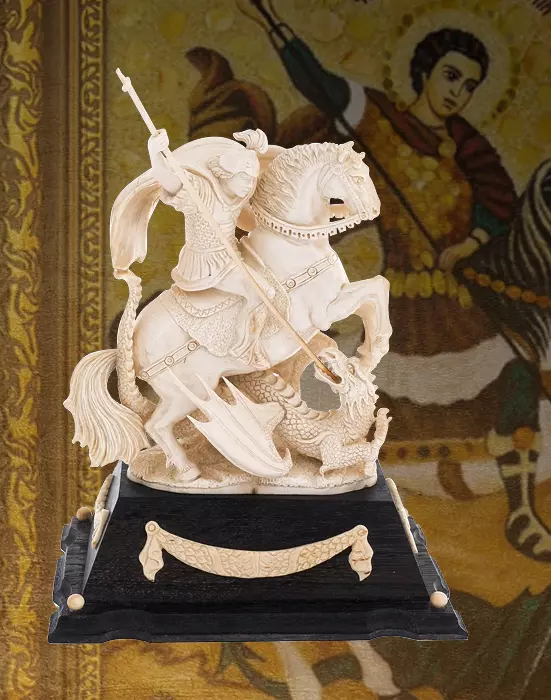
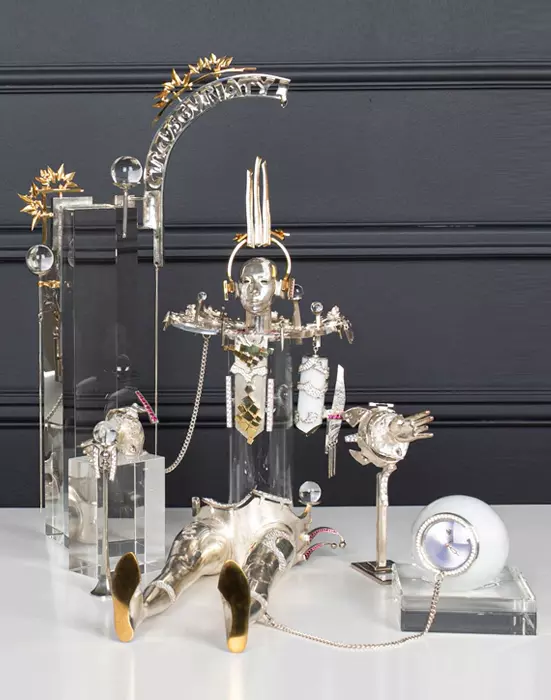










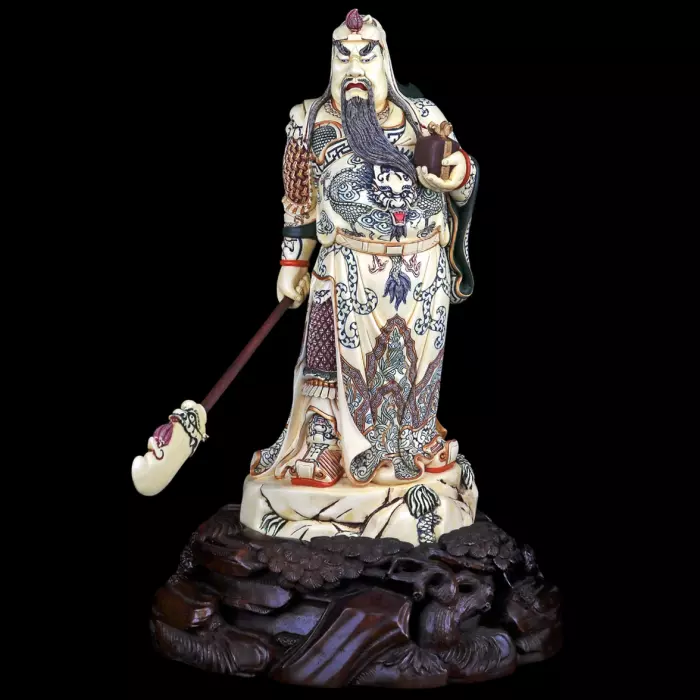
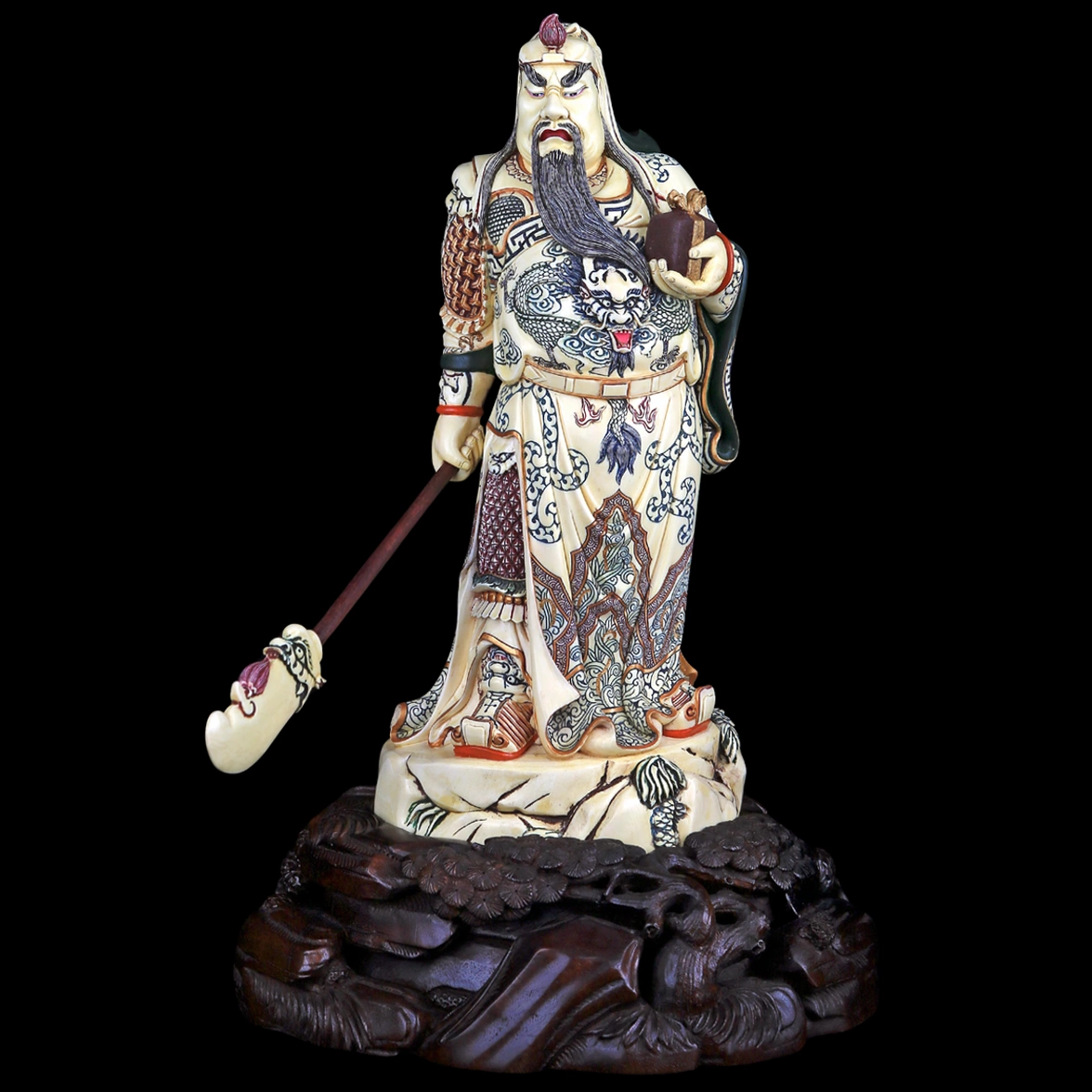
The mammoth tusk composition "God of Longevity" reveals a different, more rare and multi—layered image of longevity in the Chinese tradition - not only as a calm passage of time, but as a force that protects life and preserves its stability. The viewer is presented with a figure combining the features of military determination and spiritual maturity, which refers to the idea of active longevity — a life filled with strength, control over circumstances and internal discipline.
In Chinese culture, long life is valued not by itself, but as a result of the harmony of body, spirit and destiny. This image emphasizes that longevity requires not only blessings, but also inner strength — the ability to withstand chaos, maintain order, and protect what has been achieved. Military attributes in this context become a symbol of the protection of vital energy, stability and control over time.
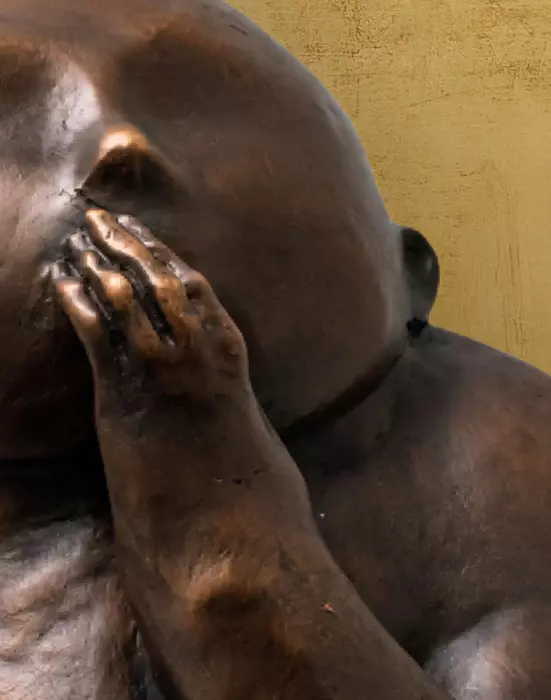
An expressive face, a stern look and a powerful figure form a sense of authority and confidence. This is not a gentle, contemplative longevity, but an active state in which a person remains strong, collected and able to influence his fate. In Chinese philosophy, this combination of strength and wisdom is considered the ideal state of maturity.
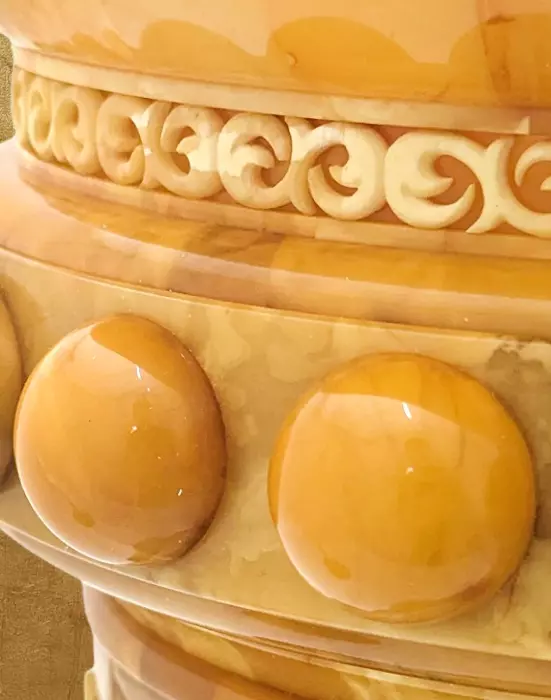
Ornaments and details of clothing enhance the symbolism of power, status and well-being. They point to the connection of longevity with social success, respect, and a stable position in the world. Thus, the composition combines several levels of meaning: physical life expectancy, inner strength and external well-being.
The "God of longevity" in this incarnation is a way of protecting life, fortitude, and time control. The composition combines the rarity of a mammoth tusk, complex artistic elaboration and deep symbolism, creating a work filled with the energy of stability, power and lasting well-being.