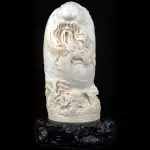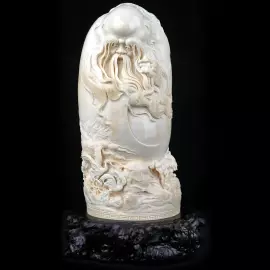













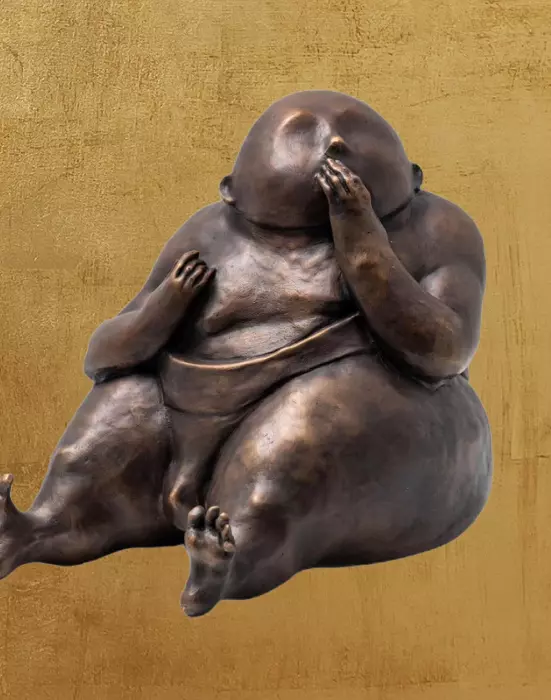











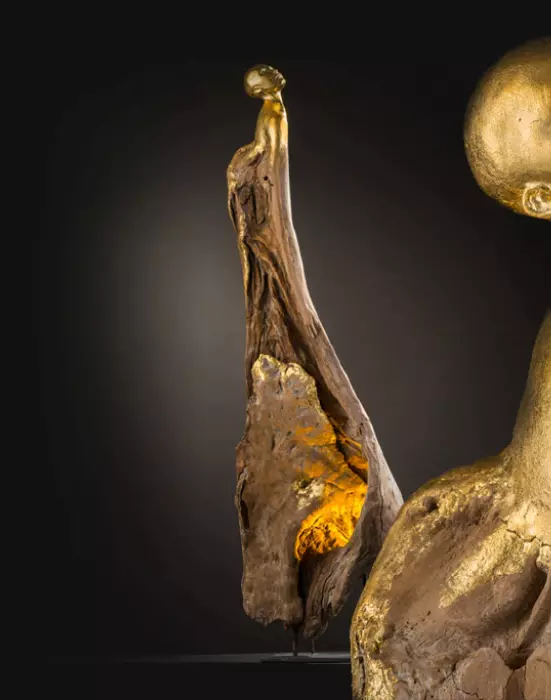







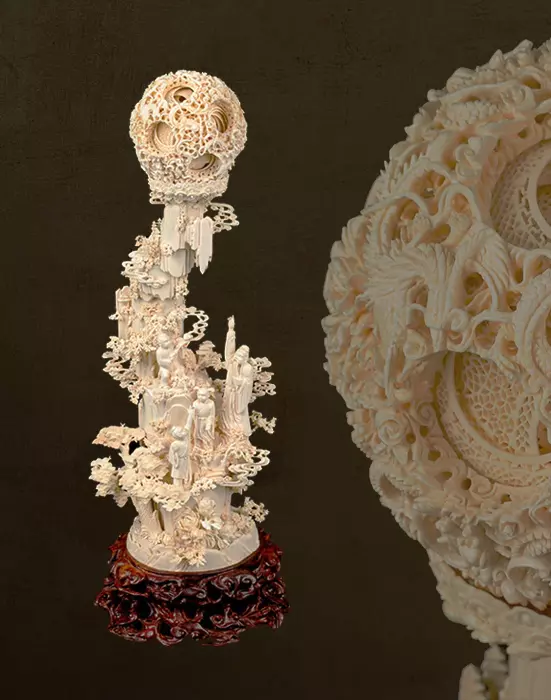


















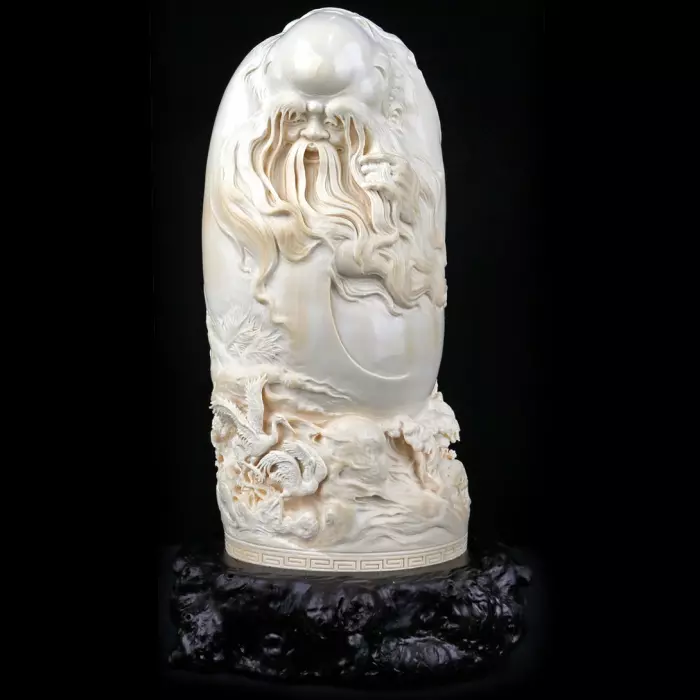
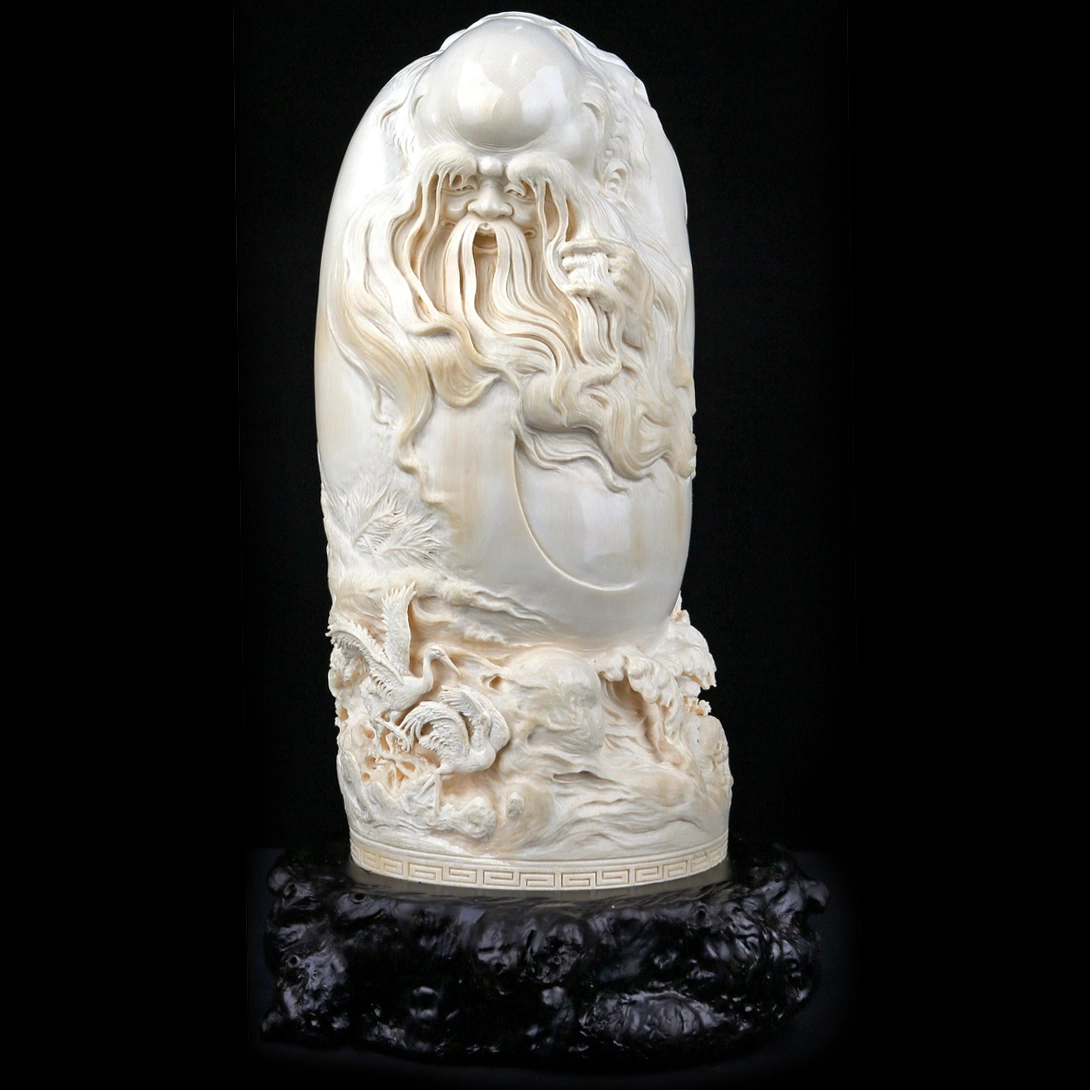
The mammoth tusk composition "God of Longevity" embodies one of the key images of the Chinese symbolism of well—being - Shouxin, the deity of long life, wisdom and a calm, harmonious existence. His recognizable appearance with a high forehead, associated with heavenly energy and accumulated wisdom, reflects the idea of longevity not only as life expectancy, but as its qualities — filled with awareness, balance and inner peace.
In Chinese culture, longevity is perceived as the highest value associated with human harmony with nature and cosmic order. The image of Shouxing symbolizes not just long years, but a life lived in harmony with the Tao, where the body, spirit and the surrounding world are in balance. His figure is often accompanied by natural motifs that emphasize the connection with the eternal cycles of life.
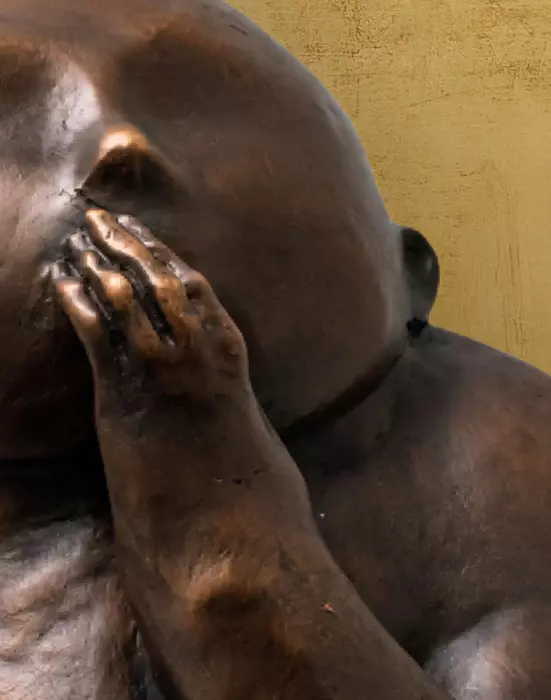
Expressive facial plasticity and a long flowing beard enhance the feeling of time passing calmly and continuously. There is no tension or struggle in this image — on the contrary, it conveys a state of acceptance and deep inner stability. This perception of longevity is linked to the philosophy of soft power, where true resilience is achieved through flexibility and harmony.
Additional symbols traditionally associated with the image of the god of longevity enhance the meaning of the composition: crane, deer, peach of immortality — each of them in Chinese culture is associated with vital energy and continued existence. Even if they are only intended or implied, their presence forms a coherent symbolic language that is understandable in a traditional context.
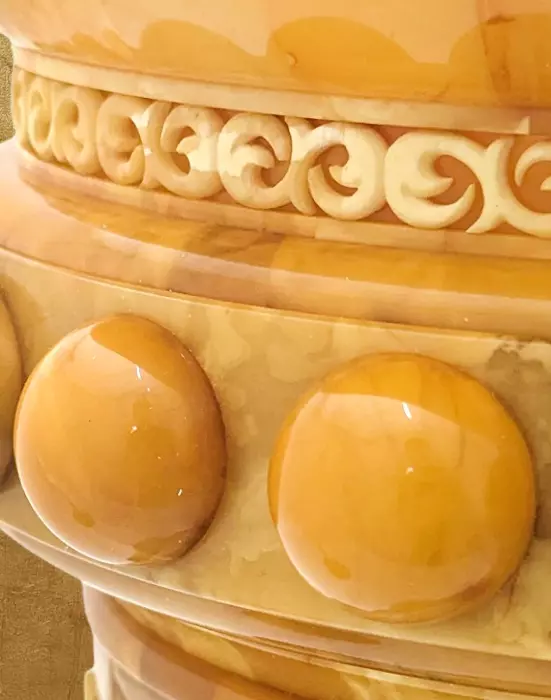
The "God of longevity" is an image of blessing for a long, peaceful and fulfilling life, a sign of stability, wisdom and inner harmony. The composition combines the rarity of a mammoth tusk, virtuoso carving and deep cultural symbolism, creating a work filled with a sense of time, strength and quiet well-being.