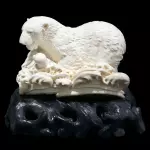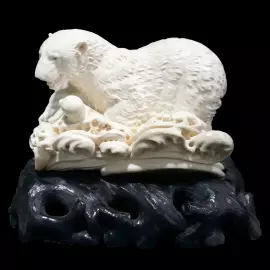











































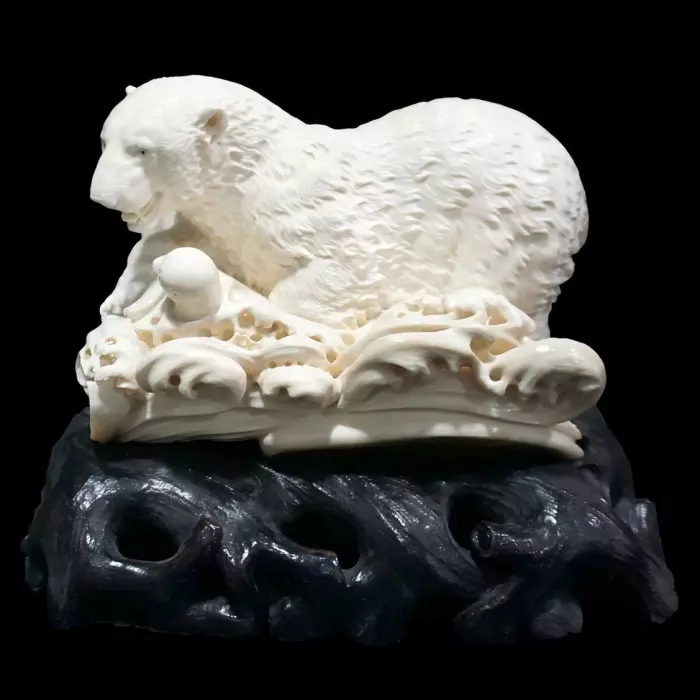
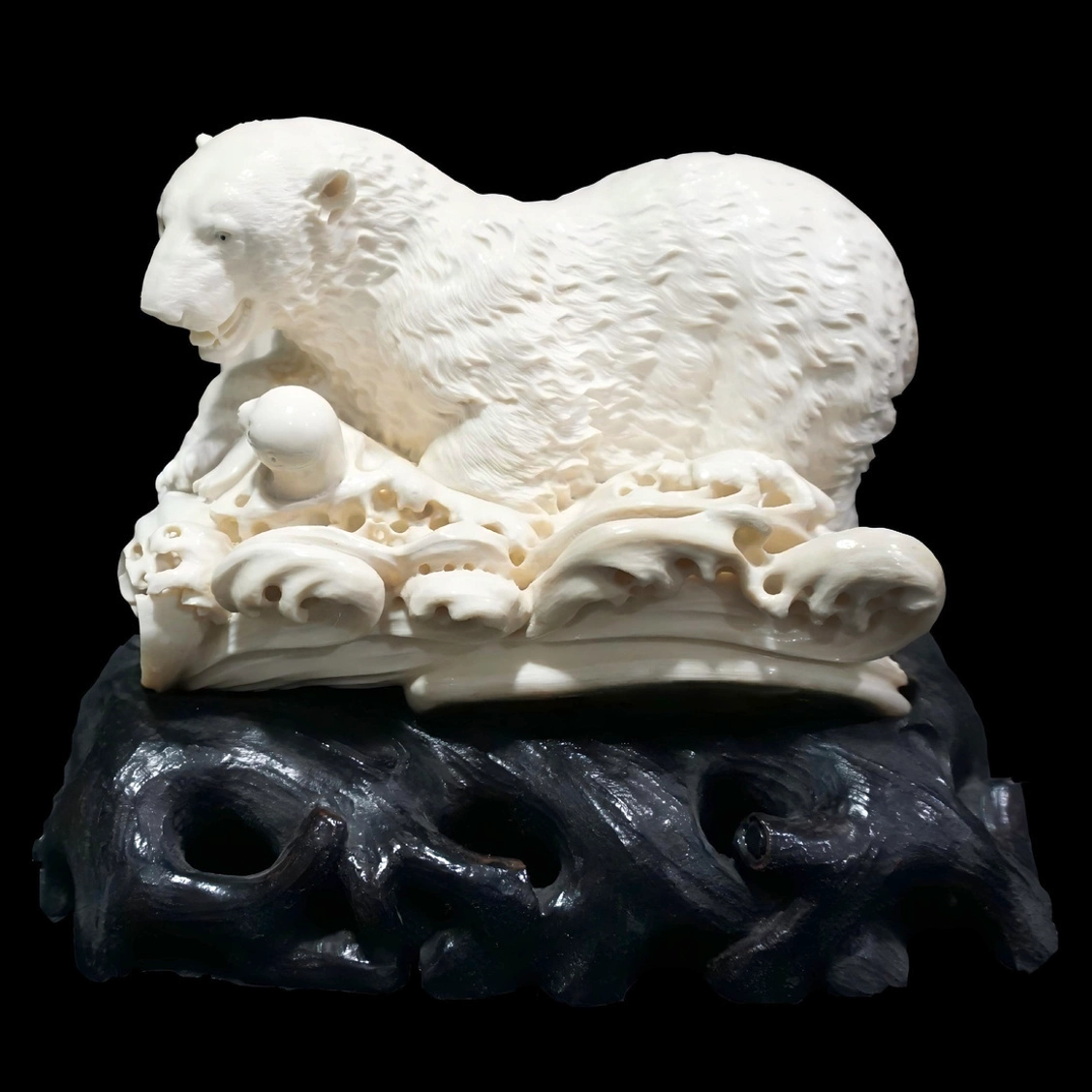
The composition of the mammoth tusk "Polar Bear" is an expressive sculptural work that combines natural power and restrained plastic elegance. The base is made of a single mammoth tusk with a characteristic velvety texture and soft transitions of shades — from cold milk to warm cream. The bear figure occupies a central position, based on a stylized relief resembling icy shapes or northern waves. The composition is mounted on a massive stand made of dark wood with deep, flowing carvings that create contrast and enhance the feeling of the natural elements.
The image of the bear is conveyed in a calm but internally tense state: the powerful body is slightly pushed forward, the head is lowered, the gaze is focused. The plasticity of the figure emphasizes strength and endurance, while devoid of aggression — it shows confidence and natural self-sufficiency. A complex relief unfolds under the paws and around the base, resembling ice surges or the sea surface, enhancing the feeling of northern space and emphasizing the connection of the animal with its environment.
The Cantonese carving technique manifests itself in the finest rendering of the texture of wool: the surface of the body is covered with soft, rhythmic strokes, creating a feeling of dense fur. Attention to detail — from the shape of the paws to the expression of the muzzle — creates a realistic but artistically generalized image. The contrast between the light tusk and the rich dark base enhances the depth of the composition and makes it visually expressive.
The "Polar bear" carries the symbolism of strength, endurance and inner stability. This image is associated with the northern element, where survival requires a balance between power and tranquility. The composition becomes not just a decorative object, but a semantic accent of space, reflecting the idea of a force that maintains balance even in the harshest conditions.