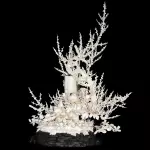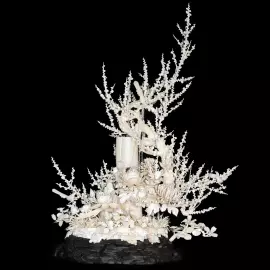












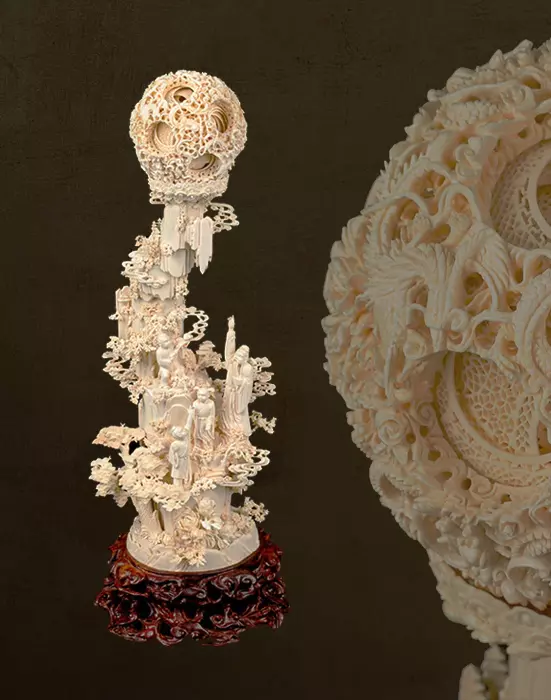

















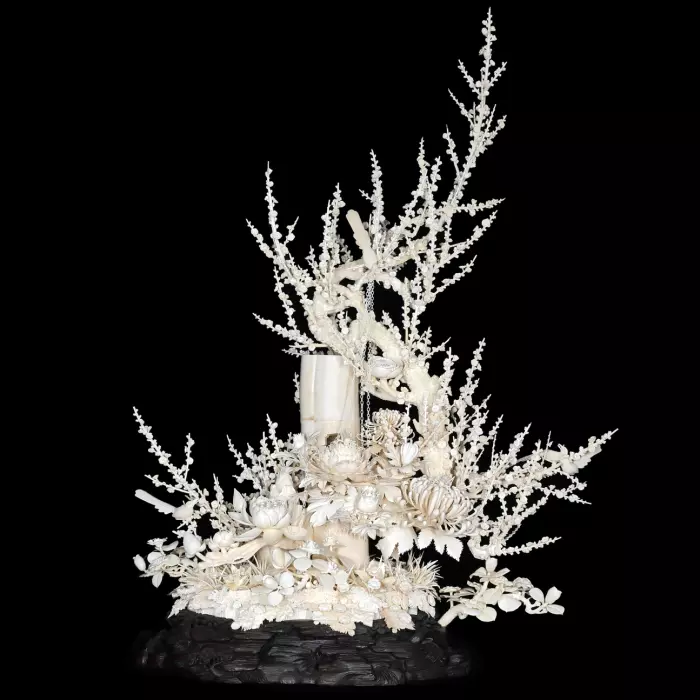
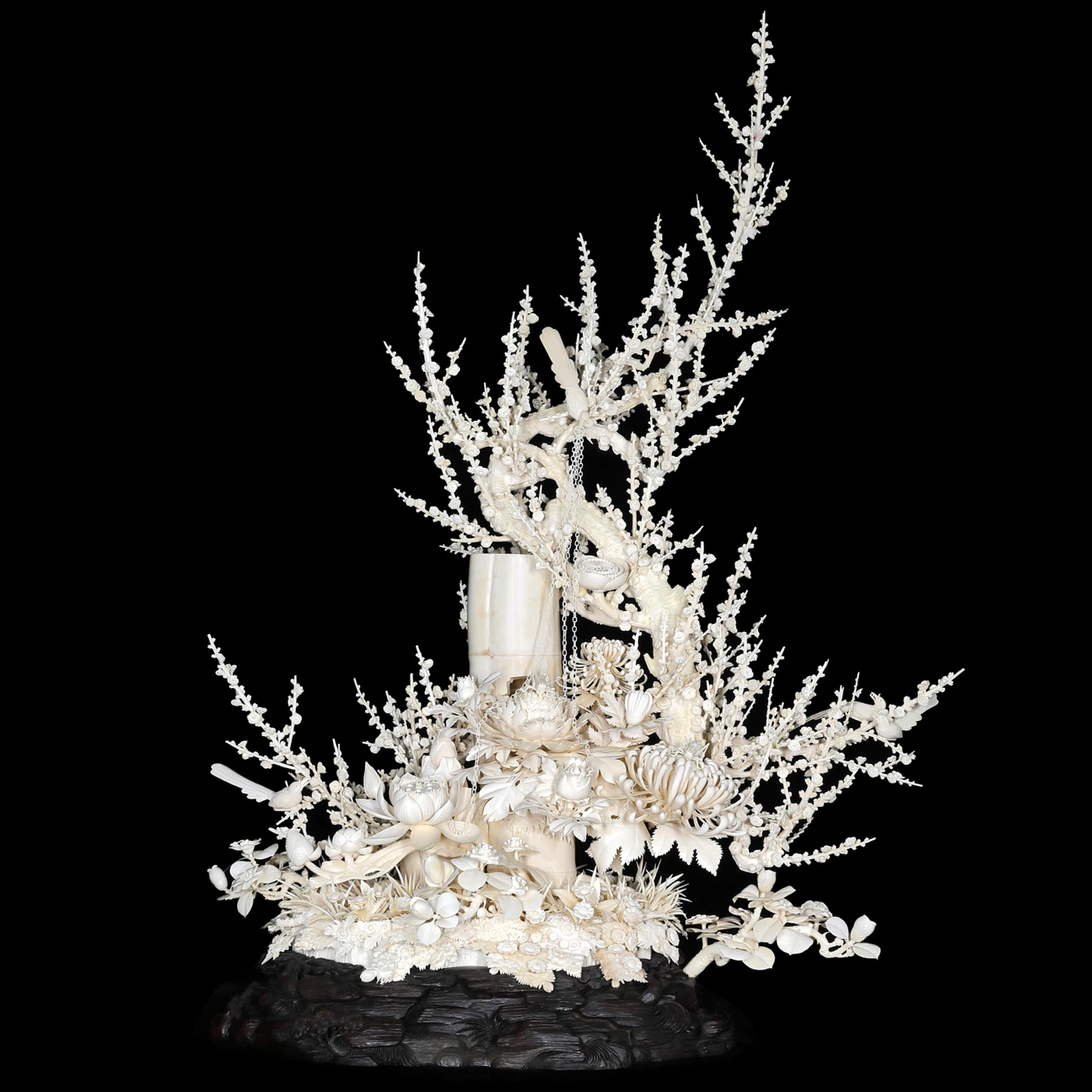
The mammoth tusk composition "The Bright Procession of the Seasons" is a complex piece of oriental carving in which natural motifs are combined into a single symbolic image of the continuous flow of time. The sculpture is made of mammoth bone, a rare natural material with a soft creamy hue and a noble texture that allows the master to convey the finest details and expressive plasticity of the form.
The central part of the composition is formed by an elegant branch of a flowering tree, rising up and forming a complex decorative silhouette. The branches are covered with many small buds and flowers, conveying the feeling of nature's spring awakening. Their graceful shapes create a rhythm of light movement, as if the flowering continues right in space.
A rich floral scene unfolds at the base of the composition. Here you can see the open lotus flowers, chrysanthemums and other plants symbolizing different seasons and different states of nature. In Eastern symbolism, such a combination is often associated with the idea of harmony of the universe and the continuous renewal of life.
Birds and dragonflies, located among branches and flowers, give special expressiveness to the composition. These elements create the feeling of a living garden filled with movement and lightness. Birds traditionally symbolize joy and good fortune, while dragonflies are associated with change and the passage of time.
The masters conveyed the smallest details of nature — thin twigs, graceful leaves, complex shapes of petals and buds. This makes the composition seem almost alive, like a frozen moment in the eternal cycle of nature.
The sculpture is mounted on a dark carved wooden stand, contrasting with the light surface of the mammoth bone and emphasizing the complexity of the artistic work. This combination of materials gives the work a museum-like depth and solemnity.
The "Bright procession of the Seasons" combines the rarity of ancient materials, the highest skill of carvers and the rich symbolism of oriental aesthetics. The composition is perceived as an artistic embodiment of the continuous cycle of nature, where every season becomes part of the harmonious and eternal movement of life.