








Top.Mail.Ru
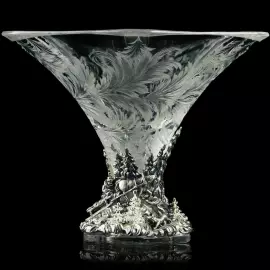
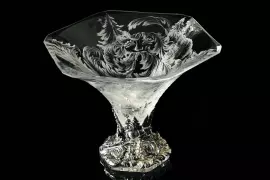
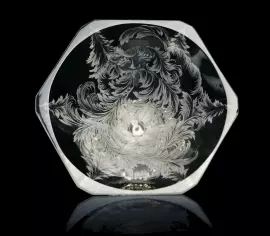
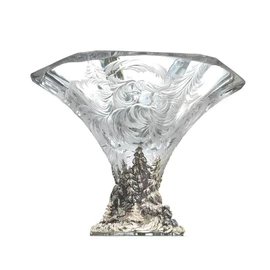
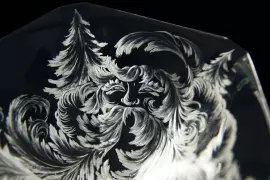
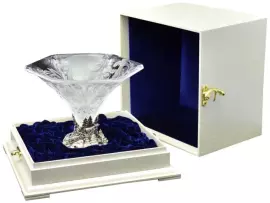
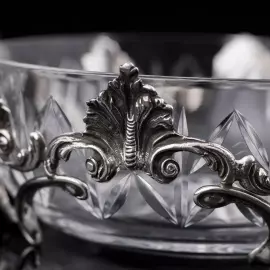
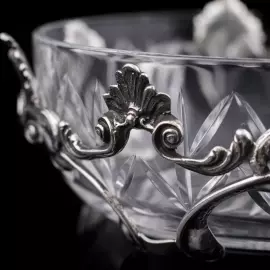
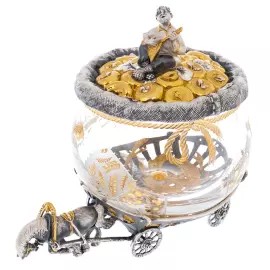
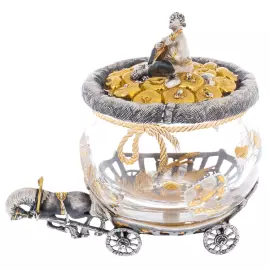
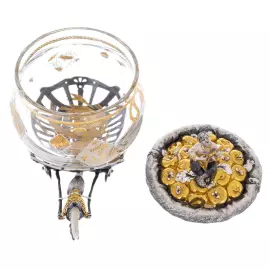
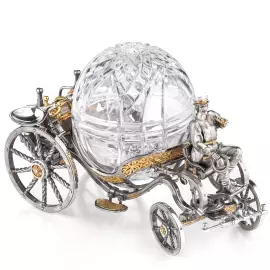
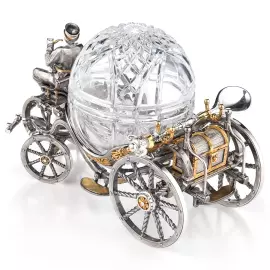
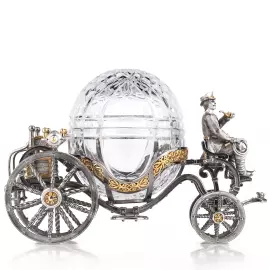
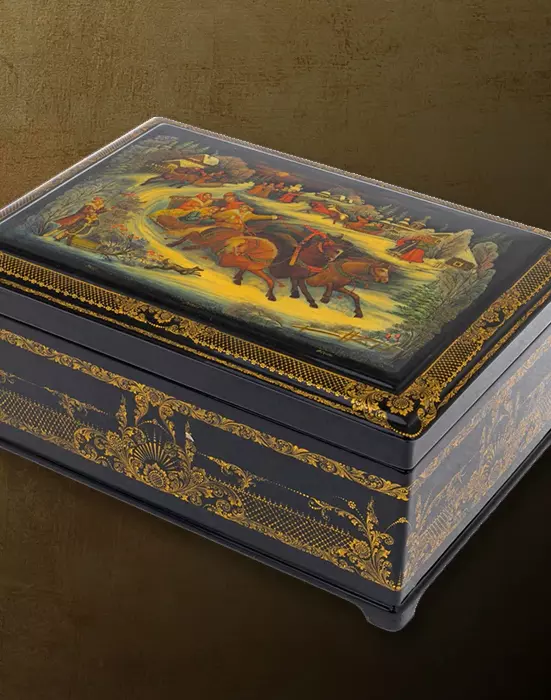
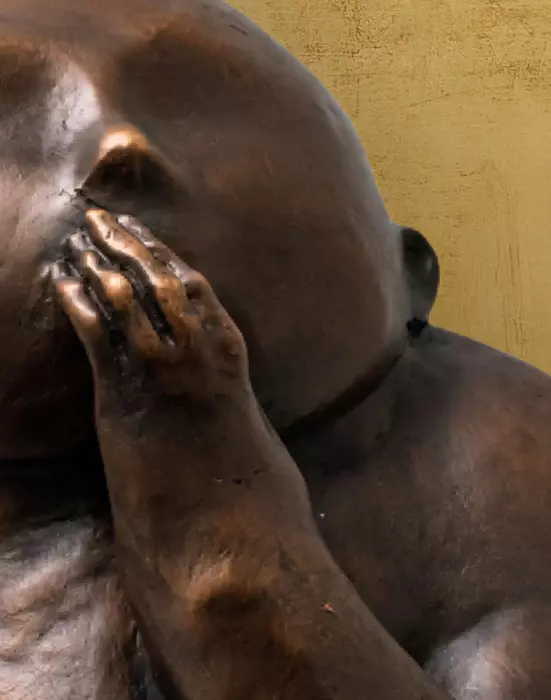
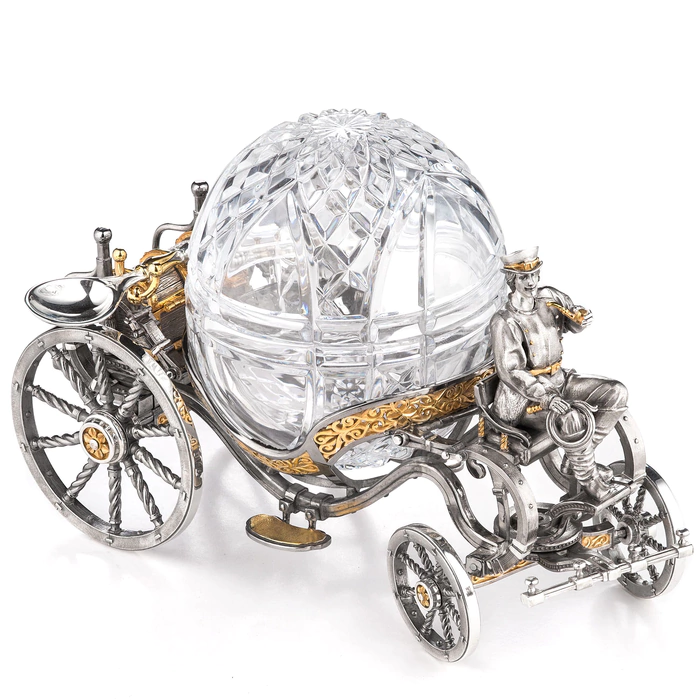
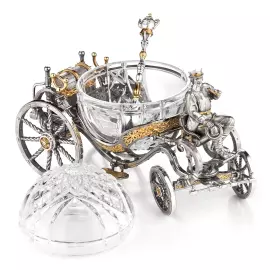
Bonbonniere made of silver and crystal "Stroller"
Altmaster Altmaster
Art. : 021-715
Clarify availablility
652 200 ₽
The discount under the loyalty program does not apply to the article 021-715
Add a gift label
Engraving on the nameplate (1500 ₽)
Wrapping
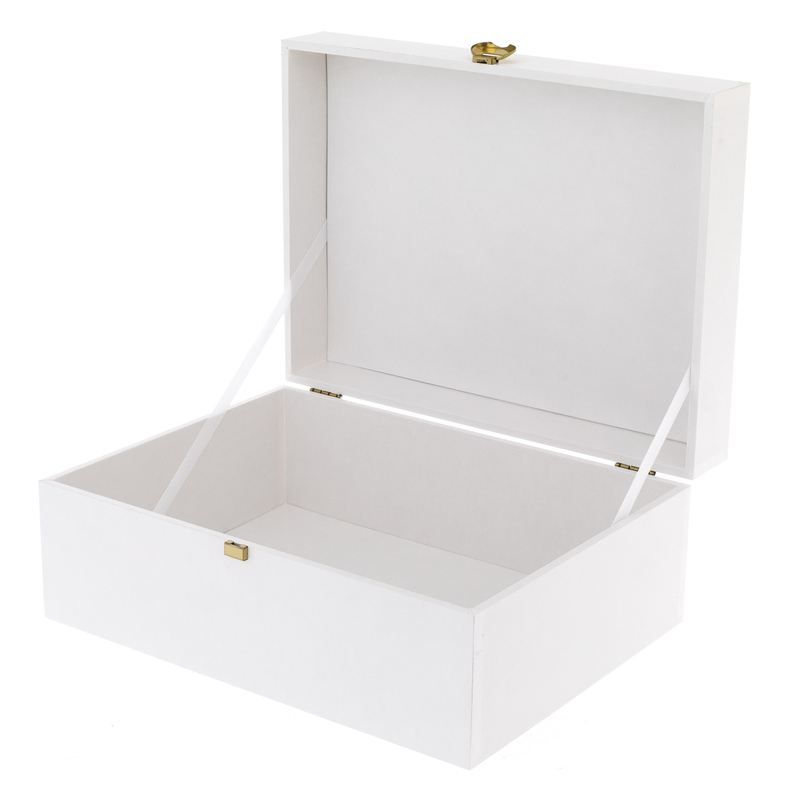
Box 35 x 26 x 15 cm (5000 ₽ )
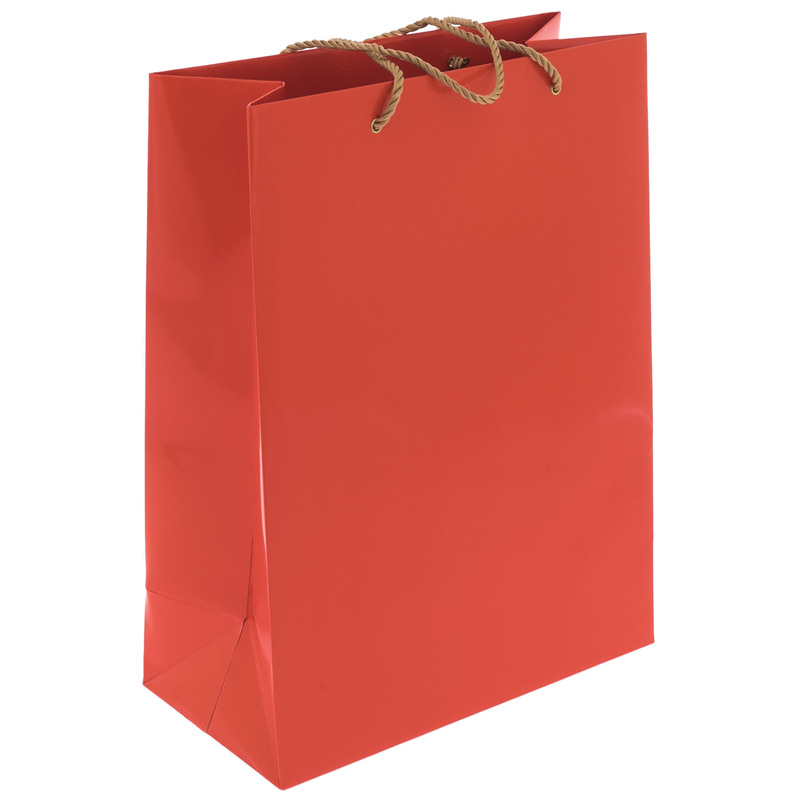
Package 30 x 40 x 15 cm (500 ₽ )
Delivery options
Moscow :
Worldwide :
  • Delivery by a transport company in the shortest possible time
  • VIP air delivery
  • Delivery rates
About this product
Art. : 021-715

Bonbonniere (French bonbonnière — "candy box", from French bonbon — candy) is a beautifully designed box for sweets.

Prototypes of bonbonnieres appeared in Ancient Rome. According to some sources using the testimonies of the Phazi family (447 BC) and Apicius (14-37 AD), on holidays in honor of marriages and births of heirs, in the house of Emperor Tiberius, as a sign of good omen, guests were treated to sweet almonds. Since sugar had not yet been discovered, it was coated with a composition of honey and flour.

The custom of putting bonbonniers on the table came to us from France. In the 16th century in Europe, not everyone could afford to buy chocolates. This delicacy was affordable only for the rich, because sugar imported from India was very expensive, and chocolate was considered a luxurious gift (only a few candies made of iced almonds were placed in bonbonniers). And especially important people invited to the event (monarchs, etc.) have a tradition of giving sweets in a box made of expensive materials (silver and crystal). At the court of the Sun King, Louis XIV of France, it was customary to thank this kind of bonbonniere for good service. The tradition was continued in 1896, when at the wedding of Prince of Naples — the future King of Italy Vittorio Emanuele with Queen Elena of Montenegro, guests presented luxurious bonbonniers with sweet almonds as offerings to the spouses.

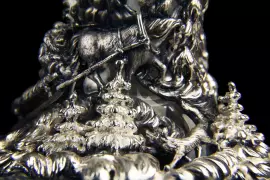
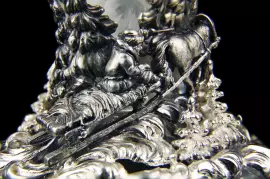
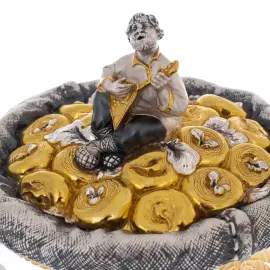
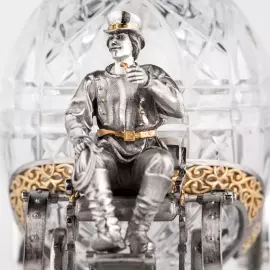
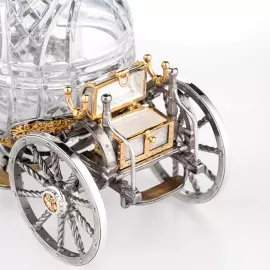
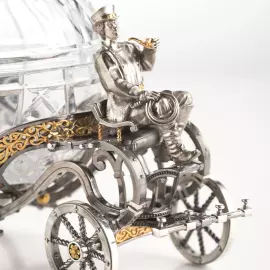
Our premium bonbonniere is also made of silver and crystal, in the form of a chaise driven by the adventurer Pavel Ivanovich Chichikov from the immortal work of N.V. Gogol.  The coachman Selifan, sitting on the box, carelessly drives the famous "Three-Bird" through his native expanses. The stroller represents Russia, which is rushing rapidly, as N.V. Gogol hopes, into a bright future.

"Oh, the three! Bird troika, who invented you? to know, you could only have been born among a lively people, in a land that does not like to joke, but spread evenly over half the world, and go count the versts until it strikes you in the eyes. And it does not seem to be a cunning road projectile, not seized with an iron screw, but hastily equipped and assembled you alive with an axe and a chisel by a Yaroslavl efficient peasant."

"Rus, where are you rushing to? Give me an answer. Does not give an answer. A bell is filled with a wonderful ringing; the air, torn to pieces, rattles and becomes a wind; everything on earth flies by, and, squinting, other peoples and states stand aside and give way to it."

N.V. Gogol
"Dead Souls"
1835

Bonbonniere (French bonbonnière — "candy box", from French bonbon — candy) is a beautifully designed box for sweets.

Prototypes of bonbonnieres appeared in Ancient Rome. According to some sources using the testimonies of the Phazi family (447 BC) and Apicius (14-37 AD), on holidays in honor of marriages and births of heirs, in the house of Emperor Tiberius, as a sign of good omen, guests were treated to sweet almonds. Since sugar had not yet been discovered, it was coated with a composition of honey and flour.

The custom of putting bonbonniers on the table came to us from France. In the 16th century in Europe, not everyone could afford to buy chocolates. This delicacy was affordable only for the rich, because sugar imported from India was very expensive, and chocolate was considered a luxurious gift (only a few candies made of iced almonds were placed in bonbonniers). And especially important people invited to the event (monarchs, etc.) have a tradition of giving sweets in a box made of expensive materials (silver and crystal). At the court of the Sun King, Louis XIV of France, it was customary to thank this kind of bonbonniere for good service. The tradition was continued in 1896, when at the wedding of Prince of Naples — the future King of Italy Vittorio Emanuele with Queen Elena of Montenegro, guests presented luxurious bonbonniers with sweet almonds as offerings to the spouses.

Our premium bonbonniere is also made of silver and crystal, in the form of a chaise driven by the adventurer Pavel Ivanovich Chichikov from the immortal work of N.V. Gogol.  The coachman Selifan, sitting on the box, carelessly drives the famous "Three-Bird" through his native expanses. The stroller represents Russia, which is rushing rapidly, as N.V. Gogol hopes, into a bright future.

"Oh, the three! Bird troika, who invented you? to know, you could only have been born among a lively people, in a land that does not like to joke, but spread evenly over half the world, and go count the versts until it strikes you in the eyes. And it does not seem to be a cunning road projectile, not seized with an iron screw, but hastily equipped and assembled you alive with an axe and a chisel by a Yaroslavl efficient peasant."

"Rus, where are you rushing to? Give me an answer. Does not give an answer. A bell is filled with a wonderful ringing; the air, torn to pieces, rattles and becomes a wind; everything on earth flies by, and, squinting, other peoples and states stand aside and give way to it."

N.V. Gogol
"Dead Souls"
1835

Expand
Characteristics
Brand: Altmaster
Country of manufacture: Russia
Material: silver, crystal
Sizes: 18.3 × 12 × 11.6 cm .
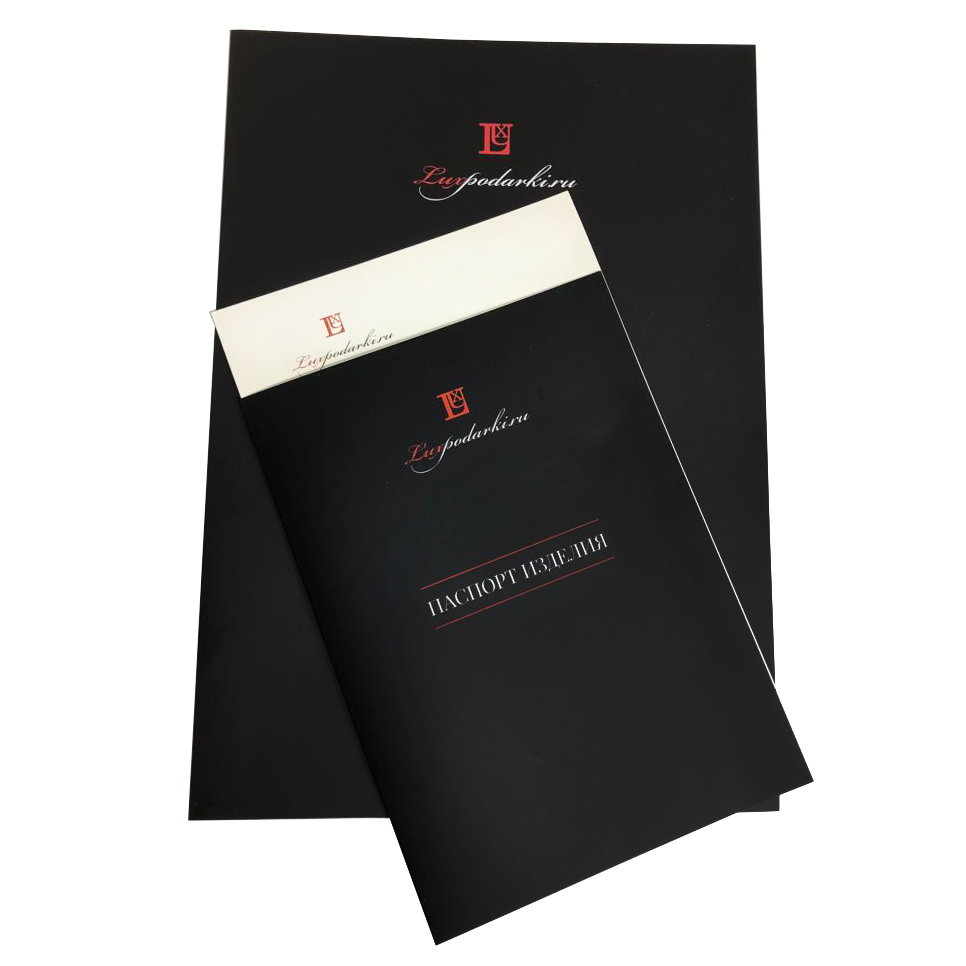
You will receive a passport with this product.

Similar products
Russian Gems Khokhloma candy bowl made of silver with gilding Khokhloma candy bowl made of silver with gilding Silverware is a privilege of the elite, a sign of aristocracy and luxury. The radiance of the precious metal reflects the refined taste of the owner, ennobles not only the festive table, but also the entire surrounding interior. The tradition of donating silverware and children's silverware has existed since the time of ancient Byzantium. Silver brings happiness and health to its owners, because the healing and antibacterial properties of silver are known to everyone.
277 000 ₽
Clarify availablility
Russian silver Candy bowl "Morozko" Candy bowl "Morozko" One of the most beloved fairy tales in our people is "Frost". She is kind, instructive and extremely interesting. The candy bowl was created based on this work. Despite its small size, it is very rich in content. A fragment of a fairy tale unfolded on the leg of the product, when Nastenka is left alone in the forest. The father, inspired by his determination to bring his daughter home despite the instructions of his stepmother, did not even notice her disappearance. And Nastenka, feeling sorry for her father and not wanting to expose him to another misfortune because of herself, quietly got off the sleigh and settled down near a huge fir tree to wait for her fate. There are snow-covered trees, fluffy white snowdrifts, and Frost all around... He seized the entire space with a cracking ice element, covered the entire earth from above. It seems that even the air is covered with amazing frosty patterns — this crystal base of the product is hand-artfully engraved by the factory's artists.
323 800 ₽
Available:
Lubyanka
Russian silver Candy bowl "Inspiration" made of silver with gilding Candy bowl "Inspiration" made of silver with gilding The patterns of lace filigree and motifs of the Bazhovsky stone flower are intricately intertwined in these products. Here a beautiful flower bud has opened, its edges have begun to play - and in front of us is a wonderful fairy-tale vase-candy bowl.
185 100 ₽
Available in stock
ORMAS A pair of Moderna candy bowls A pair of Moderna candy bowls Silverware is a privilege of the elite, a sign of aristocracy and luxury. The radiance of the precious metal reflects the refined taste of the owner, ennobles not only the festive table, but also the entire surrounding interior. The tradition of donating silverware and children's silverware has existed since the time of ancient Byzantium. Silver brings happiness and health to its owners, because the healing and antibacterial properties of silver are known to everyone. ORMAS Jewelry House is a family–owned company founded in 1997 in Moscow. For more than 25 years, the organization has been creating works of art made of 925 sterling silver – exclusive decor and gifts.
785 000 ₽
Clarify availablility
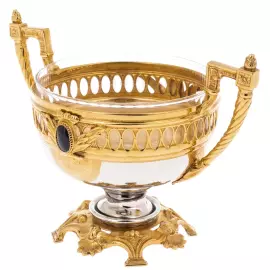
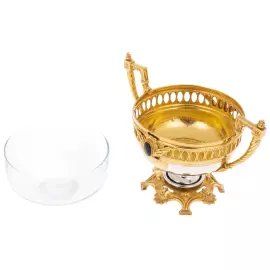
  Candy bowl "Plevkevich" Zlatoust Candy bowl "Plevkevich" Zlatoust The products of the art workshop are samples of exquisite tableware, serving items and artistically decorated interior items. The starting materials are: brass, silver, gold, precious woods, semi-precious and precious stones. The manufacturing technology used in the workshop is based on the use of high-quality Zlatoust materials. The main features of the products of the art workshop are: elegance of shapes, originality of plastics, and high quality of workmanship.
48 000 ₽
Clarify availablility
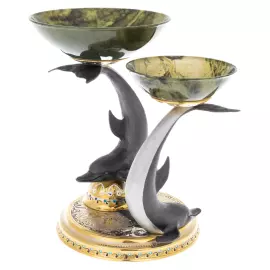
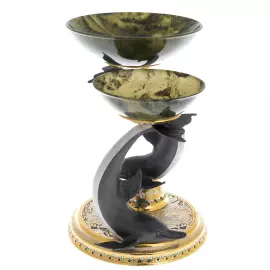
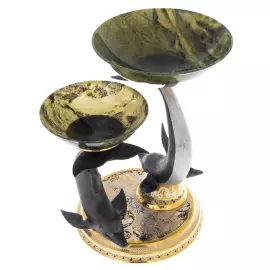
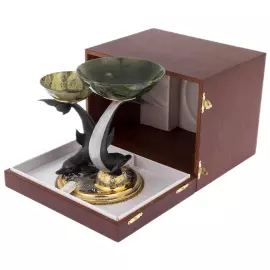
  Malachite candy bowl "Two dolphins" Zlatoust Malachite candy bowl "Two dolphins" Zlatoust Collections of fine tableware from masters from Zlatoust are spectacularly decorated with painting, etching and gilding. After an elegant pattern is applied to the polished surface, the product is dried in an oven and processed, after which the pattern becomes embossed. The secrets and subtleties of this art are passed down from generation to generation, so unique works of art cannot be repeated. Gift tableware made in the style of Zlatoust masters can become a valuable family heirloom, which will be appreciated by future generations. Handicrafts will never become outdated and will remain a fashion trend at all times.
300 000 ₽
Clarify availablility
Russian silver Crystal and silver breadcrumb bowl "Tops and roots" Crystal and silver breadcrumb bowl "Tops and roots" People have long lived in harmony with nature. A village on the edge of the forest is a common occurrence, so I had to get along side by side with wild animals. To exist peacefully and benefit each other. In the tale of the tops and roots, a peasant was able to wisely and cunningly negotiate with the owner of the forest, a Bear, while getting a rich harvest and not breaking his word. The bowl for crackers is a good addition to the beer mug "Bear" and is intended for light snacks for beer — crackers, nuts, snacks. A cheerful man rides on a cart, playing the balalaika. He has something to be happy about! The bear got the tops, and the Man, so be it, the roots... A huge bag of turnips! It's so big that they couldn't even tie it properly, just wrapped it with a rope. And on top of this golden wealth is a Man, right on top of a sack of turnips! The canvas edges are wrapped up, and the golden juicy turnip is still peeking out of the bag. And it's not an easy bag — it's seasoned, with patches, and each patch has a whole story! Here is a planted field, but the birds have swooped down — the seeds are pecking, it is difficult to protect the future harvest! But it started to rain, and then the cornflower weeds sprouted, and here it is - a harvest of rye—wheat, and here — turnips. It's a long story from spring to autumn, and you have to put in a lot of work to get the result. But that's what our life is all about.: those who work hard and are not afraid of difficulties, who know how to turn any situation for the good of the cause, will receive disproportionately more results. The Man loaded the bag onto the cart, as expected. One sack took up the whole cart! And the cart is noble, well-worn. There is some straw left from last year's wheat at the bottom. The horse, though small, is a daredevil — it carries such a burden, rests on its hooves, and tries. He understands that if the owner is satisfied in winter, then he will be fine. Yes, you will not be lost with such a master: he will save you from a wild beast, and he will raise food, and he will sing a cheerful song. That's how we live: we're rich in friends, but we're full of courage, hard work, and wit. This is the secret of success.
481 500 ₽
Available:
Lubyanka
Khokhloma painting Candy bowl "Evolution" by Khokhloma Candy bowl "Evolution" by Khokhloma It is made in full accordance with the traditional Khokhloma gilding technology. Carved from solid wood by hand. It has an author's painting in the technique of background writing. The mural "Evolution". The lacquer coating and repeated high-temperature firing make the product waterproof and wear-resistant. All materials used in the production are natural and environmentally friendly. The candy bowl is designed for storing various food products (fruits, nuts, candied fruits, confectionery, honey, jam, etc.), and can also serve as an original element of the room decor. Each product has the signature of the author of the painting.
42 200 ₽
Clarify availablility
Product passport

A passport is attached to products that cost more than 10,000 ₽:
Delivery rates
Moscow
Pickup from the gallery free
In the next day (21 May) 300 ₽
On the day of the order (20 May) 400 ₽
Within 2 hours (20 May) Check with the manager
Evening delivery (20 May) Check with the manager
Beyond the Moscow Ring Road
up to 6 km from MKAD (20 May) 600 ₽
from 6 to 10 from MKAD (20 May) 900 ₽
Over 10 km from MKAD (20 May) Check with the manager
To other cities
VIP, by courier (today)(20 May, today) from 3 000 ₽ (check with the manager)
The transport company according to the tariff of the TC
SDEK - Pick-up points, courier delivery to the door Check with the manager
Delovye Linii - Pick-up points, courier delivery to the door Check with the manager
Russian Post - to the post office (Pick-up points), courier delivery to the door Check with the manager

Courier delivery is carried out when ordering for a total amount of 5000 ₽

Available in galleries
 
Engravement of the nameplate
30
30
30
30

How is it more convenient for you to contact us?