



























Top.Mail.Ru
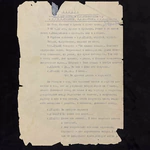
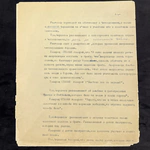
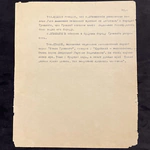
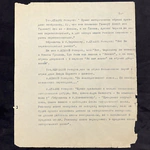
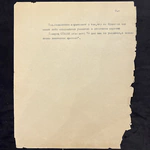
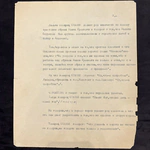
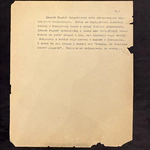
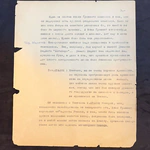
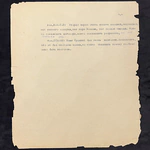
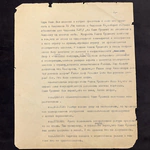
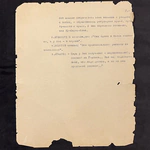
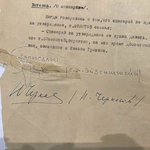
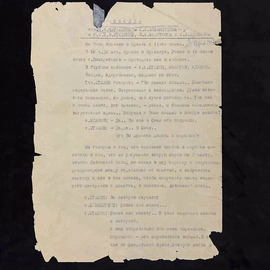
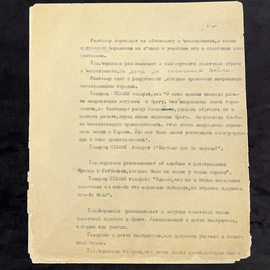
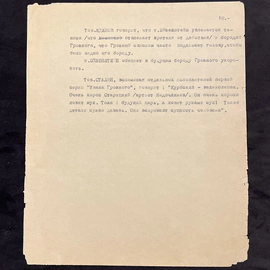
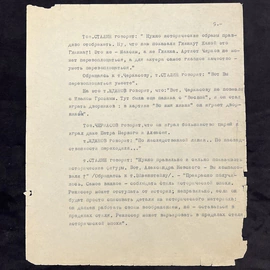
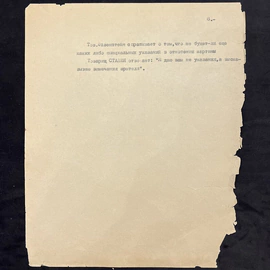
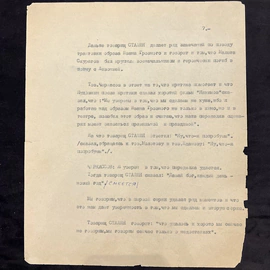
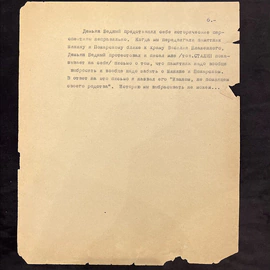
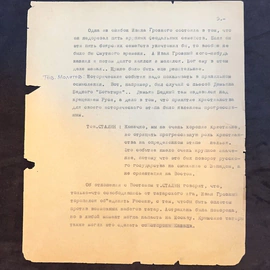
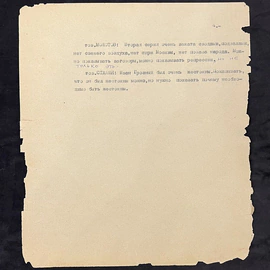
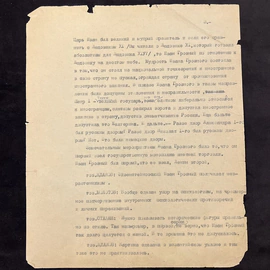
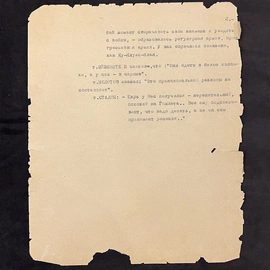
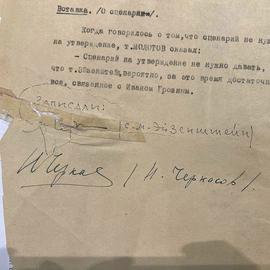
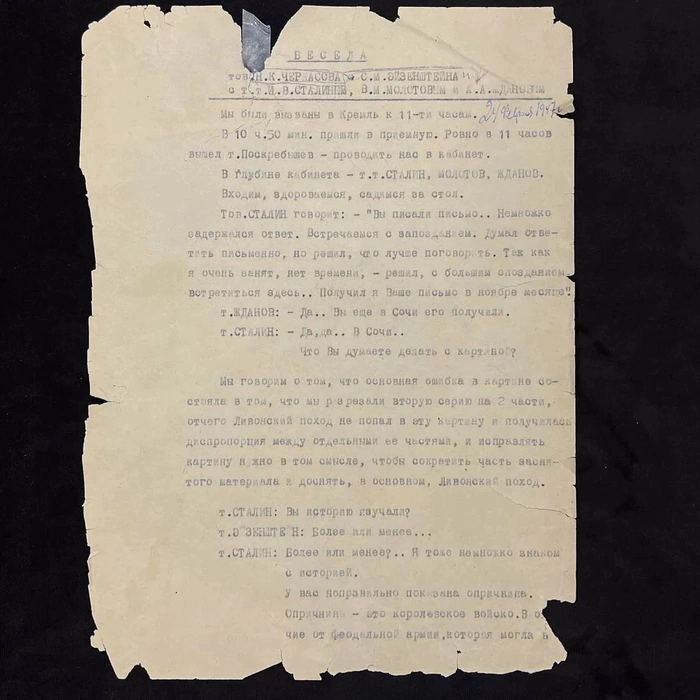
Transcript of the conversation between Sergei Eisenstein and Joseph Stalin with handwritten edits and 2 autographs
Stargift Stargift
Art. : 258-21505
Available in stock
10 000 000 ₽
The discount under the loyalty program does not apply to the article 258-21505
Add a gift label
Engraving on the nameplate 1000 ₽
Wrapping
Box 35 x 26 x 15 cm (5000 ₽ )
Delivery options
Moscow :
Worldwide :
  • Delivery by a transport company in the shortest possible time
  • VIP air delivery
  • Delivery rates
About this product
Art. : 258-21505
Transcript of the conversation between Sergei Eisenstein and Joseph Stalin with handwritten edits and 2 autographs

Sergei Eisenstein is a Soviet theater and film director, artist, screenwriter, art theorist, and teacher. Professor of the VGIK, Honored Artist of the RSFSR (1935), Doctor of Art History (1939), winner of two Stalin Prizes of the first degree (1941, 1946). He is the author of fundamental works on the theory of cinematography.

Nikolai Cherkasov is a Soviet theater and film actor, People's Artist of the USSR (1947), winner of the Lenin (1964) and five Stalin Prizes (1941, 1946, 1950, 1951 — twice). He starred in historical films of the 1930s and 1940s. He played the main roles in Eisenstein's films "Alexander Nevsky" and "Ivan the Terrible".

"Ivan the Terrible" was conceived as another historical and patriotic film of the Stalin era. Like Vsevolod Pudovkin's Minin and Pozharsky, Vladimir Petrov's Peter the Great and Sergei Eisenstein's Alexander Nevsky, the picture was supposed to clearly prove the correctness of Stalin's policy — in all these films, a strong leader unites the Russian people and confidently leads them to victory. However, Ivan the Terrible was not such an unambiguous figure in history, and the cinema about him, according to the authorities, should not only broadcast the party's policy, but also contain many allusions to the era, including justifying repression in the person of the proud oprichnina army of the tsar.

The theme of "Grozny" was proposed to Sergei Eisenstein in January 1941 by the Kremlin. He was given the task of praising Ivan the Terrible. At some point, the director realized that he did not fit into the accepted time norm of the picture, and broke the film into three parts. He managed to create only the first two, the final one remained in the script, preparatory notes, drawings and several fragments captured on film.

The first part of the film was released in 1945, received the most laudatory ratings and was awarded the Stalin Prize.

The second part begins as a continuation of the first with the glorification of autocracy and tells about the events of 1560-1569: the creation of the oprichnina, the suppression of the boyar opposition, reprisals and executions. In stark contrast to the first series, it is a denunciation of despotism and state terror.

The second series was sharply criticized by Stalin. The idea of the inevitability of retribution for victory in the struggle for power could not be expressed in a Soviet film of the late forties. It was released only in 1958. After Eisenstein's death in 1948, all the materials of the third series were destroyed (only a few short scenes survived).

In the transcript of the conversation between Sergei Eisenstein and Nikolai Cherkasov with Joseph Stalin presented in the Stargift collection, the Supreme Commander, who remained dissatisfied with the historical authenticity of the film, gives this characteristic to Grozny: "You turned out to be an indecisive Tsar, similar to Hamlet. Everyone tells him what to do, not he makes the decisions himself... Tsar Ivan was a great and wise ruler, and if you compare him with Louis XI (have you read about Louis XI, who prepared absolutism for Louis XIV?), then Ivan the Terrible is in the tenth heaven in relation to Louis."

In his next remark to Eisenstein, Stalin says: "Ivan the Terrible was very cruel. It is possible to show that he was cruel, but it is necessary to show why it is necessary to be cruel.

One of Ivan the Terrible's mistakes was that he did not finish off five large feudal families. If he had destroyed these five boyar families, then there would have been no Time of Troubles at all. And Ivan the Terrible executed someone and then repented and prayed for a long time. God was in his way in this matter... I should have been even more determined."
Transcript of the conversation between Sergei Eisenstein and Joseph Stalin with handwritten edits and 2 autographs

Sergei Eisenstein is a Soviet theater and film director, artist, screenwriter, art theorist, and teacher. Professor of the VGIK, Honored Artist of the RSFSR (1935), Doctor of Art History (1939), winner of two Stalin Prizes of the first degree (1941, 1946). He is the author of fundamental works on the theory of cinematography.

Nikolai Cherkasov is a Soviet theater and film actor, People's Artist of the USSR (1947), winner of the Lenin (1964) and five Stalin Prizes (1941, 1946, 1950, 1951 — twice). He starred in historical films of the 1930s and 1940s. He played the main roles in Eisenstein's films "Alexander Nevsky" and "Ivan the Terrible".

"Ivan the Terrible" was conceived as another historical and patriotic film of the Stalin era. Like Vsevolod Pudovkin's Minin and Pozharsky, Vladimir Petrov's Peter the Great and Sergei Eisenstein's Alexander Nevsky, the picture was supposed to clearly prove the correctness of Stalin's policy — in all these films, a strong leader unites the Russian people and confidently leads them to victory. However, Ivan the Terrible was not such an unambiguous figure in history, and the cinema about him, according to the authorities, should not only broadcast the party's policy, but also contain many allusions to the era, including justifying repression in the person of the proud oprichnina army of the tsar.

The theme of "Grozny" was proposed to Sergei Eisenstein in January 1941 by the Kremlin. He was given the task of praising Ivan the Terrible. At some point, the director realized that he did not fit into the accepted time norm of the picture, and broke the film into three parts. He managed to create only the first two, the final one remained in the script, preparatory notes, drawings and several fragments captured on film.

The first part of the film was released in 1945, received the most laudatory ratings and was awarded the Stalin Prize.

The second part begins as a continuation of the first with the glorification of autocracy and tells about the events of 1560-1569: the creation of the oprichnina, the suppression of the boyar opposition, reprisals and executions. In stark contrast to the first series, it is a denunciation of despotism and state terror.

The second series was sharply criticized by Stalin. The idea of the inevitability of retribution for victory in the struggle for power could not be expressed in a Soviet film of the late forties. It was released only in 1958. After Eisenstein's death in 1948, all the materials of the third series were destroyed (only a few short scenes survived).

In the transcript of the conversation between Sergei Eisenstein and Nikolai Cherkasov with Joseph Stalin presented in the Stargift collection, the Supreme Commander, who remained dissatisfied with the historical authenticity of the film, gives this characteristic to Grozny: "You turned out to be an indecisive Tsar, similar to Hamlet. Everyone tells him what to do, not he makes the decisions himself... Tsar Ivan was a great and wise ruler, and if you compare him with Louis XI (have you read about Louis XI, who prepared absolutism for Louis XIV?), then Ivan the Terrible is in the tenth heaven in relation to Louis."

In his next remark to Eisenstein, Stalin says: "Ivan the Terrible was very cruel. It is possible to show that he was cruel, but it is necessary to show why it is necessary to be cruel.

One of Ivan the Terrible's mistakes was that he did not finish off five large feudal families. If he had destroyed these five boyar families, then there would have been no Time of Troubles at all. And Ivan the Terrible executed someone and then repented and prayed for a long time. God was in his way in this matter... I should have been even more determined."
Expand
Characteristics

Material: paper.

It is possible to make it into a baguette.


Sizes: 21.6 × 29.5 × 0.4 cm .

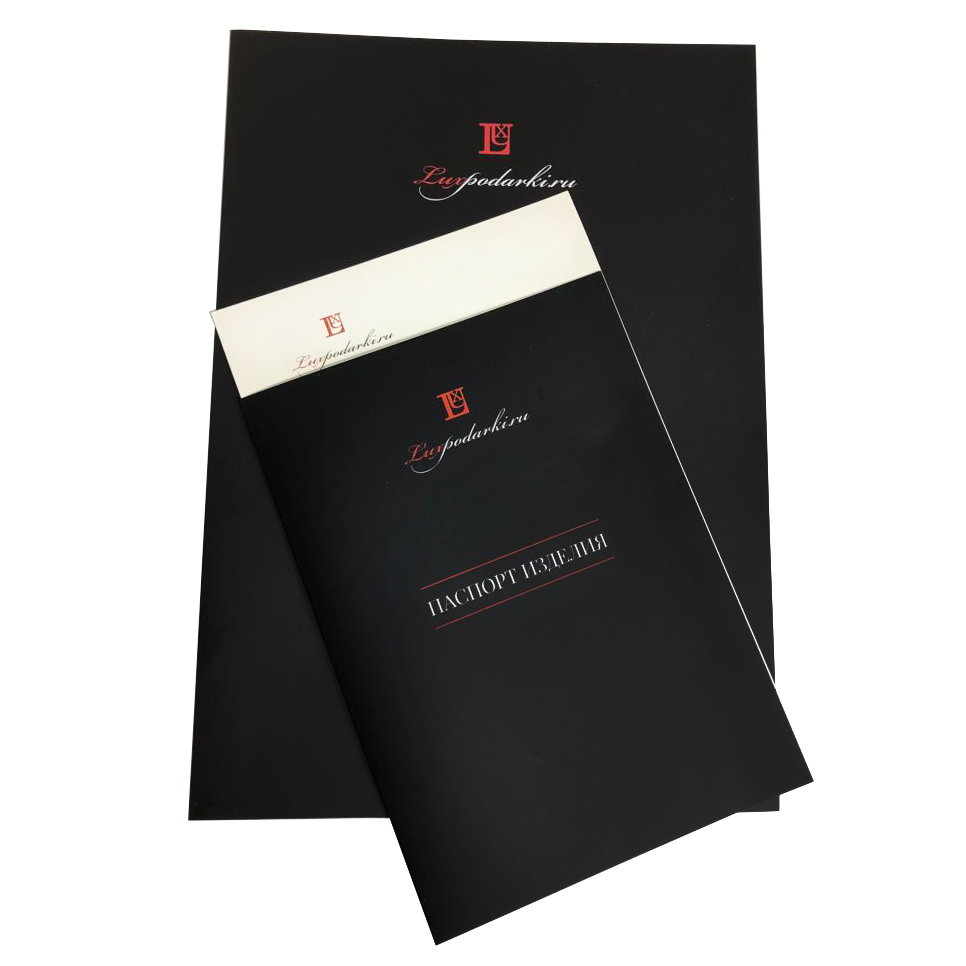
You will receive a passport with this product.

Similar products

Stargift An autographed photo of actor Sylvester Stallone An autographed photo of actor Sylvester Stallone Sylvester Stallone is an American actor, film director, screenwriter and producer. During his acting career, he starred in more than 50 films, including the series Rocky, Rambo, The Expendables and Escape Plan, the first three of which he also had a hand in as a screenwriter, director and producer. He is a Golden Globe Award nominee for his role as Rocky Balboa in the first film and a winner for his role in the seventh film in the series. He is a three-time Oscar nominee for his role as Rocky Balboa in the first and seventh films, as well as writing the script for the first film. Winner of the Saturn, Cesar and Critics' Choice Movie Awards. According to the results for 2012, the total box office of films with Stallone as an actor amounted to $ 3.7 billion (adjusted for inflation). On June 12, 2011, he was inducted into the International Boxing Hall of Fame for his services to the popularization of boxing.
180 000 ₽
Available in stock
Stargift An autographed photo of actress Ava Gardner An autographed photo of actress Ava Gardner Ava Lavinia Gardner is an American actress and singer, one of the brightest Hollywood stars of the 1940s and 1950s. She was nominated for an Oscar. She was included in the list of the greatest movie stars in the history of Hollywood. The owner of "the face of an angel and the body of a goddess" was often called one of the most beautiful actresses of the XX century. She began acting in films during World War II. The first tangible success came with the film "The Killers" (1946), a classic film in the post—war noir genre. In the 1950s, Gardner began to be promoted under the motto "the sexiest animal on earth." Ava's career peaked with starring roles in the films "The Snows of Kilimanjaro" with Gregory Peck (1952) and "Mogambo" with Clark Gable (1953), for which the actress was nominated for an Oscar. In 1976, she starred in the Soviet-American film "The Blue Bird".
115 000 ₽
Available in stock
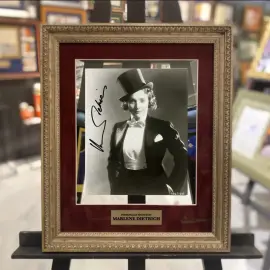
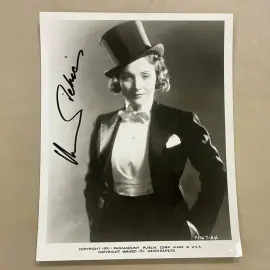
Stargift An autographed photo of actress Marlene Dietrich An autographed photo of actress Marlene Dietrich Maria Magdalena (Marlene) Dietrich is a German and American actress, singer, and sex symbol. She became a legend during her lifetime, creating one of the most perfect female images in cinema and having a great influence on fashion, style and female consciousness. Dietrich was a shocking type of beautiful and charming woman, at the same time vicious and innocent, provocatively sexy and unapproachable. Her fate, mixed up in art, politics and sex, her loneliness at the end of her life still arouse interest and controversy. Dietrich has remained in history as a popular singer. Her harsh contralto with an expressive timbre still attracts fans with its exciting charm. In 1999, the American Film Institute ranked Marlene Dietrich ninth on the list of the greatest actresses of classic Hollywood cinema.
180 000 ₽
Available in stock
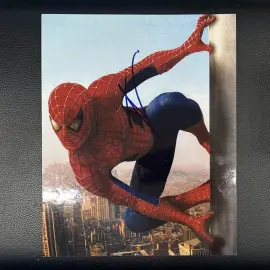
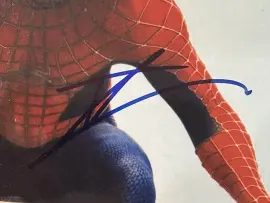
Stargift A photo from the movie "Spider-Man" with 2 autographs by actors Emma Stone and Andrew Garfield A photo from the movie "Spider-Man" with 2 autographs by actors Emma Stone and Andrew Garfield Emily Jean "Emma" Stone is an American actress. Winner of the Academy Awards (2017), Golden Globe (2017), BAFTA (2017) and three awards of the Screen Actors Guild of the USA (2012, 2015, 2017). Stone appeared on the Forbes Celebrity 100 in 2013 and Time 100 in 2017, and is often described by the media as one of the most talented actresses of her generation. In 2017, according to Forbes magazine, she became the highest-paid actress in the world with an annual income of $ 26 million. The most famous and commercially successful films starring Emma Stone: "SiregPerts" (2007), "Welcome to Zombieland" (2009), "Excellent Student of Easy Virtue" (2010), "This Stupid Love" (2011), "The Maid" (2011), "The New Spider-Man" (2012), "Birdman" (2014), "La La Land" (2016), "Battle of the Sexes" (2017) and "The Favorite" (2018). Andrew Russell Garfield is a British-American actor. Winner of the Tony Award, as well as a nominee for the Oscar, Golden Globe and BAFTA awards. Garfield became known to the public in 2010, with supporting roles in the films "The Social Network" and "Don't Let Me Go," which earned him two BAFTA Award nominations, a Golden Globe nomination, and a Saturn Award. Garfield's worldwide fame was brought by the role of Spider-Man in the eponymous dilogy by Mark Webb (2012-2014). In 2016, Garfield starred in two critically acclaimed dramas, "For Reasons of Conscience" and "Silence." The role of Desmond Doss in the first of the films earned him nominations for the Academy Awards, Golden Globe and BAFTA for Best Actor.
80 000 ₽
Available in stock
Stargift A photo from the movie "Spider-Man" signed by actor Tom Holland A photo from the movie "Spider-Man" signed by actor Tom Holland Thomas Stanley "Tom" Holland is a British actor and dancer. He became widely known for playing the role of Spider-Man in the Marvel cinematic universe. He played the main role in the musical "Billy Elliot" at the London West End Theater, as well as in the 2012 film "The Impossible".
115 000 ₽
Available in stock
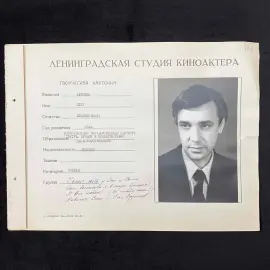
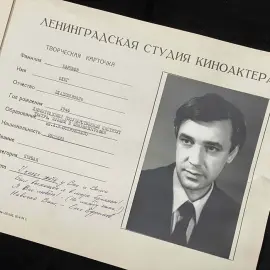
Stargift An autographed questionnaire from actor Oleg Efremov An autographed questionnaire from actor Oleg Efremov Oleg Vladimirovich Efremov is a Soviet and Russian actor and director of theater and cinema, teacher, theater worker. Hero of Socialist Labor (1987). People's Artist of the USSR (1976). Winner of three State Prizes of the USSR (1969, 1974, 1983) and two State Prizes of the Russian Federation (1998, 2004 — posthumously). Knight of the Order of Lenin (1987). One of the founders and the first secretary of the Board of the Union of Theatrical Figures of the USSR, a member of the Union of Cinematographers of the USSR. He was elected People's Deputy of the USSR from creative unions. Member of the CPSU since 1955. Oleg Efremov is the creator of the Sovremennik Theater, in 1956-1970 he was its artistic director; since 1970 he headed the Moscow Art Theater of the USSR. Gorky, and after its partition in 1987 — the Moscow Art Theater named after him. Chekhov. One of the outstanding theater directors of his time, Oleg Efremov always remained an actor; on the theater stage he created memorable images of contemporaries in the plays of V. Rozov, A. Volodin and A. Gelman; among the best roles of the Moscow Art Theater period are Chekhov's Astrov and Moliere in the "Cabal of Saints" by M. Bulgakov; moviegoers are known primarily as Colonel Gulyaev ("Battalions ask for fire"), taxi driver Sasha ("Three poplars on Ivy"), Maxim Podberezovikov ("Beware of the car"), Aibolit ("Aibolit-66"). For half a century, since 1949, Oleg Efremov taught acting skills at the Moscow Art Theater Studio School, was a professor and head of the Department of acting skills.
150 000 ₽
Available in stock
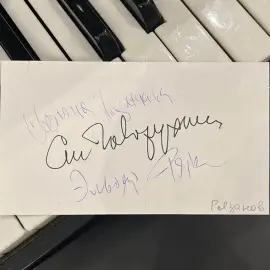
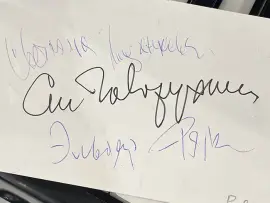
Stargift Autographs of film directors Stanislav Govorukhin and Eldar Ryazanov Autographs of film directors Stanislav Govorukhin and Eldar Ryazanov Stanislav Sergeevich Govorukhin is a Soviet and Russian film director, actor, screenwriter, producer, political and public figure. Honored Artist of the Ukrainian SSR (1986). People's Artist of the Russian Federation (2006). Eldar Aleksandrovich Ryazanov is a Soviet and Russian film director, screenwriter, actor, poet, playwright, TV presenter, teacher, producer. People's Artist of the USSR (1984). Laureate of the USSR State Prize (1977) and the Vasiliev Brothers State Prize of the RSFSR (1979).
250 000 ₽
Available in stock
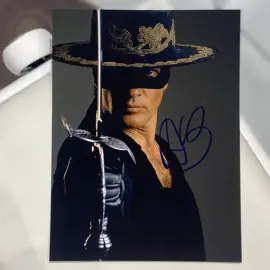
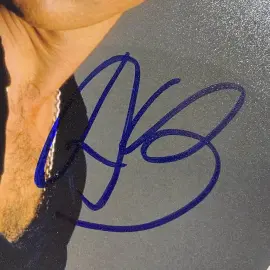
Stargift Autographed photo of actor Antonio Banderas Autographed photo of actor Antonio Banderas A shot from the movie "Mask of Zorro" Antonio Banderas is a Spanish actor, director, producer and singer. As a child, Antonio dreamed of becoming a football player, as football was one of his main hobbies at school, in which he was also very successful. However, the boy's priorities shifted a bit after he broke his leg. At the age of 16, he watched the musical "Hair" performed by the troupe of the local Malaga Theater. Impressed, he enrolled in an acting school and joined one of the city's theater groups.
150 000 ₽
Available in stock
Product passport

A passport is attached to products that cost more than 10,000 ₽:

Delivery rates
Moscow
Pickup from the gallery free
In the next day (5 December) 300 ₽
On the day of the order (4 December) 400 ₽
Within 2 hours (4 December) Check with the manager
Evening delivery (4 December) Check with the manager
Beyond the Moscow Ring Road
up to 6 km from MKAD (4 December) 600 ₽
from 6 to 10 from MKAD (4 December) 900 ₽
Over 10 km from MKAD (4 December) Check with the manager
To other cities
VIP, by courier (today)(4 December, today) from 3 000 ₽ (check with the manager)
The transport company according to the tariff of the TC

Courier delivery is carried out when ordering for a total amount of 5000 ₽

Available in galleries
 
Engravement of the nameplate
30
30
30
30

How is it more convenient for you to contact us?