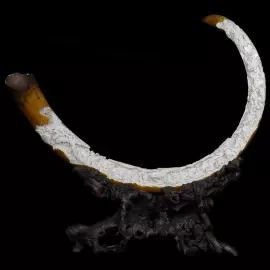































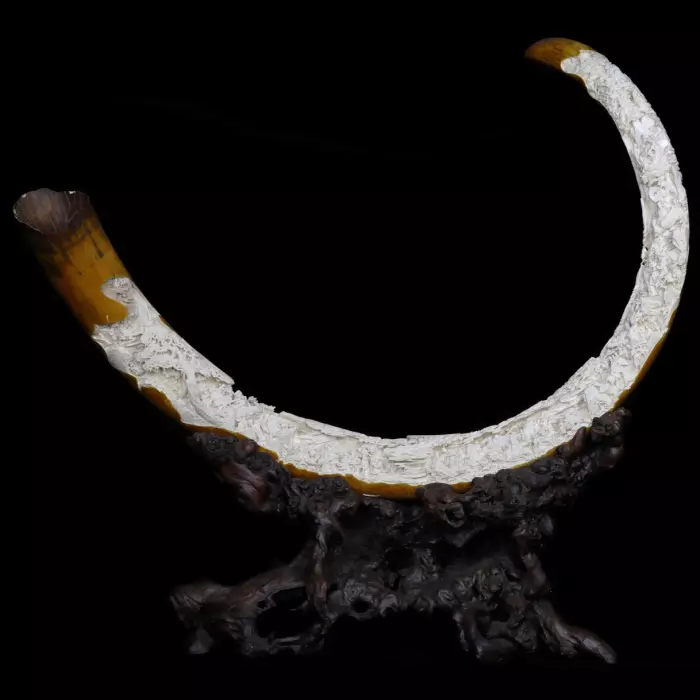
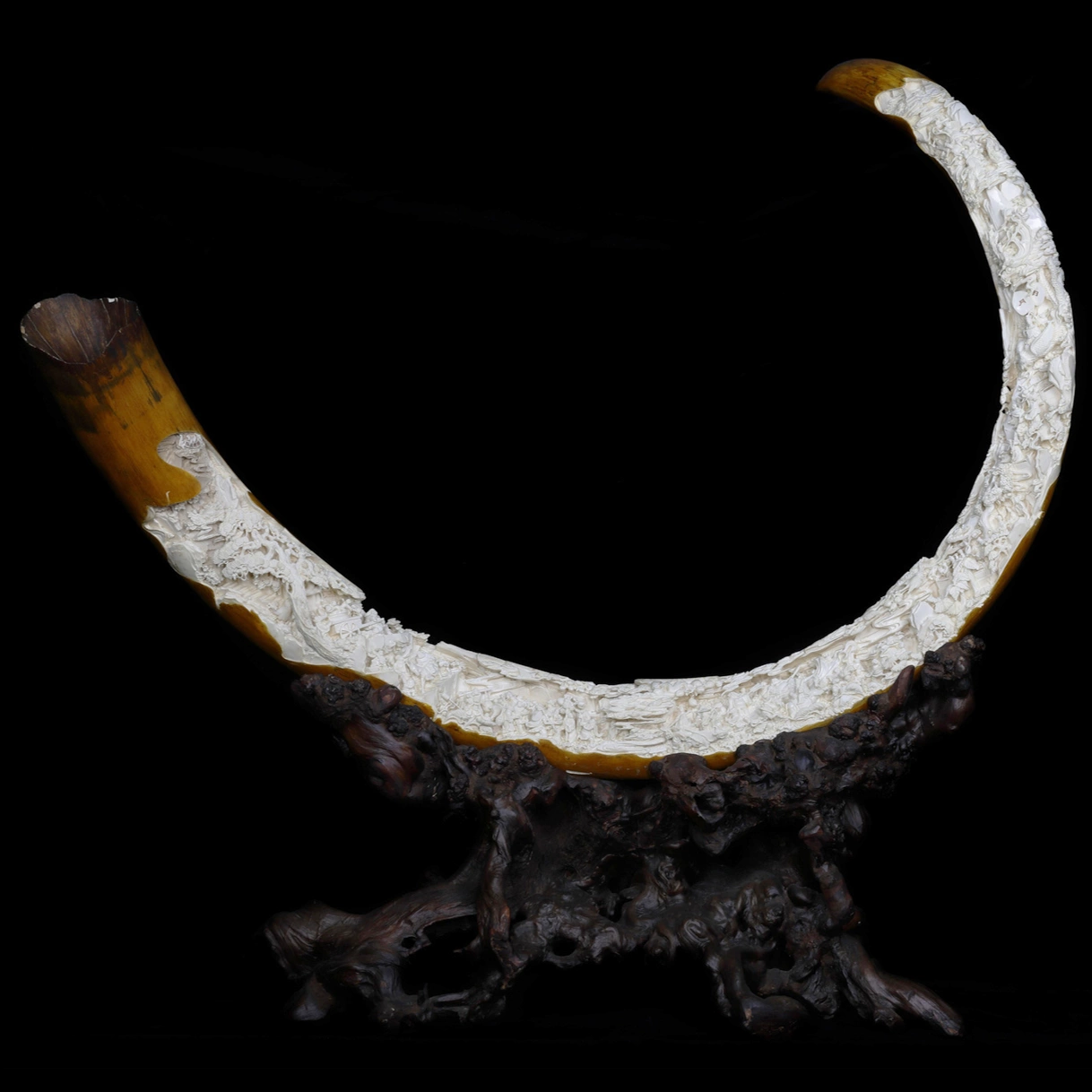
The mammoth tusk composition "The Star of Happiness shines high — Under the Lucky Star" is an expressive piece of artistic carving in which ancient natural material becomes the basis for a complex symbolic scene. The composition is based on a large mammoth tusk, which retains its natural curve. Its arc resembles the firmament or the horizon line, along which a whole world of figures and architectural elements unfolds.
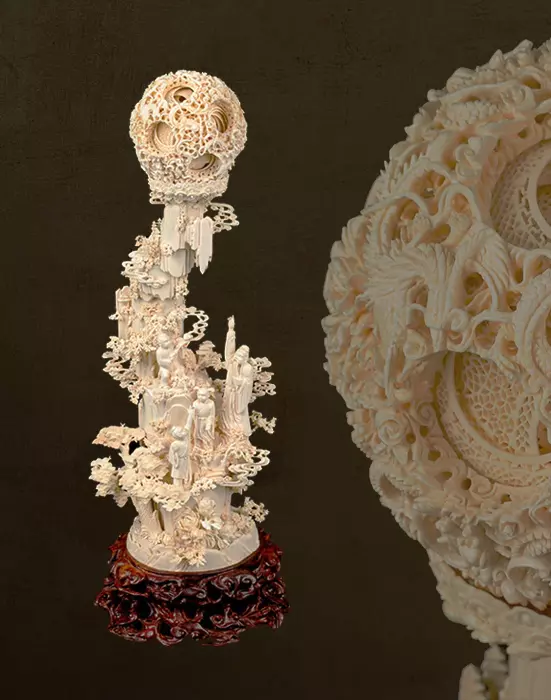
The finest multilevel carving is made along the inner surface of the tusk. The light surface of the mammoth bone is covered with numerous scenes in which you can see people, sages, celestial beings and characters of traditional oriental symbols. They are located among pavilions, bridges, mountain landscapes and trees, forming a complex panorama filled with movement and life. Each figure is worked out with a high degree of detail, so that the entire composition is perceived as a continuous narrative.
In the central part of the composition, the scenes are especially saturated. There are architectural ensembles and groups of characters symbolizing prosperity, peace and harmony. The master combines numerous elements into a single structure, where the figures seem to move along the arc of the tusk, creating the feeling of a large-scale celebration or solemn gathering.
The name of the composition is associated with the ancient benevolence of living under a lucky star. In Eastern culture, the star often symbolizes fate, heavenly protection and the favorable location of heavenly powers. Thus, the whole plot becomes an artistic image of good luck, prosperity and blessings.
The composition combines the rarity of ancient materials, virtuoso carving techniques and rich symbols of oriental culture. "The star of happiness shines high — Under a lucky star" is perceived as an integral artistic image, where the natural power of the tusk, the skill of the carver and the idea of a prosperous fate combine in a harmonious and monumental work of art.