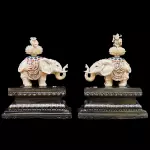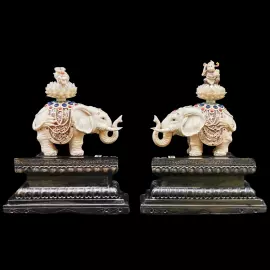












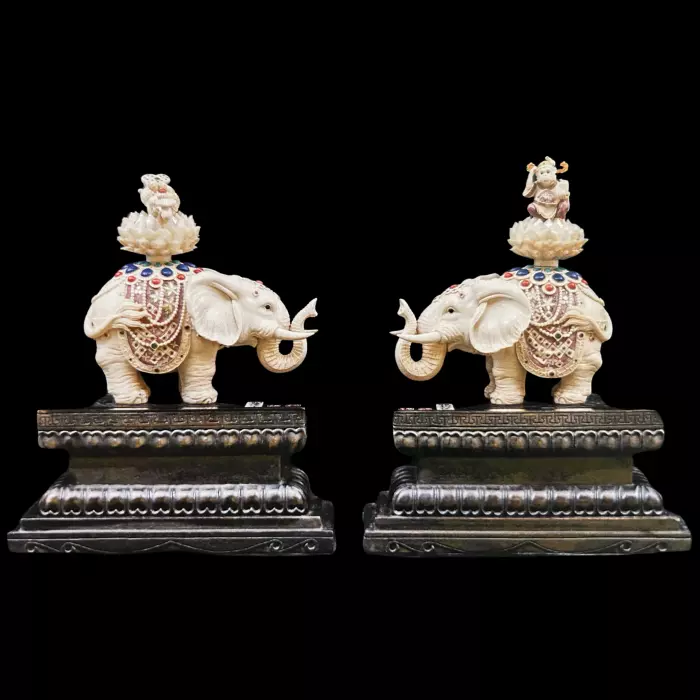
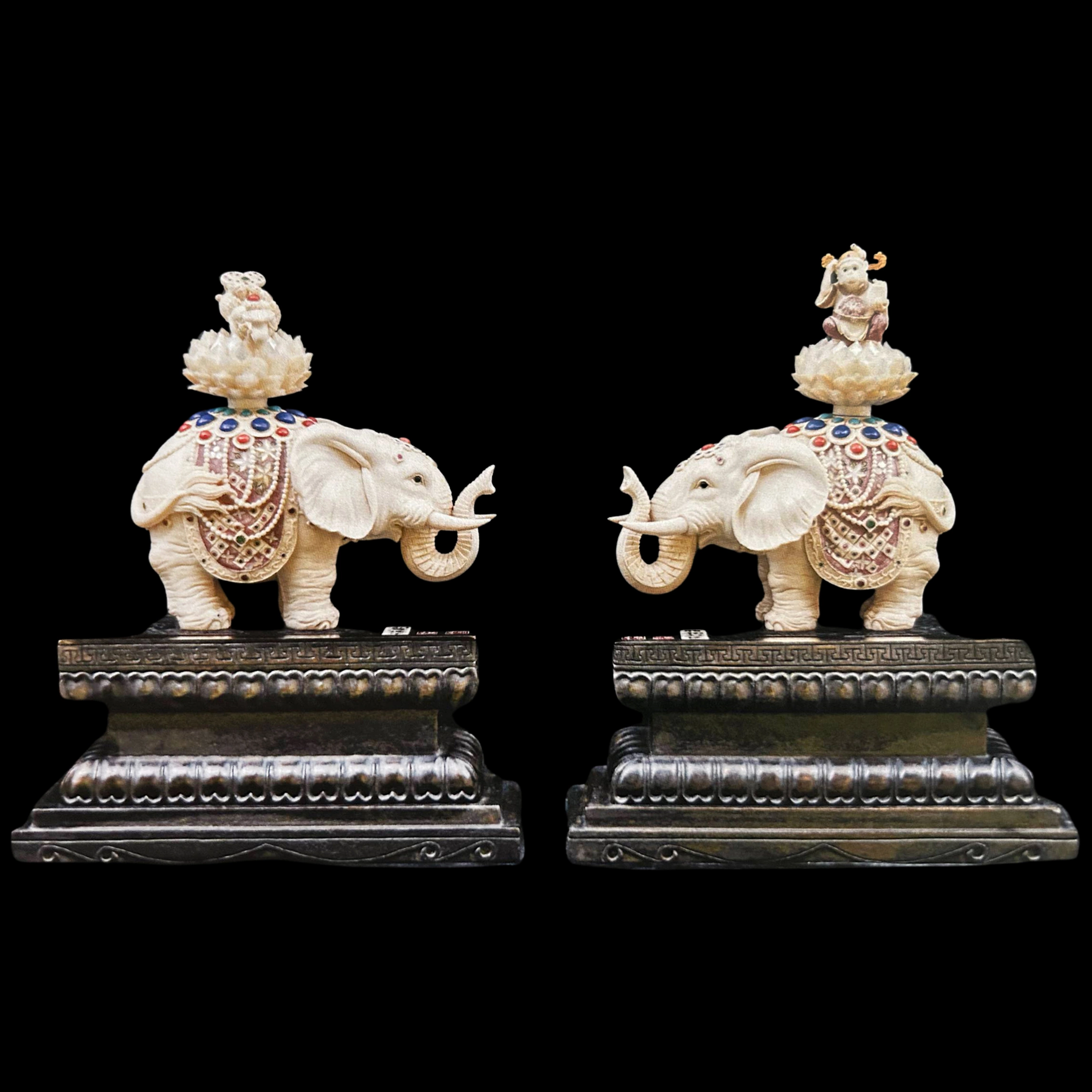
Mammoth tusk composition "Elephants: The Desire for longevity"
18 720 000 ₽
0
Add a gift label
Engraving on the nameplate 1500 ₽
Delivery options
Worldwide
Delivery by a transport company in the shortest possible time
VIP air delivery
Delivery rates
About this product
The mammoth tusk composition "Elephants: The Desire for Longevity" embodies one of the graceful benevolent images of the Chinese artistic tradition. The plot is based on a combination of symbols associated with long life, harmony and fulfillment of desires. Such compositions were created as signs of blessing, designed to bring peace, happiness and a favorable fate to the house.
The main characters of the scene are a pair of elephants, animals that symbolize strength, wisdom and resilience in Chinese culture. The elephant is associated with prosperity and peace, and its name is consonant with the word meaning "happy omen." A pair of elephants reinforces this meaning by creating an image of balance and harmony, where the two principles support each other and together form stability and prosperity.
There are lotus flowers on the elephants' backs, from which small figures rise. The lotus in Chinese philosophy and Buddhist tradition symbolizes purity, spiritual perfection and renewal. Its flower, opening above the water, embodies a person's ability to maintain inner harmony and clarity of spirit amid life's changes.
The delicate carving on the mammoth tusk allows you to convey a wealth of details: the folds of decorative bedspreads, ornamental patterns, expressive animal shapes and ornaments inlaid with colored elements. Each line highlights the artist's skill and creates a sense of noble decorativeness.
The symbolic meaning of the composition is connected with the wish for a long and happy life. In Chinese culture, such works are perceived as a sign of blessing, calling for health, stability and prosperity. A pair of elephants bearing symbols of spiritual purity and harmony becomes a figurative wish for long years of life filled with peace, prosperity and well-being.
Characteristics
- Country of manufacture:
- China
- Material:
- the mammoth tusk, The ebony tree
- Technique of execution:
- Beijing bone carving
- Sizes:
- 24 × 14 × 34 cm.
- Weight:
- 1.99 kg.
Similar products