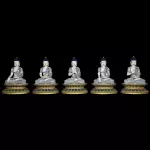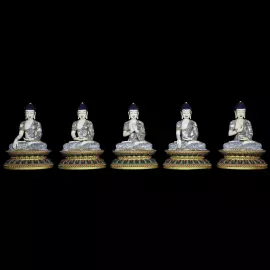







































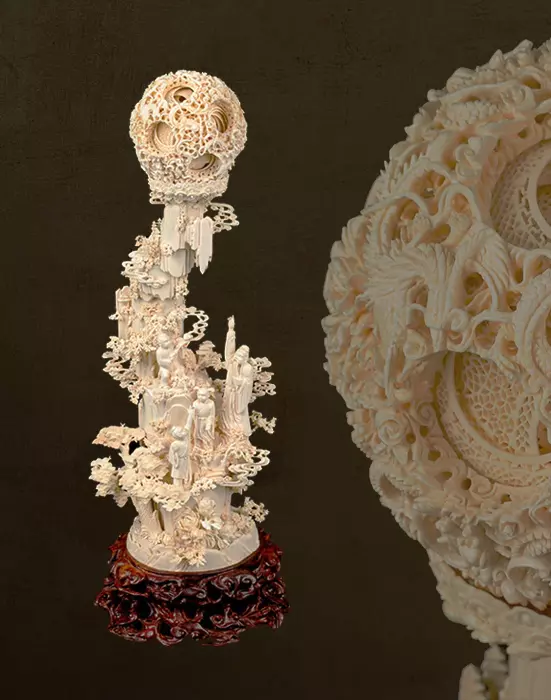


















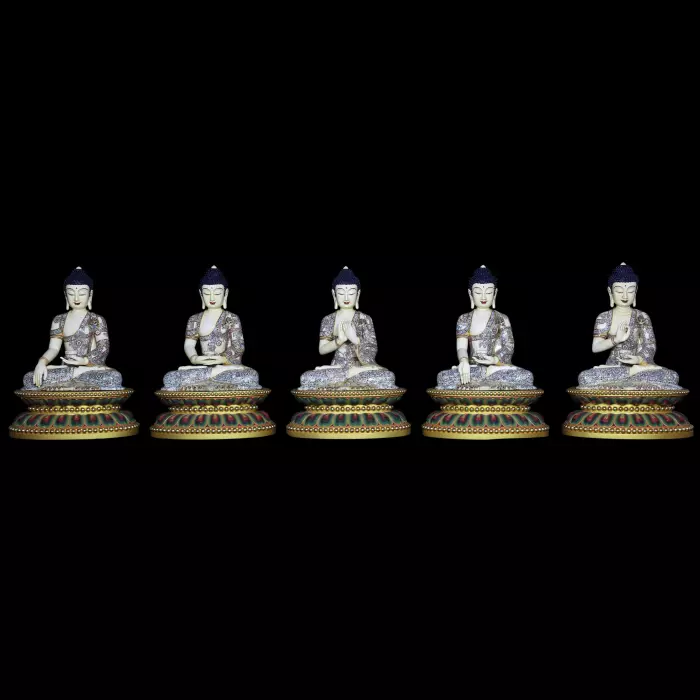
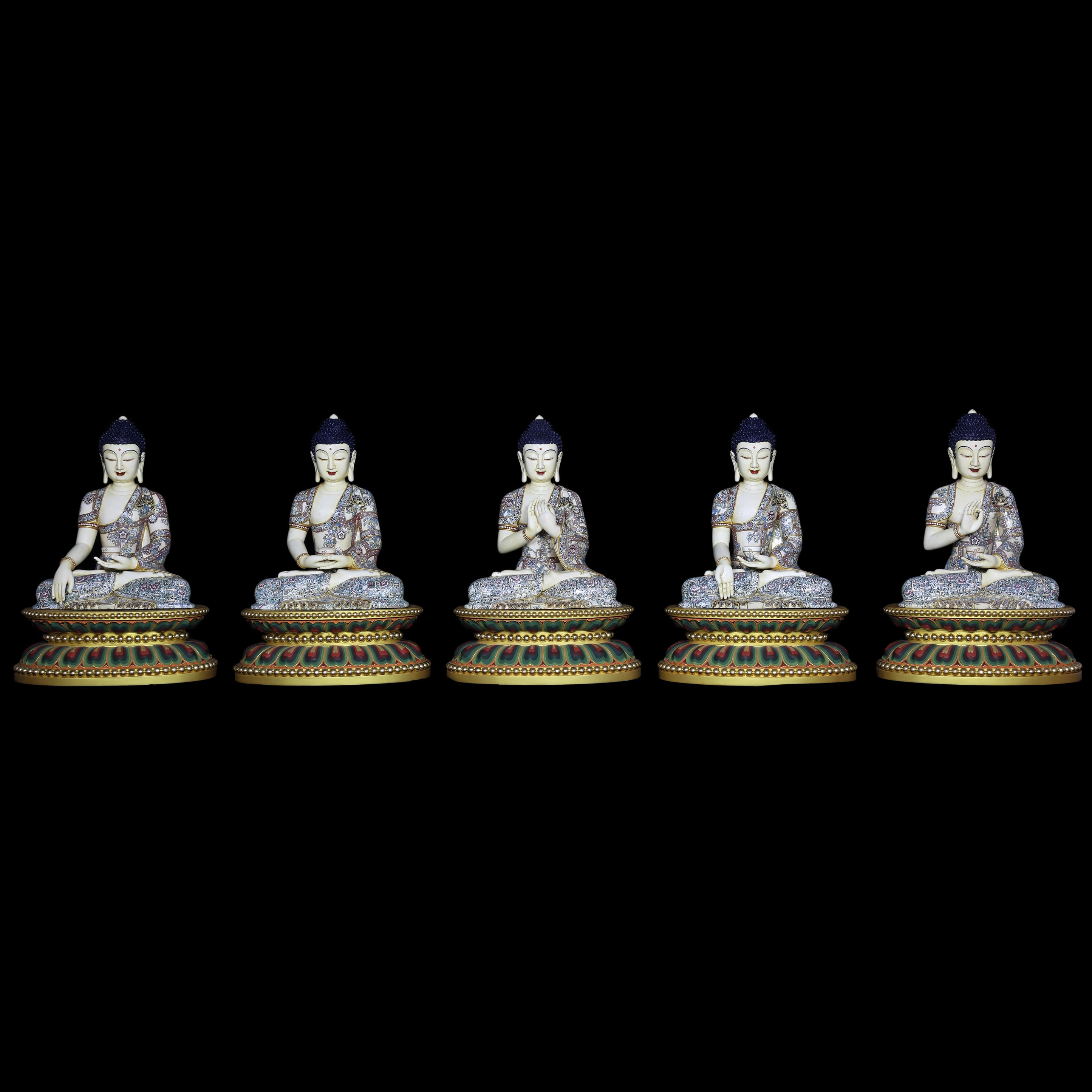
The mammoth tusk composition "Five Buddhas of Meditation" is a rare piece of Oriental sacred sculpture embodying one of the key philosophical concepts of Buddhism — the system of five Dhyani Buddhas, symbolizing various aspects of enlightened consciousness. Each figure is made of mammoth bone and mounted on a decorative lotus pedestal, forming a harmonious ensemble where spiritual symbolism is combined with exquisite carving skills.
All five Buddhas are depicted in meditative poses, each of which expresses a special gesture — mudra, reflecting different paths of spiritual attainment. These gestures symbolize different states of enlightenment: wisdom, compassion, inner balance, protection, and overcoming ignorance. Together they form a unified system of spiritual harmony reflecting the Buddhist concept of perfection of consciousness.
The faces of the figures are characterized by calmness and inner concentration. Half-closed eyes convey a state of deep meditation, and soft facial expressions create a sense of peace and spiritual clarity. Each figure has its own hand pose and slight differences in gestures, which emphasizes the individual meaning of each Buddha in the overall composition.
The clothes are decorated with intricate ornaments made with exceptional precision. Fine carvings and decorative paintings create the impression of rich fabrics, reminiscent of the palace robes of ancient traditions. The craftsmen have carefully rendered the smallest details of the patterns, folds and ornaments, making the sculptures look surprisingly lively and expressive.
The pedestals are made in the form of an open lotus, a symbol of spiritual purity and enlightenment. The petals are colored in rich shades of red, green and gold, creating an expressive contrast with the light surface of the mammoth bone. The lotus in Buddhist symbolism means the awakening of consciousness, arising in the midst of a world of suffering.
The composition "Five Buddhas of Meditation" combines the rarity of ancient material, a complex philosophical idea and the virtuoso skill of carvers. The ensemble is perceived as a symbol of harmony and spiritual balance, where each figure expresses a certain aspect of enlightenment, and together they create an image of a holistic picture of the universe and the path to inner wisdom.