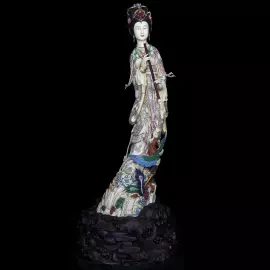














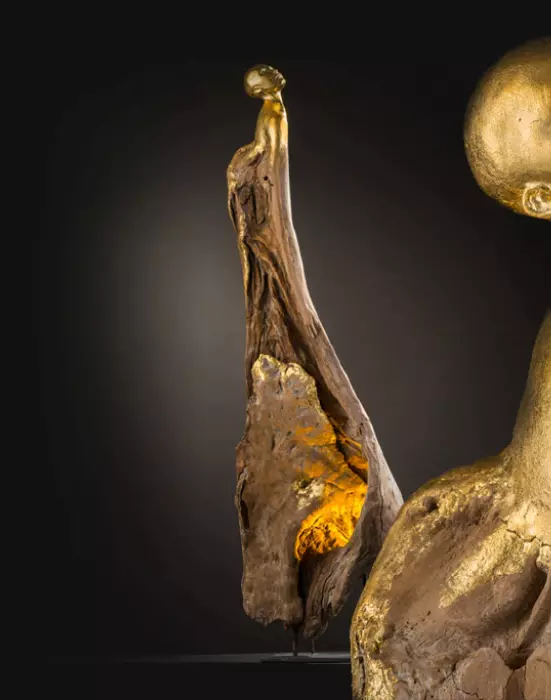





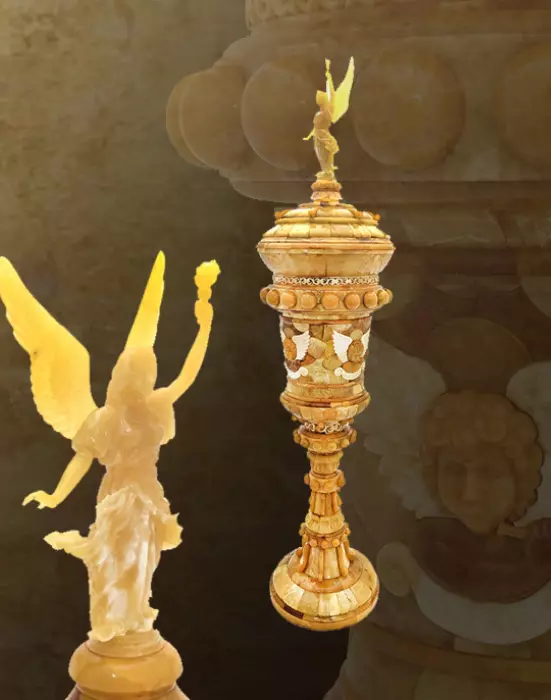
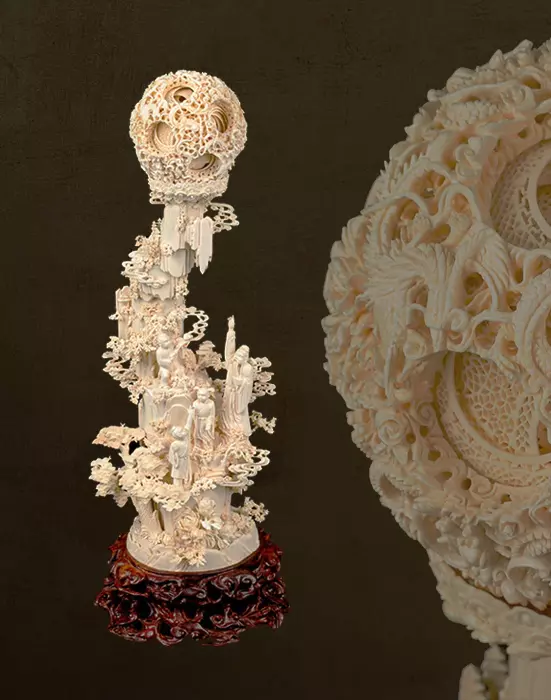

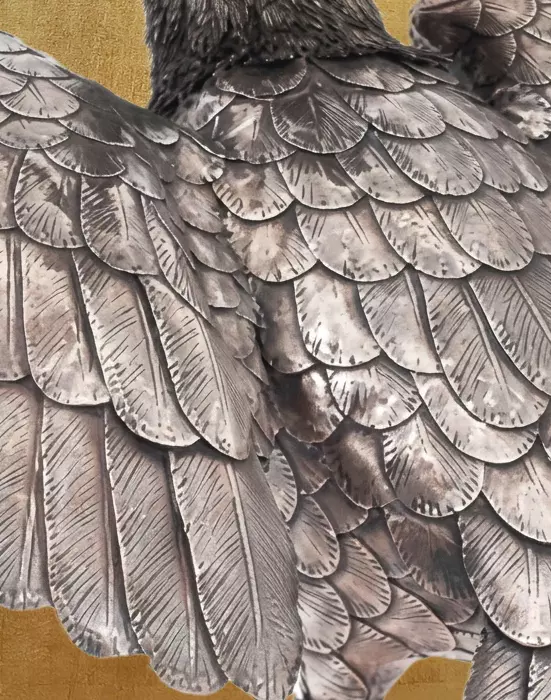














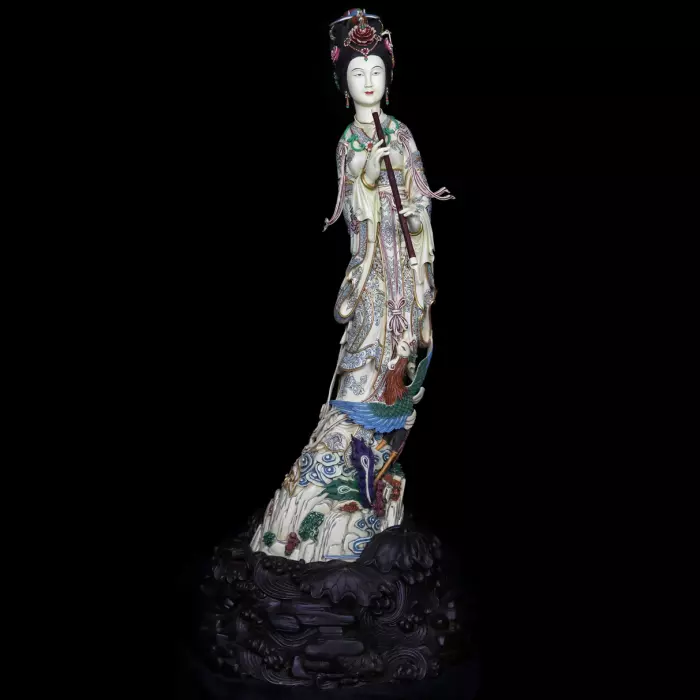
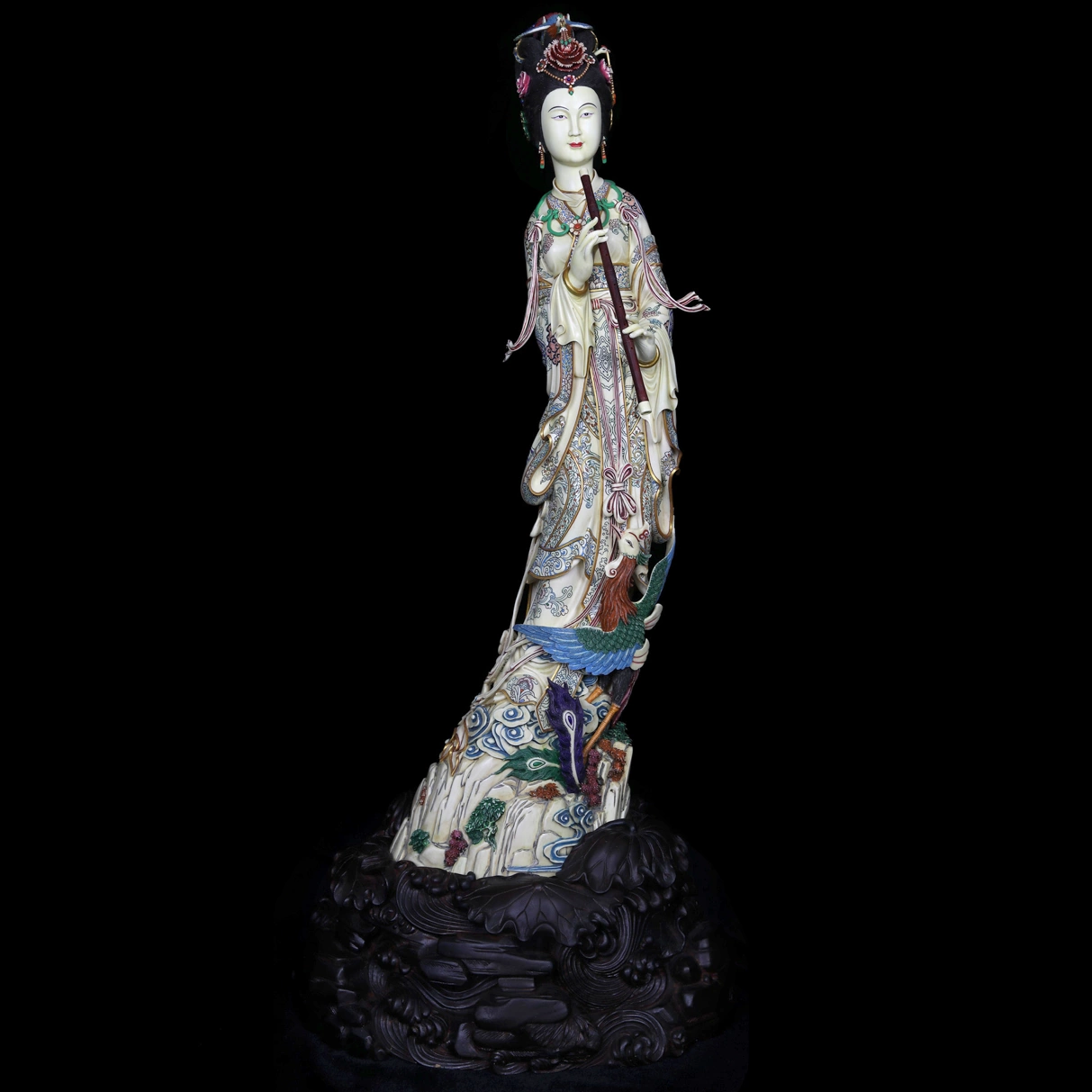
The mammoth tusk composition "Melody for the Phoenix" reveals one of the most refined and symbolically saturated images of Chinese culture — the unity of music, nature and the heavenly principle. The female figure depicted with a musical instrument embodies the idea of harmony, where sound becomes not just an art, but a way of influencing the world and subtle energies.
The phoenix, which is present in the composition, occupies a special place in Chinese symbolism. He is considered the embodiment of the highest virtue, harmony and well-being, as well as a symbol of rebirth and great balance. Unlike the Western image, the Chinese phoenix (fenghuang) is not associated with the fire of destruction, but with the idea of perfect order that arises in epochs of peace and prosperity. His appearance is always interpreted as a sign of favorable changes and supreme harmony.
The musical motif in the title reinforces this meaning. In Chinese philosophy, it was believed that true music could bring order not only to human feelings, but also to the space itself. Legends say that sounds performed in a state of inner purity can attract celestial beings, including the phoenix. Thus, the image becomes an allegory of the subtle connection between man and higher powers.
The smooth lines of the figure and the richness of the ornaments create a feeling of fluidity, as if the melody is already playing and unfolding in space. There are no harsh accents in this composition — everything is subordinated to a single rhythm, reflecting the idea of harmony and balance, which is so important for the Chinese worldview.
"Melody for the Phoenix" is an image of refined harmony, well—being and a sublime state in which art becomes the language of communication with the sky. The composition combines the rarity of a mammoth tusk, virtuoso carving and deep symbolism, creating a work filled with positive energy, beauty and a sense of perfect balance.