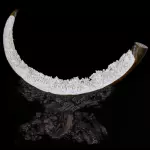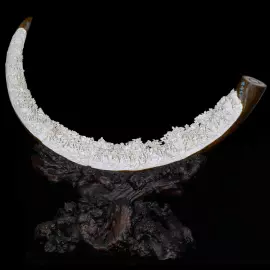



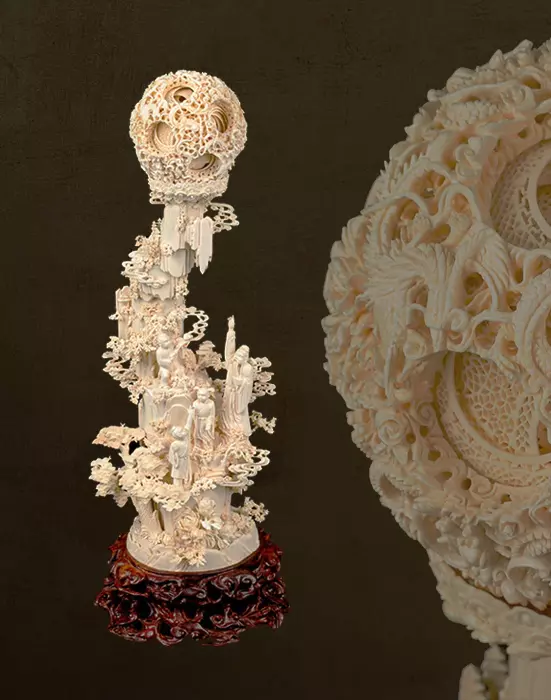












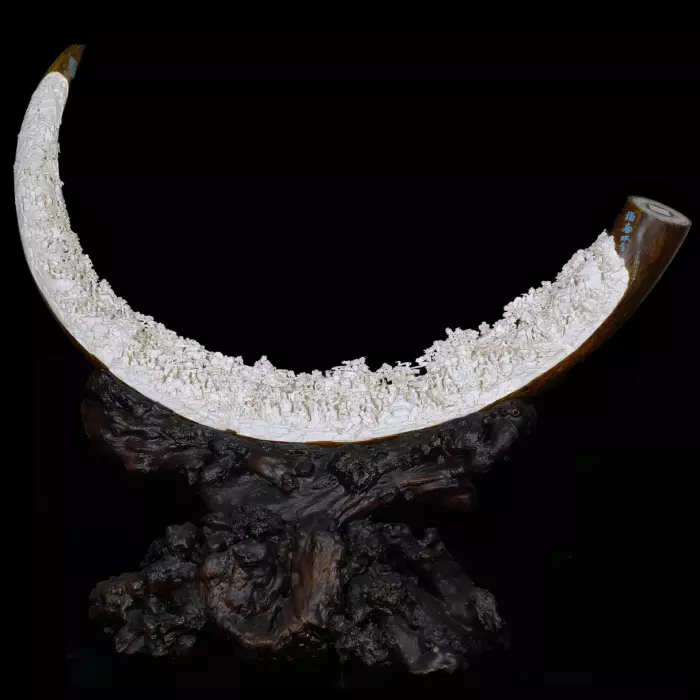
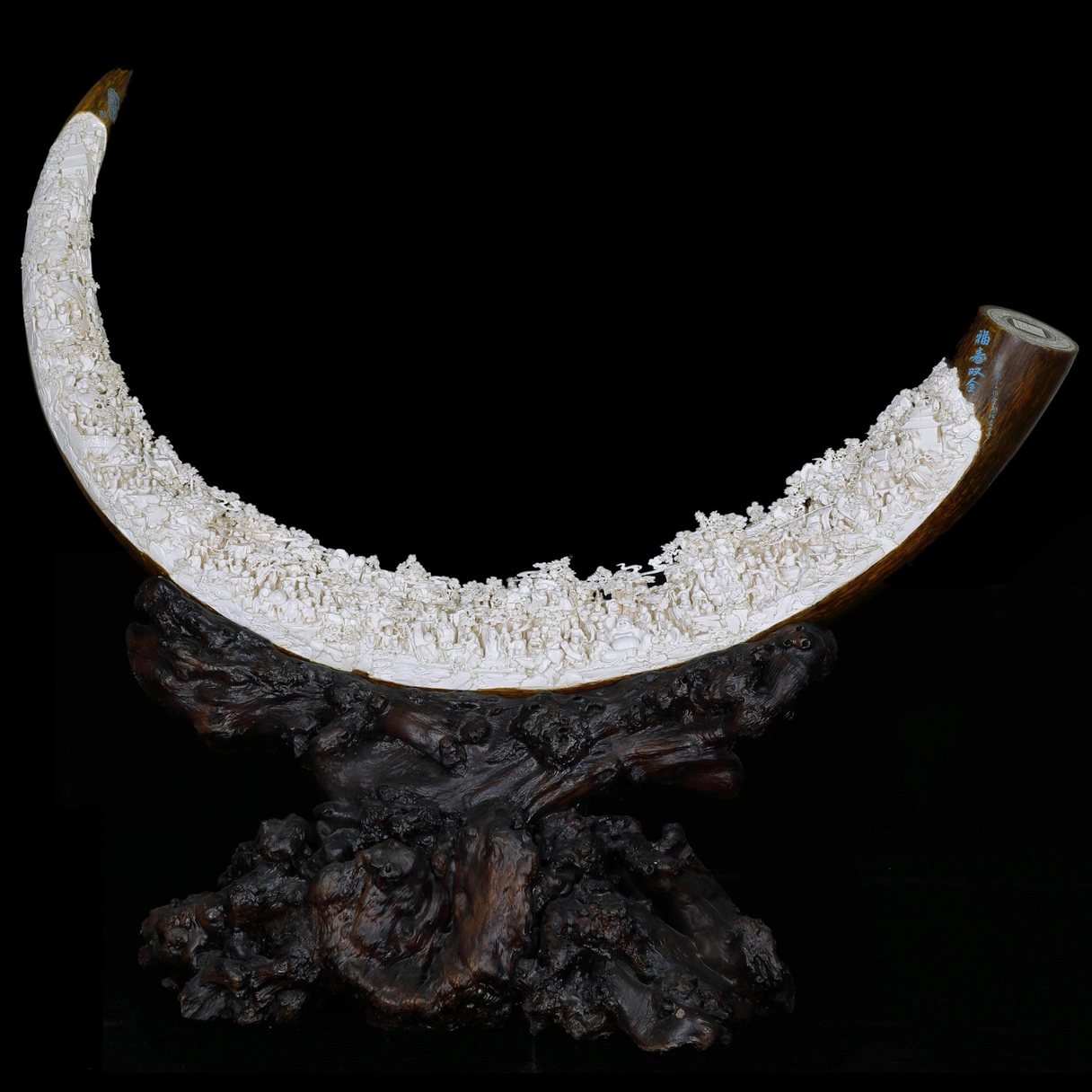
The mammoth tusk composition "To have in abundance — happiness and longevity" is a large work of artistic carving in which the natural shape of the ancient tusk is transformed into a complex symbolic panorama. The work is based on a massive mammoth tusk with a natural bend forming a wide arc. This line becomes the compositional basis of the entire stage, on which a whole world of figures, architecture and landscape elements unfold.
A detailed multi-figure composition created using the technique of deep relief is made along the inner side of the tusk. The surface of the bone is covered with numerous scenes: here you can see pavilions and pagodas, bridges and terraces, trees and mountain slopes. Among the architectural and natural forms there are figures of people — wise men, inhabitants, pilgrims and celestial beings. They are depicted in various activities: talking, traveling, participating in ceremonies and celebrations, creating a sense of a vibrant and harmonious world.
The central part of the composition unites the main scenes symbolizing well-being and prosperity. The figures of venerable elders, the traditional image of longevity in Eastern culture, are especially noticeable here. Nearby there are characters carrying symbolic objects associated with happiness, prosperity and longevity. Thanks to the fine elaboration of details, each figure has its own personality, and the whole composition is perceived as a single narrative about a prosperous and harmonious life.
The master masterfully uses the natural shape of the tusk. Its smooth curve turns into a horizon line, along which the whole scene unfolds. The light surface of the mammoth bone with the finest carvings contrasts with the dark base of the root wood. The texture of the base resembles a natural rock, from which the entire depicted world seems to arise.
The name of the composition is associated with the traditional oriental wish to have an abundance of happiness, health and a long life. Such plots often combine symbolic images of prosperity, harmony and spiritual well-being, creating an artistic embodiment of an ideal world order.
The work combines the rarity of ancient materials, exceptional carving skills and deep symbolism of oriental culture. The composition is perceived as an integral artistic image, where the natural power of the tusk, the delicacy of handwork and the philosophical idea of well-being combine in a harmonious and monumental work of art.