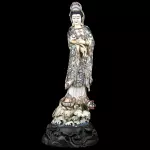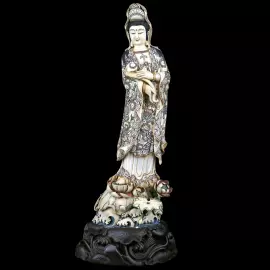











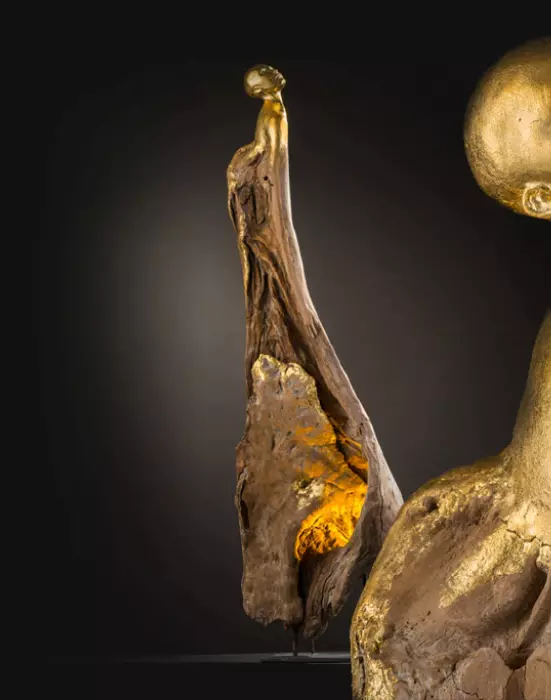



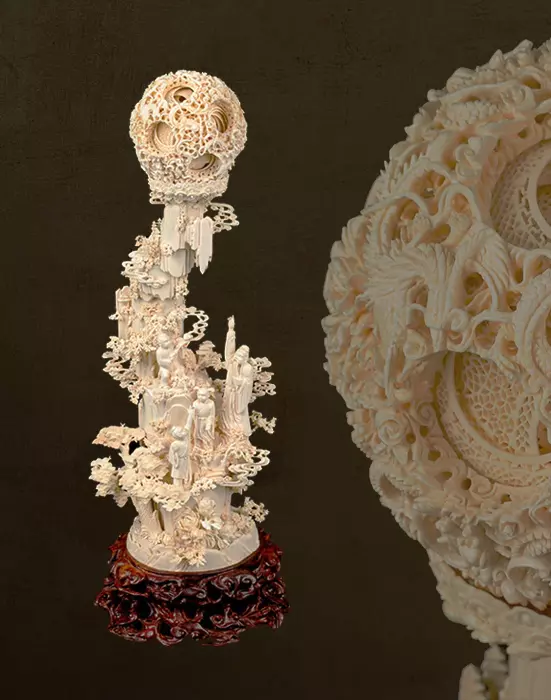










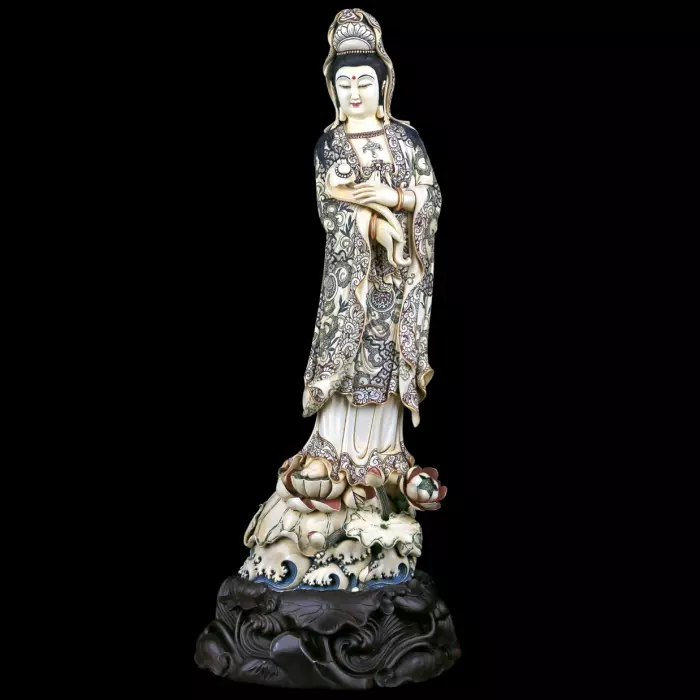
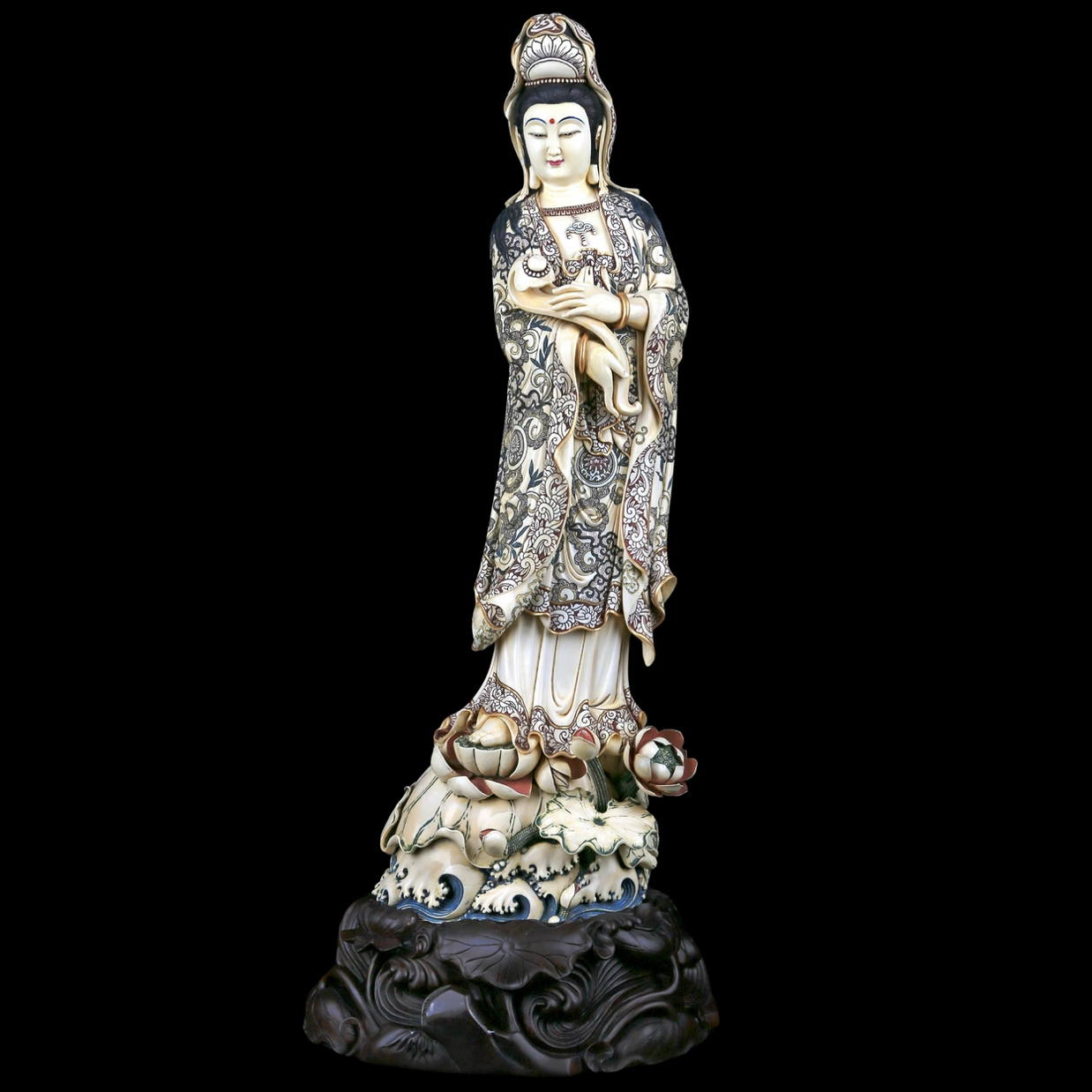
The mammoth tusk composition "Guanyin with a ruyi rod" embodies one of the most revered images of the Eastern spiritual tradition — the goddess of mercy and compassion. Guanyin in Chinese culture is perceived as an intercessor who hears prayers and responds to people's suffering, giving comfort, protection and hope. Her image is associated with the idea of unconditional kindness and inner purity, capable of transforming a person's destiny.
Of particular importance in the composition is the zhui rod, an ancient symbol of fulfillment of desires and a favorable fate. The word "zhui" itself translates as "at will", "as intended", and in the tradition this subject is associated with power over circumstances, harmony in life and achievement of goals. In the hands of Guanyin, rui acquires a deeper meaning: it is not just a sign of good luck, but an expression of supreme grace, in which desires are fulfilled in accordance with the spiritual order.
The image of the goddess is presented in a state of calm and concentration, which reflects the ideal of inner balance. Her soft gaze and smooth lines of her figure convey a sense of silence and security. In Chinese symbolism, such a state is perceived as a manifestation of true power — not external, but internal, capable of guiding and supporting.
The lotus, traditionally associated with the image of Guanyin, symbolizes purity arising from the world of imperfection. He reminds us of the possibility of spiritual growth regardless of circumstances, as well as the ability to maintain clarity and light even in difficult life situations. In combination with zhui, this image forms the idea of harmony between desire and wisdom.
"Guanyin with a ruyi rod" is a symbol of blessing, soft power and fulfillment of desires that come at the right time. The composition combines the rarity of a mammoth tusk, the finest artistic work and deep symbolism, creating an image filled with tranquility, protection and beneficial energy.