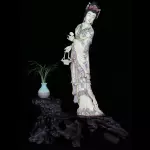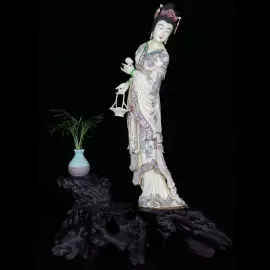




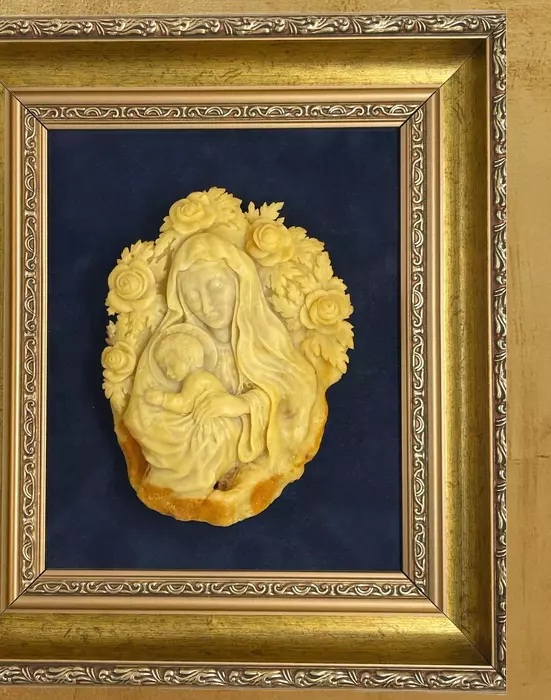













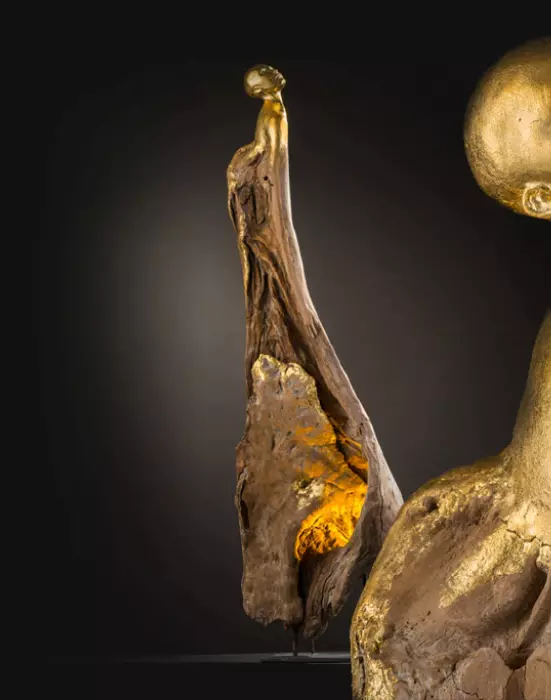


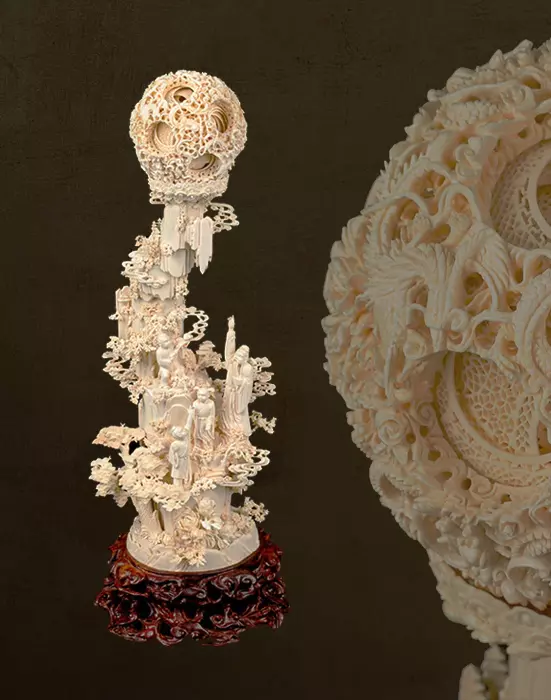















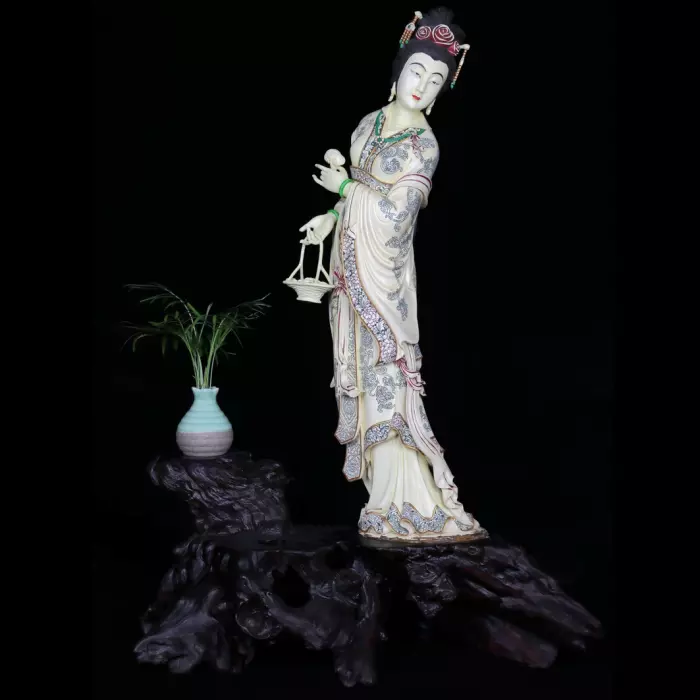
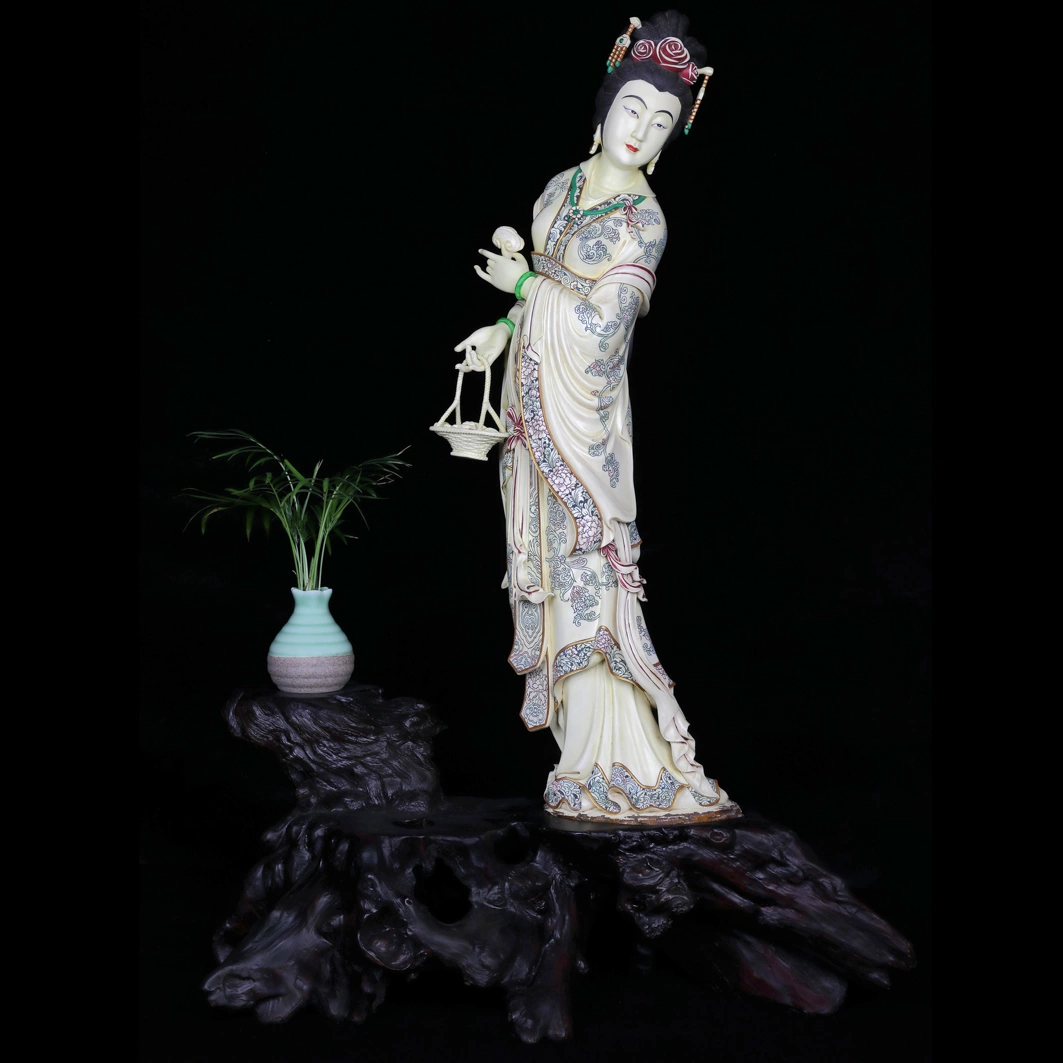
The mammoth tusk composition "The Spiritual Virgin and the Mushroom of Immortality" addresses one of the most poetic themes of Chinese culture — the search for eternal life and harmony with the heavenly order. The image of the graceful virgin goes back to the tradition of heavenly servants and immortals accompanying the higher powers and embodying purity, refinement and inner clarity.
The mushroom of immortality, known as lingzhi, occupies a central semantic place in the composition. In Chinese symbolism, it is considered one of the main attributes of longevity, spiritual strength and blessing. Its form and natural origin are associated with the idea of a natural path to immortality — not through struggle, but through harmony with nature and inner state. Lingzhi is often depicted in the hands of immortals and deities as a sign of achieved perfection and higher vital energy.
The smooth tilt of her figure and the soft lines of her clothes create a feeling of lively movement, as if virgo is not standing, but gliding in space, being between worlds. In Chinese aesthetics, such lightness is interpreted as a sign of spiritual refinement and the absence of gross material attachment. Ornaments decorating clothes enhance the meaning of the composition, acting as symbols of well-being, protection and continuity of the life stream.
The gesture of the hand holding the basket is perceived as an act of offering or handing over — not a material, but a symbolic gift. This is a hint of the blessing that the image brings: longevity, health, inner harmony and tranquility.
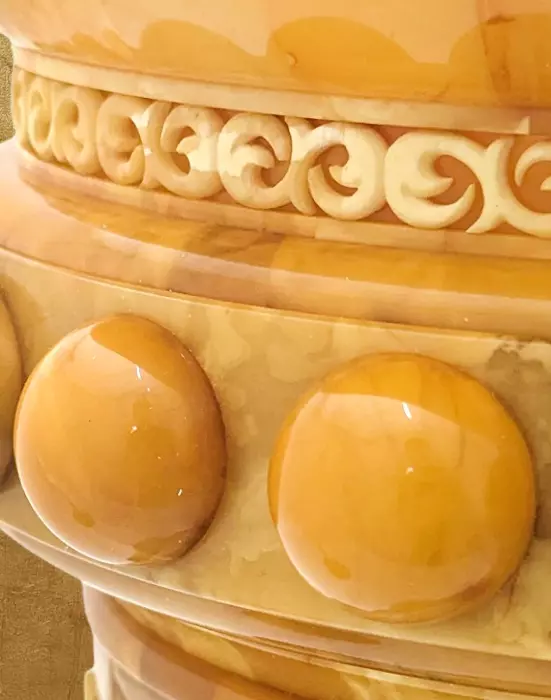
"The Spiritual Virgin and the Mushroom of Immortality" is an image of quiet strength, refined beauty and eternal life achieved through harmony. The composition combines the rarity of a mammoth tusk, virtuoso carving and deep symbolism, creating a work filled with light, positive energy and a sense of continuity of being.