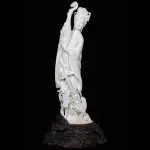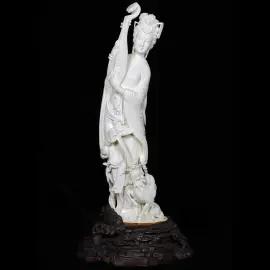


































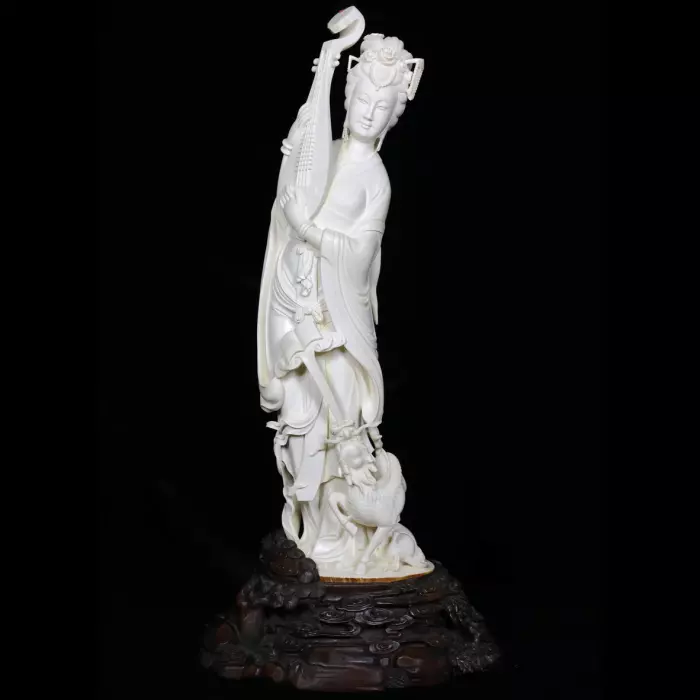
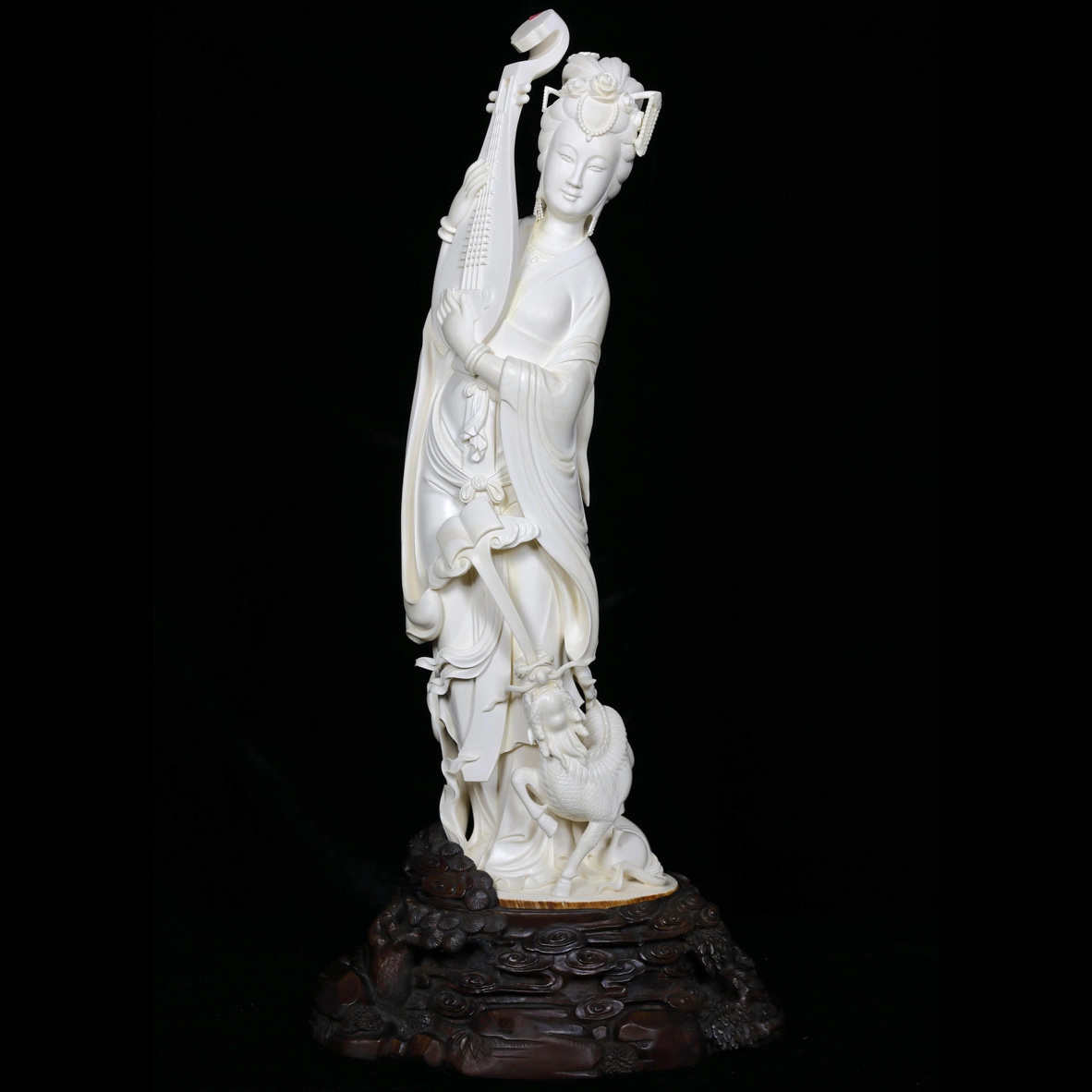
The mammoth tusk composition "Girl with a Lute" refers to the image of music as the highest form of harmony capable of connecting a person with the world and the sky. In Chinese culture, playing stringed instruments like the lute was perceived not as entertainment, but as an art of inner state — a way to bring thoughts, feelings and the surrounding space to balance.
The female figure depicted at the moment of concentrated performance symbolizes refinement, spiritual purity and control over emotions. Traditionally, it was believed that true music is born not from the skill of hands, but from the depths of consciousness, so the image of a musician is always associated with the concept of inner harmony and clarity.
The lute in Chinese symbolism is a sign of nobility and education. She is associated with scientists and people of high culture, for whom music was part of the path of self-improvement. The sound of such an instrument was perceived as a reflection of cosmic order — quiet, measured and devoid of chaos.
The figure of an animal at the feet enhances the meaning of the composition, adding a motif of nature's natural response to harmony. In the Chinese tradition, it was believed that pure music can affect all living things: it calms, attracts and unites, creating a space in which tension disappears and harmony arises.
"The Girl with the Lute" is an image of subtle inner attunement, beauty and harmony expressed through sound. The composition combines the rarity of a mammoth tusk, virtuoso carving and deep symbolism, creating a work filled with tranquility, nobility and a sense of perfect balance.