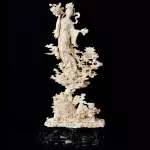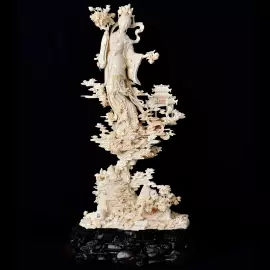







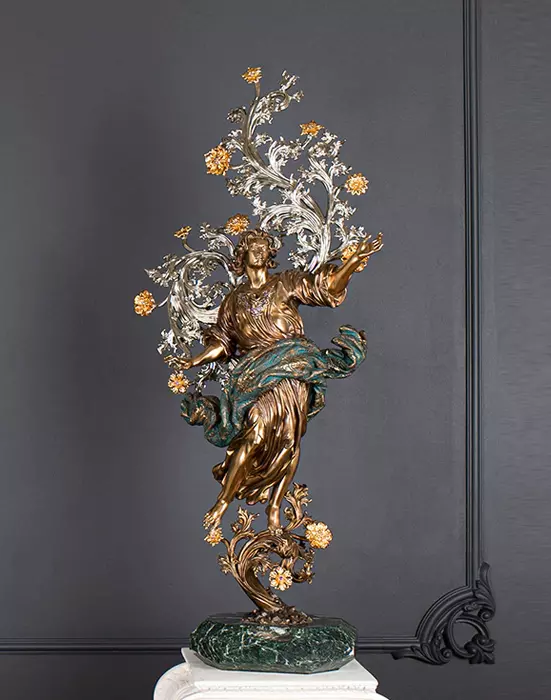
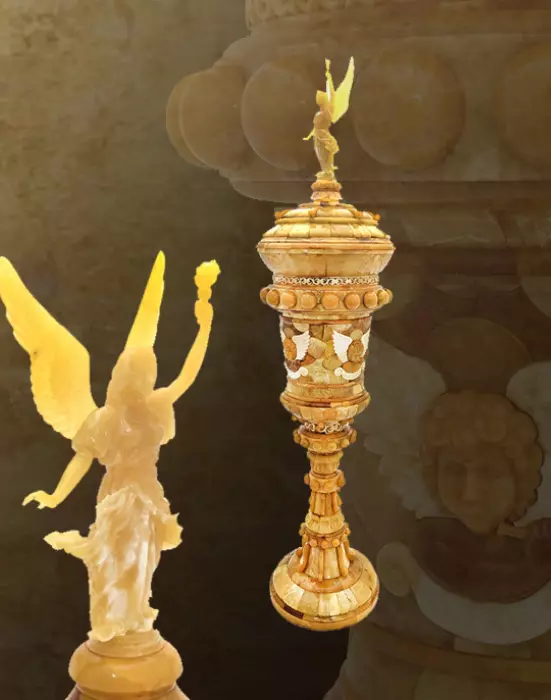
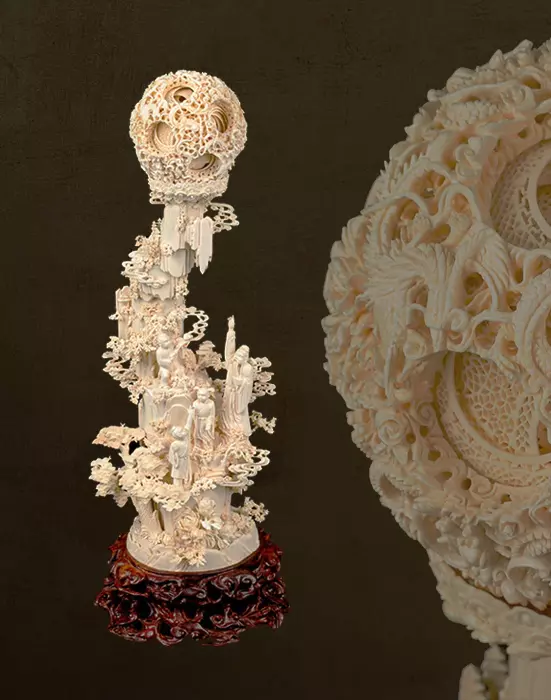














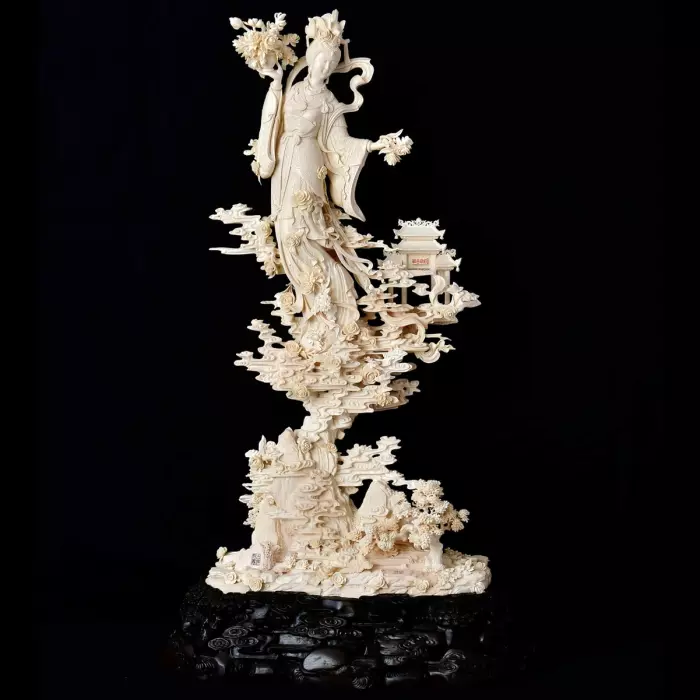
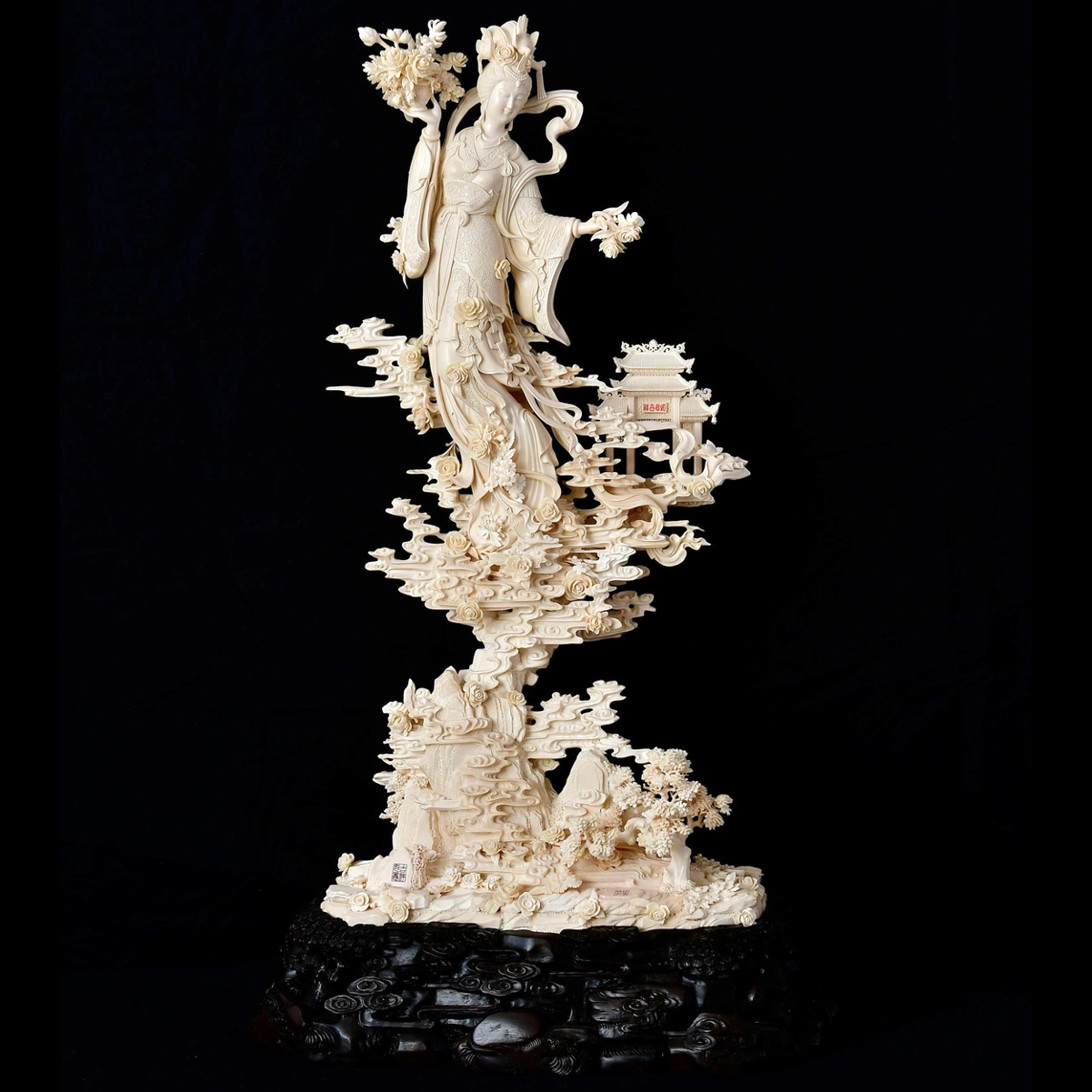
The mammoth tusk composition "Flowers Showered from Heaven" refers to the image of heavenly blessing, a rare and especially significant motif in the Chinese and Buddhist traditions. The plot, in which flowers fall from heaven, symbolizes the highest mercy, manifested in moments of harmony, spiritual purification and favorable changes. This is a sign that space and man are in harmony with the heavenly order.
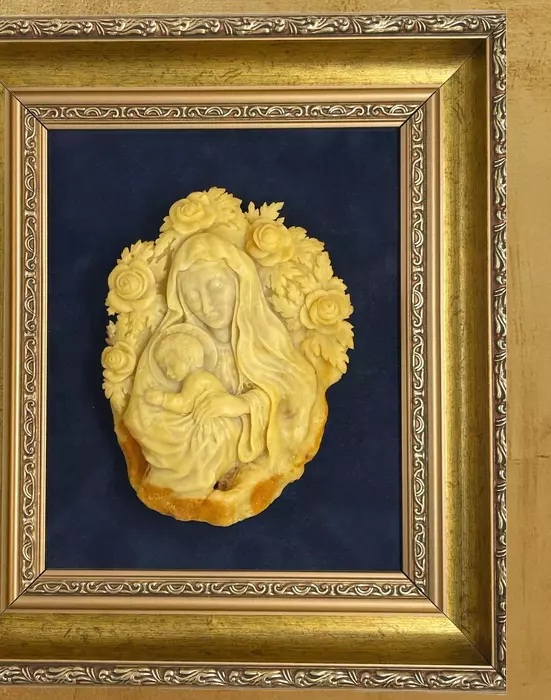
The figure of the heavenly virgin embodies refinement and purity, being an intermediary between the worlds. In Eastern culture, such images are associated with the idea of invisible patronage — soft, unobtrusive, but constantly present. Hand gestures guiding flowers downwards are perceived as an act of giving, through which well-being, joy and vitality are transmitted.
The flowers themselves in Chinese symbolism have a multi-layered meaning. They are associated with beauty, transience of life and at the same time with its renewal. The showering of flowers from heaven reinforces this meaning, turning the natural image into a metaphor of blessing, abundance, and spiritual awakening. This is not an accidental phenomenon, but a sign of supreme approval and harmony.
Landscape elements, including architectural forms and natural motifs, create a sense of an ideal world where man, nature and the sky are in unity. In Chinese aesthetics, such scenes are perceived as a reflection of a utopian space — a world in which balance has been achieved and there is no contradiction.
"Flowers showered from heaven" is an image of blessing, abundance and a subtle connection with higher powers. The composition combines the rarity of a mammoth tusk, complex multilevel carvings and deep symbolism, creating a work filled with light, harmony and a sense of heavenly grace.