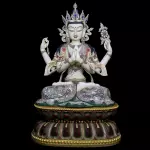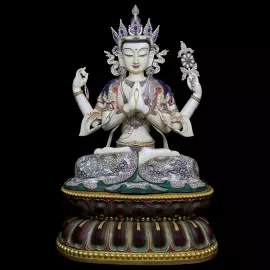






















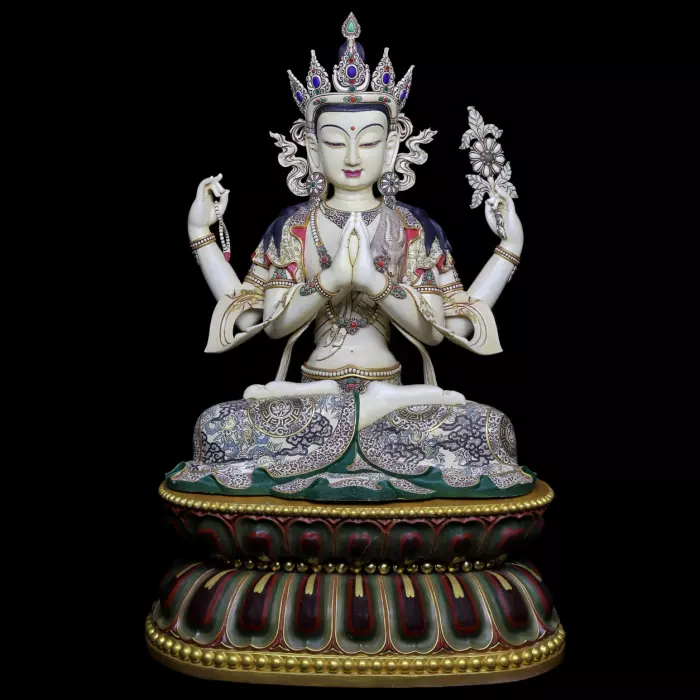
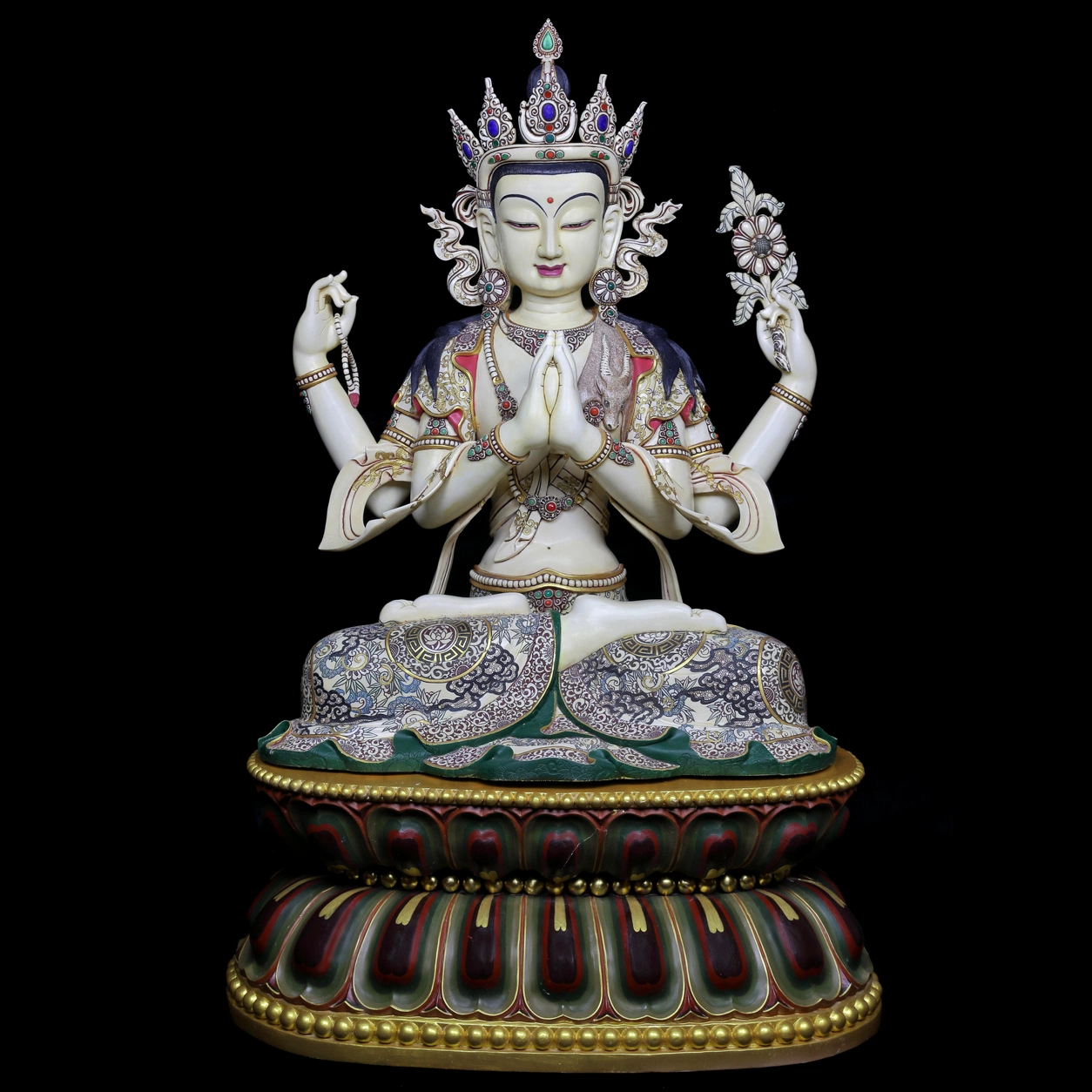
The mammoth tusk composition "Four-armed Guanyin" is an exquisite work of Oriental sculptural tradition, embodying one of the most revered images of Buddhist spiritual culture. The sculpture is made of mammoth bone and is mounted on a decorative lotus pedestal, symbolizing purity, spiritual awakening and elevation above worldly passions.
In the center of the composition is Guanyin, the Bodhisattva of mercy and compassion, revered as the protector and patroness of all living beings. The figure is represented in a meditative pose with four arms, each of which carries a symbolic meaning. The central pair of hands is folded in a prayer gesture expressing harmony and concentration. In one of the side hands is a rosary, a symbol of spiritual practice and continuous meditation, in the other — a lotus flower, a sign of purity, enlightenment and spiritual perfection.
The bodhisattva's face is filled with calmness and inner light. Half-closed eyes convey a state of deep contemplation, and a soft smile creates a feeling of benevolence and peace. The head is decorated with an elaborate crown with precious stones, enhancing the solemnity of the image and emphasizing its sacred significance.
The figure's clothes are covered with intricate ornamental patterns, reminiscent of the luxurious fabrics of ancient palaces. Relief details, decorations and delicate paintings create the impression of richness and depth of artistic work. Each line and each decorative element are executed with exceptional precision, which emphasizes the high level of craftsmanship of the carvers.
The base of the composition is made in the form of an open lotus with petals of saturated red, green and gold shades. Such a pedestal traditionally symbolizes spiritual birth and purity of consciousness arising in the midst of a world of suffering.
"Four-armed Guanyin" embodies the idea of infinite compassion and willingness to help all beings. The multitude of hands in Buddhist symbolism means the bodhisattva's ability to simultaneously hear and respond to the requests of the world.
The composition combines ancient natural materials, virtuoso artistic technique and deep philosophical symbolism, turning it into a work of art that carries not only aesthetic value, but also an image of spiritual harmony and mercy.