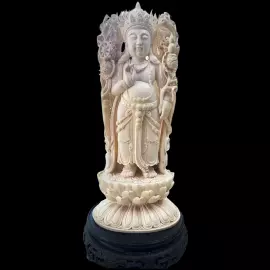
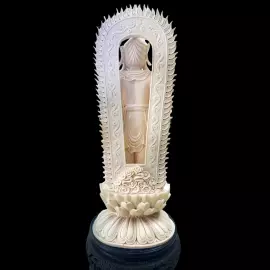
Composition of a mammoth tusk "Buddha"


- Pickup from gallery : Set a route
- Courier delivery
- Delivery by a transport company in the shortest possible time
- VIP air delivery
- Delivery rates
The composition of the mammoth tusk "Buddha" is a sophisticated piece that harmoniously combines spiritual meaning and virtuoso carving technique. The light, warm shade of the material with soft natural iridescences emphasizes the purity of the image and gives it an inner glow. The figure is placed on a multi-level base, where smooth lines and ornamental elements create a sense of stability and completeness, corresponding to the status of a rare collector's item.
The central image is a standing Buddha, full of restrained plasticity and inner peace. The face of the deity expresses deep concentration and enlightenment, and the gesture of the hand raised in blessing is interpreted as protection, guidance and giving peace. In the Chinese tradition, such Buddha images are often associated with spreading the teachings of the Dharma, harmonizing space, and strengthening a person's inner balance. The ornamental background behind the figure may include symbolic motifs indicating the cycle of life, the path to enlightenment, and the connection between the earthly and spiritual worlds. The sculptural composition is perceived as a visual embodiment of the state of enlightenment that a person aspires to, passing the path of self-knowledge.
The finest Cantonese carving is revealed in the filigree elaboration of the folds of clothing, jewelry and facial features, creating a feeling of softness and depth of the material. In Chinese culture, the image of the Buddha symbolizes supreme wisdom, the ability to comprehend the true nature of the world and free oneself from illusions and suffering. He represents the path to inner freedom, purification of consciousness and spiritual perfection. Such a work is perceived not only as an object of art, but also as a carrier of sacred meaning: it fills the space with harmony, promotes peace, helps to focus on the main thing and serves as a symbol of striving for a conscious, fulfilling and harmonious life.
| Country of manufacture: | China |
| Material: | the mammoth tusk, The ebony tree |
| Technique of execution: | Beijing bone carving |
| Sizes: | 39 × 16 × 13 cm . |