






















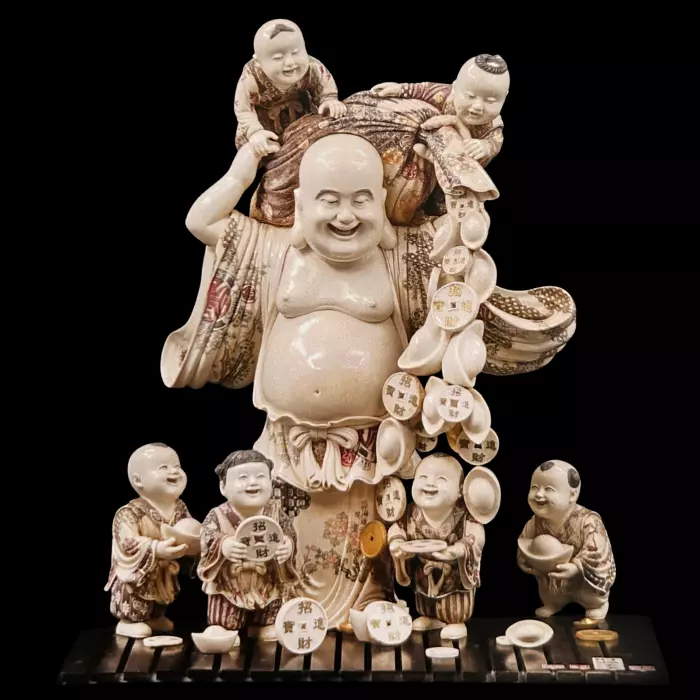
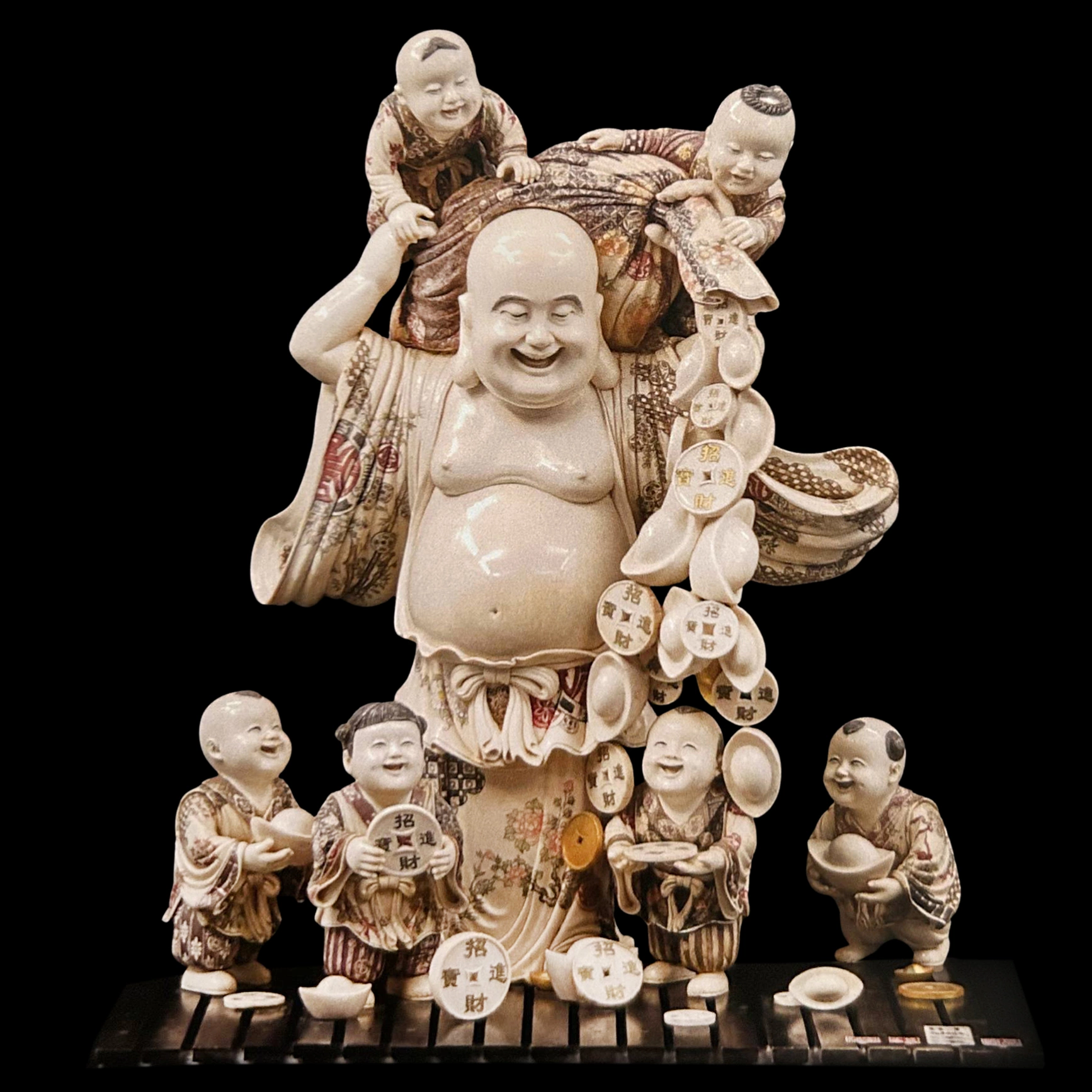
Mammoth tusk composition "Wealth flows like a river"
28 080 000 ₽
0
Add a gift label
Engraving on the nameplate 1500 ₽
Delivery options
Worldwide
Delivery by a transport company in the shortest possible time
VIP air delivery
Delivery rates
About this product
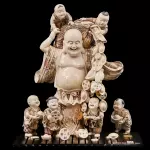
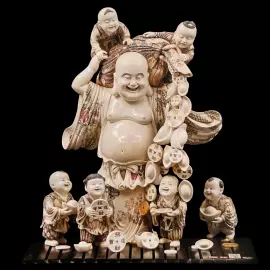
The mammoth tusk composition "Wealth flows like a River" embodies one of the most cheerful and benevolent images of the Chinese tradition — the figure of the laughing Buddha, known as Buddai or Hotei. In Eastern culture, this character symbolizes abundance, happiness and generosity of fate. His image is associated with the idea that true wealth comes to those who live in harmony and joy.
In the center of the composition is a smiling Buddha with a rounded belly, symbolizing prosperity and well—being. He carries a large bag on his shoulders, from which a stream of coins and jewelry seems to be pouring. In Chinese symbolism, such a bag means inexhaustible abundance and the ability to attract material goods.
Children are placed around the deity, a traditional symbol of happiness and procreation. They happily collect coins and bullion, laugh and play, creating an atmosphere of carefree joy. In Chinese art, children often represent a blessing for a happy family life, as well as for numerous offspring.
The coins themselves, depicted in the composition, resemble ancient Chinese banknotes with a square hole in the center. Their stream, descending from the shoulders of the Buddha, forms a kind of "river of wealth", which is reflected in the title of the composition. This image symbolizes the continuous flow of prosperity and financial luck.
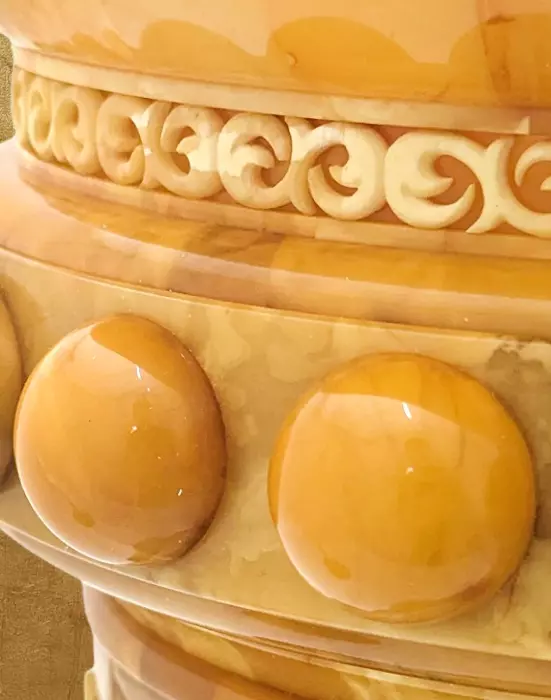
Masterful mammoth tusk carving allows you to convey an amazing wealth of details: the delicate texture of fabrics, expressive faces of children, smooth folds of clothes and rounded shapes of coins. The warm shade of the bone gives the composition nobility and a soft glow, emphasizing its artistic value.
In general, the composition is perceived as a vivid symbol of the generosity of fate and the joy of life. The stream of coins emanating from the laughing Buddha recalls the ancient Oriental wish that wealth and happiness come to the house easily and freely, like a river flowing its waters without end.
Characteristics
- Country of manufacture:
- China
- Material:
- the mammoth tusk, The ebony tree
- Technique of execution:
- Beijing bone carving
- Sizes:
- 45.5 × 35.5 × 68 cm.
- Weight:
- 12.5 kg.
Similar products