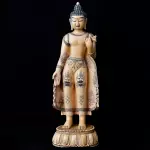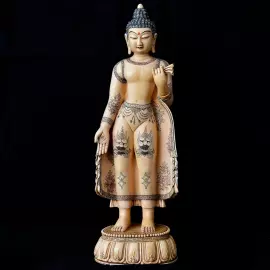



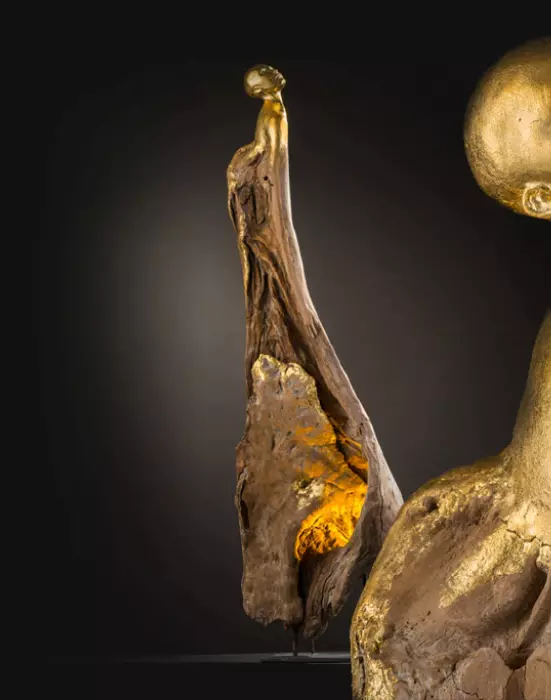
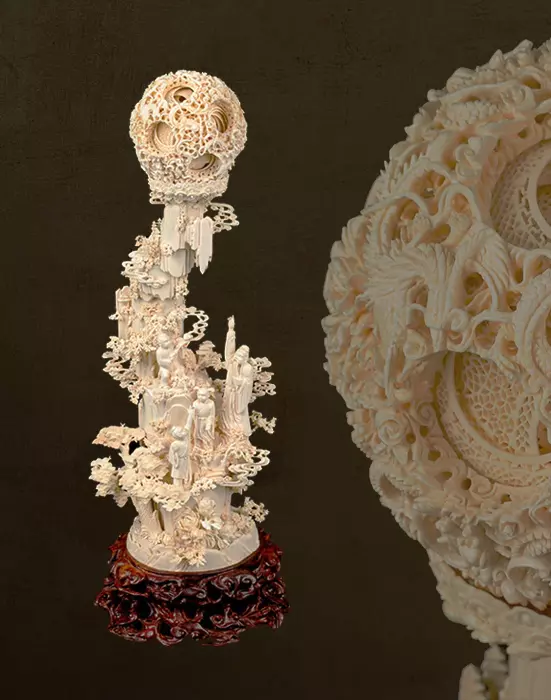










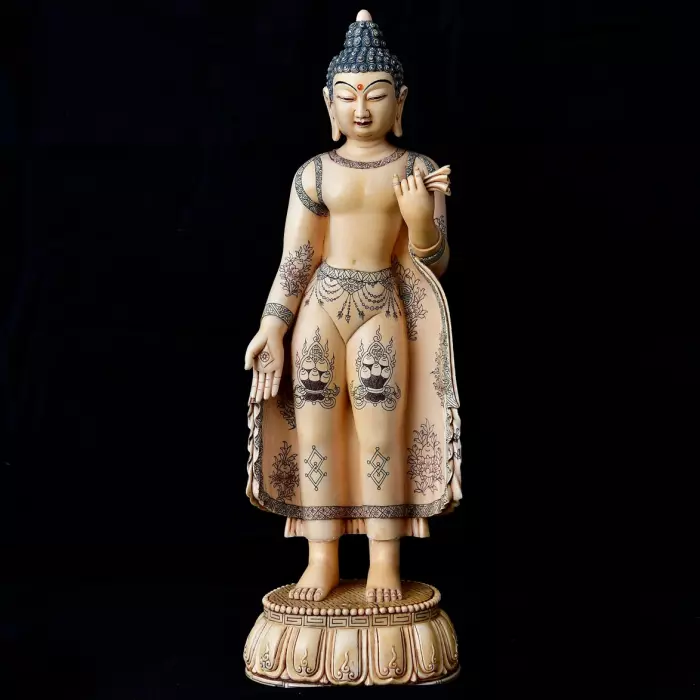
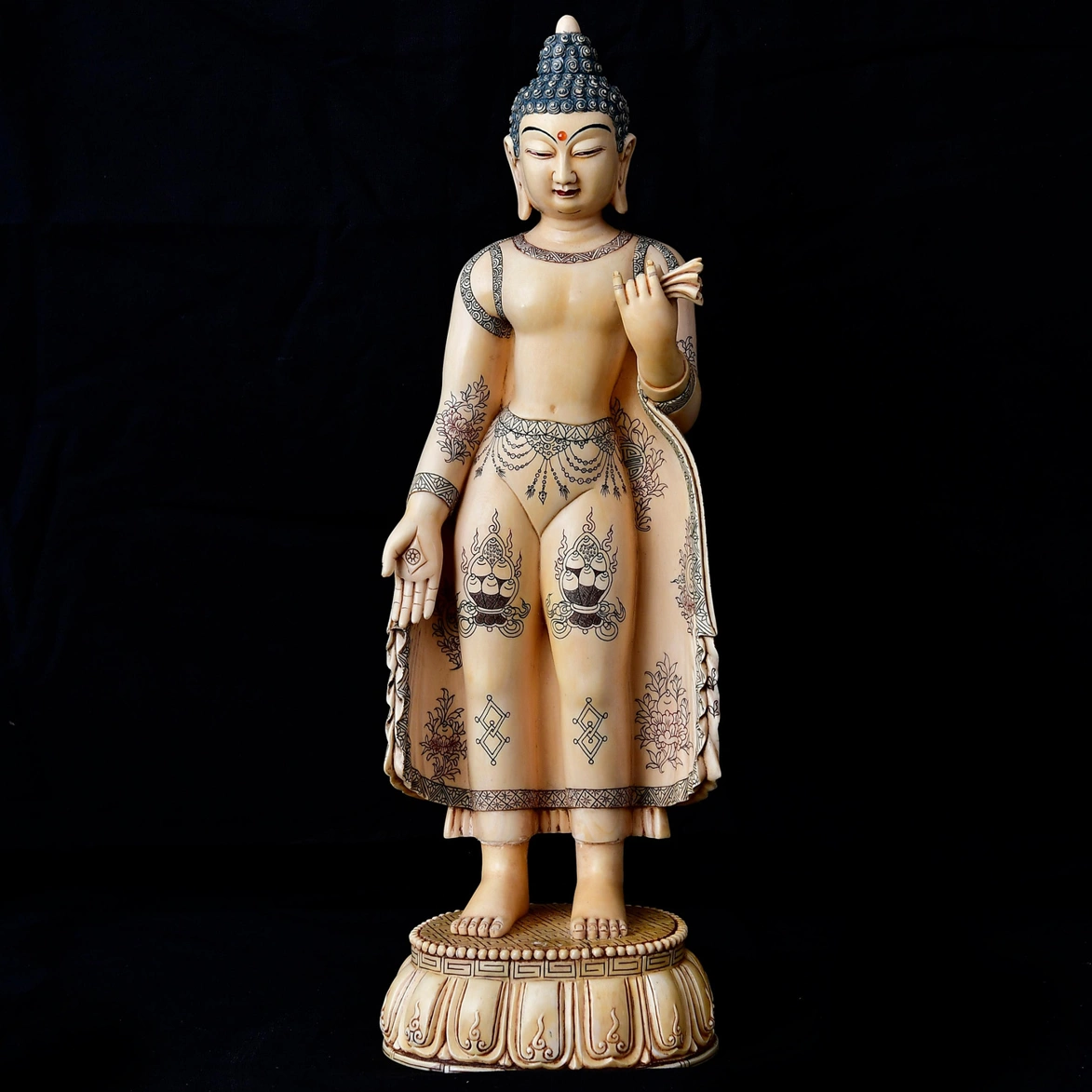
The mammoth tusk composition "God of Longevity" is a special, rare interpretation of the theme of long life, where the emphasis is shifted from the familiar image of the elder to the idea of eternal vitality and renewal. The viewer is presented with a figure that combines the features of youth and inner maturity, which in Chinese symbolism indicates true longevity — not as aging, but as the preservation of vitality and clarity of consciousness.
In the tradition, longevity is closely linked to the harmony between body and spirit, as well as the proper flow of qi energy. This image reflects a state in which a person not only lives for a long time, but retains health, beauty and inner stability. That is why the figure is devoid of signs of time fatigue — on the contrary, it is filled with calm, concentrated vitality.
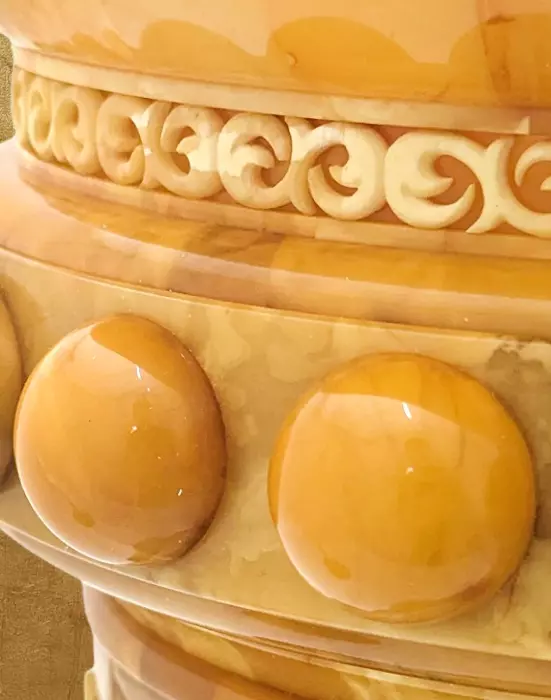
Ornamental motifs covering the body and clothing play an important symbolic role. In Chinese culture, patterns are not decorative elements in the usual sense — they act as carriers of meaning, a kind of language of benevolence. Repetitive elements reinforce the idea of continuity, cyclicity and steady flow of life, as well as protection and energy storage.
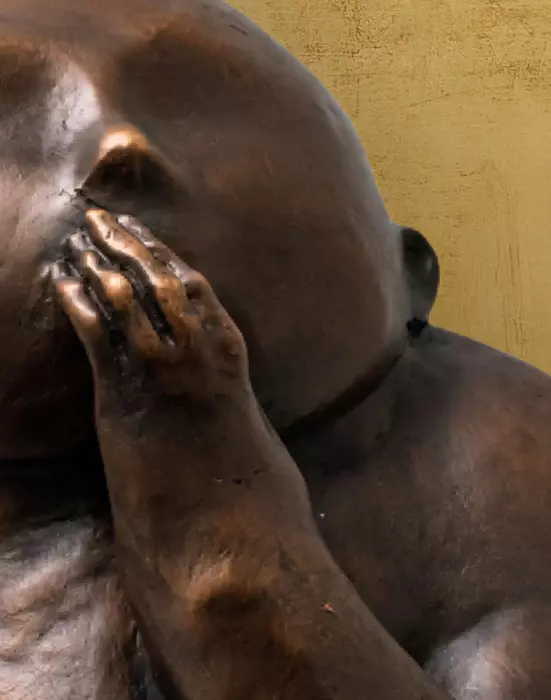
The pose of the figure, combining openness and inner composure, conveys a balance between the outside world and the inner state. This shows the philosophy of longevity as the ability to maintain balance: not to waste your strength, but also not to lock yourself in, remaining in the flow of life.
The "God of longevity" in this incarnation is a symbol not only of longevity, but also of the quality of life: health, harmony and inner strength that persists beyond time. The composition combines the rarity of a mammoth tusk, the exquisite work of a master and deep symbolism, creating an image filled with tranquility, stability and the beneficial energy of a long life.