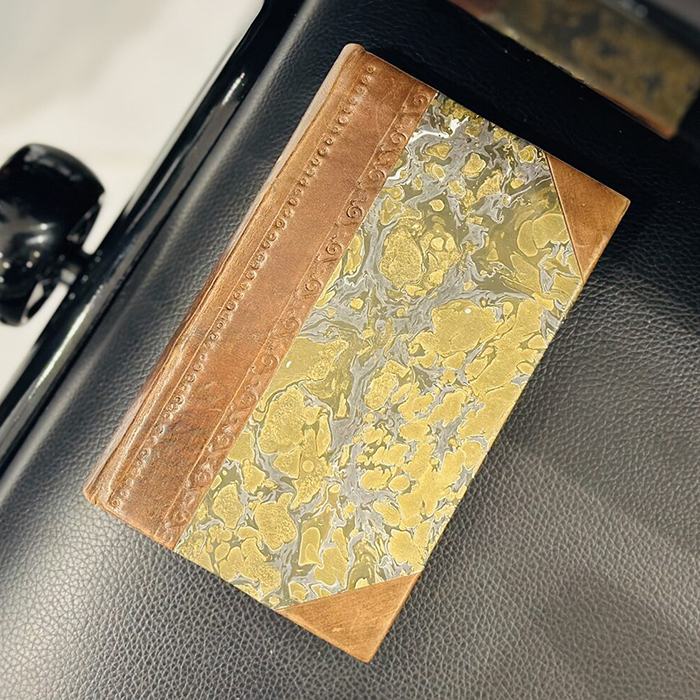
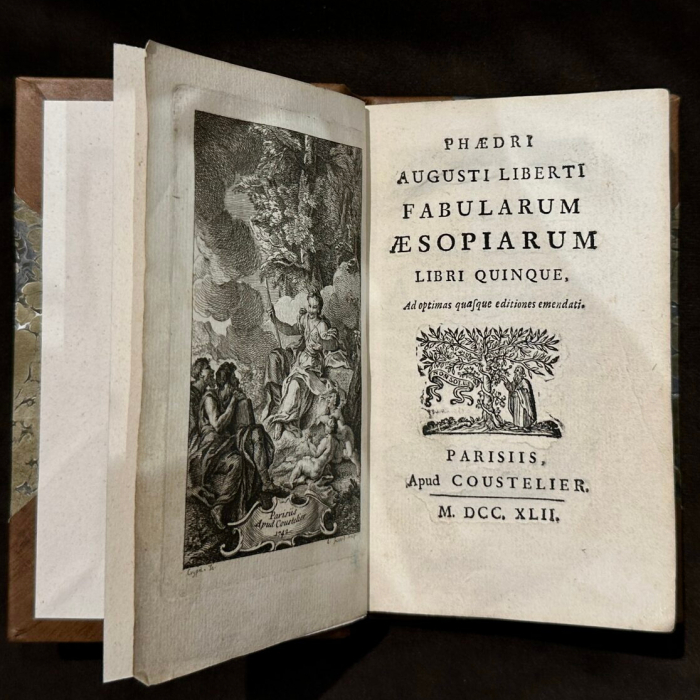
The book "Phaedrus, freedman of Augustus, Aesop's fables", Paris, Coustelier Printing House, 1742
Art.
:
258-21806
Available in stock


590 000
₽
The discount under the loyalty program does not apply to the article 258-21806
Add a gift label
Engraving on the nameplate
(1500 ₽)
Delivery options
Moscow
:
- Pickup from gallery : Set a route
- Courier delivery
Worldwide
:
- Delivery by a transport company in the shortest possible time
- VIP air delivery
- Delivery rates
About this product
Art.
:
258-21806
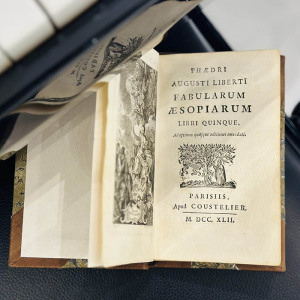
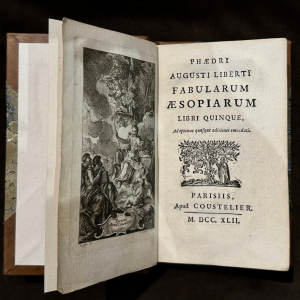
The book was printed in the Paris printing house of Antoine-Urbain Coustelier II, who between 1742 and 1746 published a series of small-format Latin classics, which included this edition of the fables of Phaedrus.
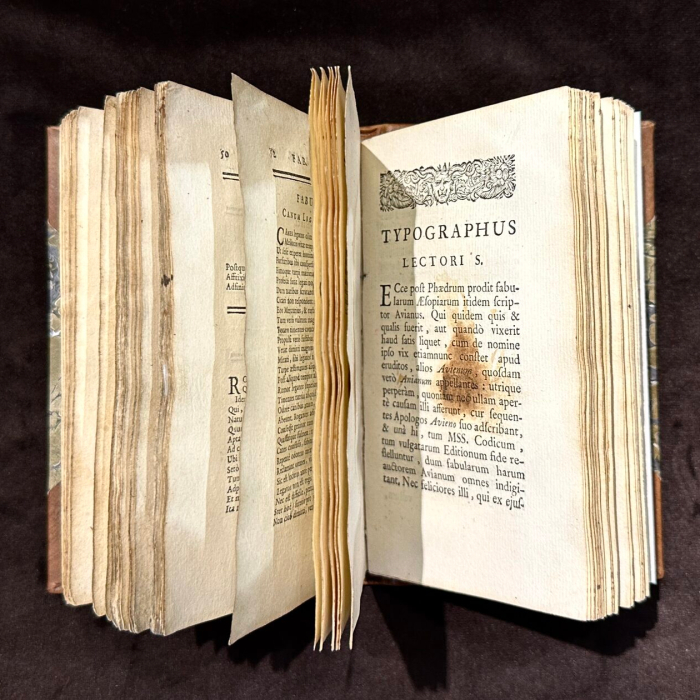
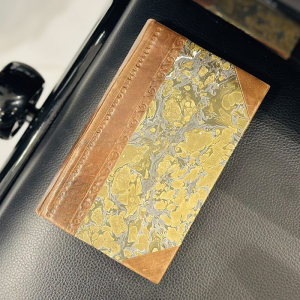
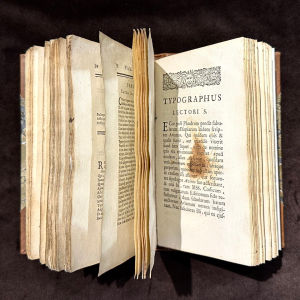
The frontispiece depicting a mythological plot is illustrated by the engraver Antoine Quapel. The book contains five plot screensavers, engraved by E. Fessar, depicting the same scene of the fabulist Phaedrus surrounded by animals — frequent heroes of his works. There are also ornamental screensavers and small initials at the beginning of each chapter. The preservation is perfect: the original cover has been restored, the sheets are not damaged, there are minor changes in the color of the paper. The text is in Latin.
Phaedrus is a Roman poet and fabulist of the beginning of our era. Often his fables are translations of Aesop's fables, but also his own fables "in the Aesopian spirit." Phaedrus wrote five books of poetic fables, 134 of them have survived to our time. The fables are written in Latin iambic hexameter, as are the comedies of Plautus and Terence.
The fabulist Phaedrus was a native of Macedonia. At first he was a slave, then a freedman of the Emperor Augustus, which is where part of the title of the book comes from. He wrote poetry in Latin and, as he admitted, wanted them to compete with Greek fables, in particular, with Aesop himself.
The heroes of Phaedrus' fables are people and talking animals. Historical and legendary figures often became the exponents of his thoughts. For example, Socrates in the fable builds a small house, the size of which is enough to gather real friends there. In other fables, the heroes were the Emperor Tiberius and the commander Pompey. Repeatedly, Aesop himself became the hero of the fables.
Fables were considered a despicable low genre in the literary circles of imperial Rome, so the poetic work of Phaedrus was not appreciated during his lifetime.
In late antiquity, his fables, set out in prose, became part of the fable collection (the so-called "Romulus"), which for many centuries served for school education and was one of the most important sources for medieval fable.
In the Middle Ages, the fables of Phaedrus were considered lost, but at the end of the XVI century, the legacy of the fabulist was published and its authenticity was verified.
The frontispiece depicting a mythological plot is illustrated by the engraver Antoine Quapel. The book contains five plot screensavers, engraved by E. Fessar, depicting the same scene of the fabulist Phaedrus surrounded by animals — frequent heroes of his works. There are also ornamental screensavers and small initials at the beginning of each chapter. The preservation is perfect: the original cover has been restored, the sheets are not damaged, there are minor changes in the color of the paper. The text is in Latin.
Phaedrus is a Roman poet and fabulist of the beginning of our era. Often his fables are translations of Aesop's fables, but also his own fables "in the Aesopian spirit." Phaedrus wrote five books of poetic fables, 134 of them have survived to our time. The fables are written in Latin iambic hexameter, as are the comedies of Plautus and Terence.
The fabulist Phaedrus was a native of Macedonia. At first he was a slave, then a freedman of the Emperor Augustus, which is where part of the title of the book comes from. He wrote poetry in Latin and, as he admitted, wanted them to compete with Greek fables, in particular, with Aesop himself.
The heroes of Phaedrus' fables are people and talking animals. Historical and legendary figures often became the exponents of his thoughts. For example, Socrates in the fable builds a small house, the size of which is enough to gather real friends there. In other fables, the heroes were the Emperor Tiberius and the commander Pompey. Repeatedly, Aesop himself became the hero of the fables.
Fables were considered a despicable low genre in the literary circles of imperial Rome, so the poetic work of Phaedrus was not appreciated during his lifetime.
In late antiquity, his fables, set out in prose, became part of the fable collection (the so-called "Romulus"), which for many centuries served for school education and was one of the most important sources for medieval fable.
In the Middle Ages, the fables of Phaedrus were considered lost, but at the end of the XVI century, the legacy of the fabulist was published and its authenticity was verified.
Expand
Characteristics
| Brand: | Stargift |
| Material: | paper |
| : | , , , , , , , |
| Sizes: | 9 × 2 × 15 cm . |

You will receive a passport with this product.
Similar products











Available in stock











Available in stock




350 000 ₽
Available in stock




Available in stock