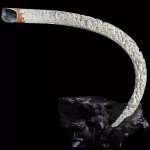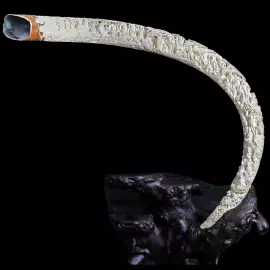


















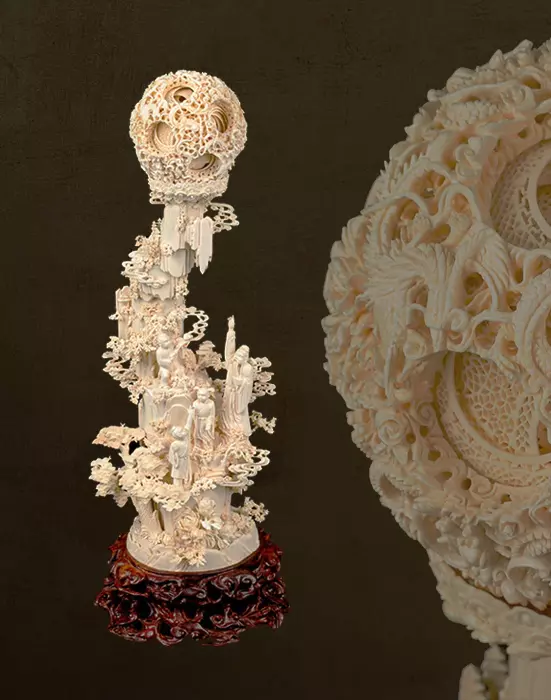
















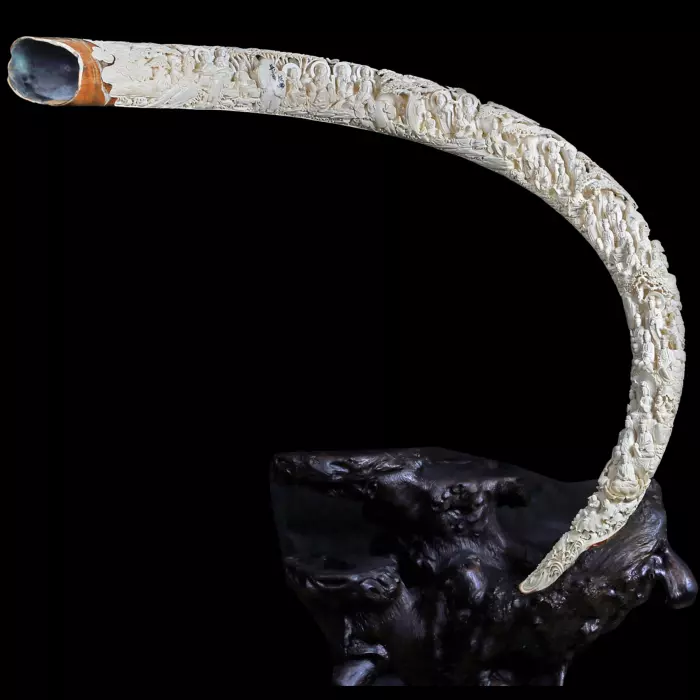
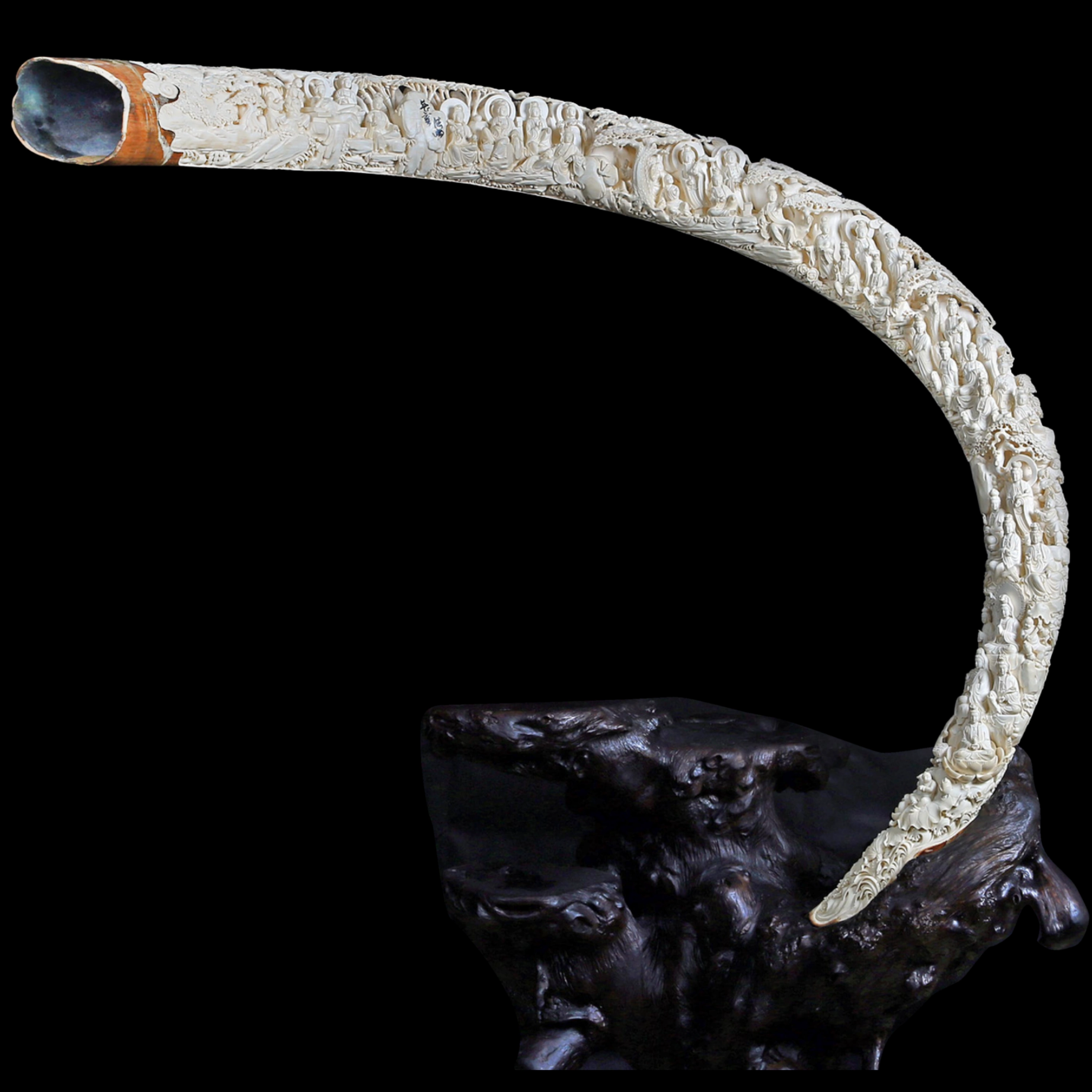
The mammoth tusk composition "Thirty-three Incarnations of Guanyin" is a complex piece of artistic carving in which ancient natural material becomes the basis for a philosophical and religious image. A large mammoth tusk was used as the main element, preserving the natural smooth curve line. Its shape resembles an arc of celestial space, on the surface of which a continuous narrative composition is unfolded.
The entire outside of the tusk is covered with the finest relief carvings. It successively depicts thirty—three manifestations of Bodhisattva Guanyin, one of the most revered images of Eastern Buddhism, symbolizing mercy, compassion and protection of living beings. Each incarnation is presented in a separate scene: the figures differ in poses, attributes, and surroundings, reflecting the diverse forms of divine compassion in the human world.
The plot develops along the entire arc of the tusk, like a spiritual journey. Guanyin figures appear among temple pavilions, clouds, rocks, and trees. Monks, pilgrims and celestial beings are depicted next to them, creating a feeling of a solemn spiritual procession. Thanks to the multilevel carving, the scenes acquire depth, and each figure is perceived as an independent artistic image.
The natural shape of the tusk gives the composition a special expressiveness. Its curve becomes a kind of narrative line, which consistently reveals various aspects of the image of Guanyin. The light surface of the mammoth bone, covered with intricate carvings, contrasts with the dark base of the root wood, reminiscent of an ancient rock or mountain range.
The theme of "The Thirty-three Incarnations of Guanyin" has a deep spiritual significance. According to Buddhist tradition, a bodhisattva is able to take on various forms to help beings depending on their needs and circumstances. The artistic embodiment of this plot turns the composition into a symbol of mercy, protection and spiritual enlightenment.
The work combines the rarity of ancient materials, virtuoso carving techniques and rich religious symbols. The composition is perceived as an integral artistic image in which the natural shape of the tusk, the skill of the carver and the philosophical idea of compassion are combined in a single harmonious space.