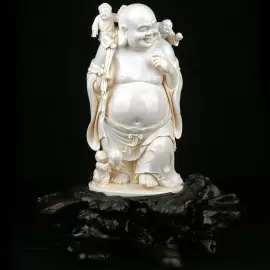





































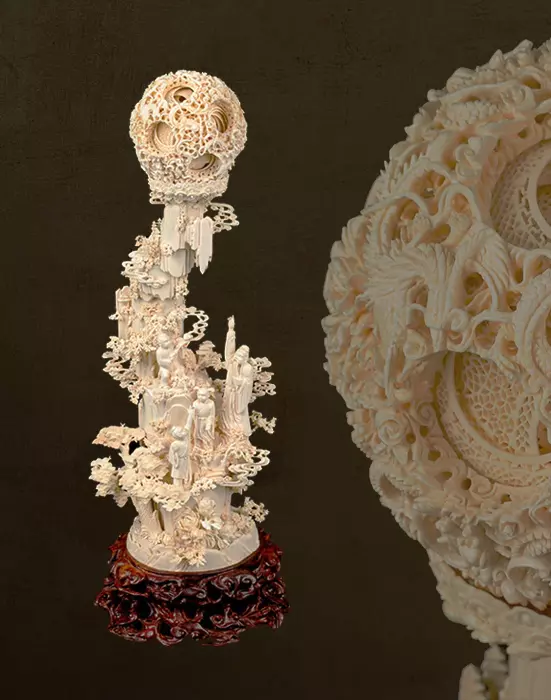


















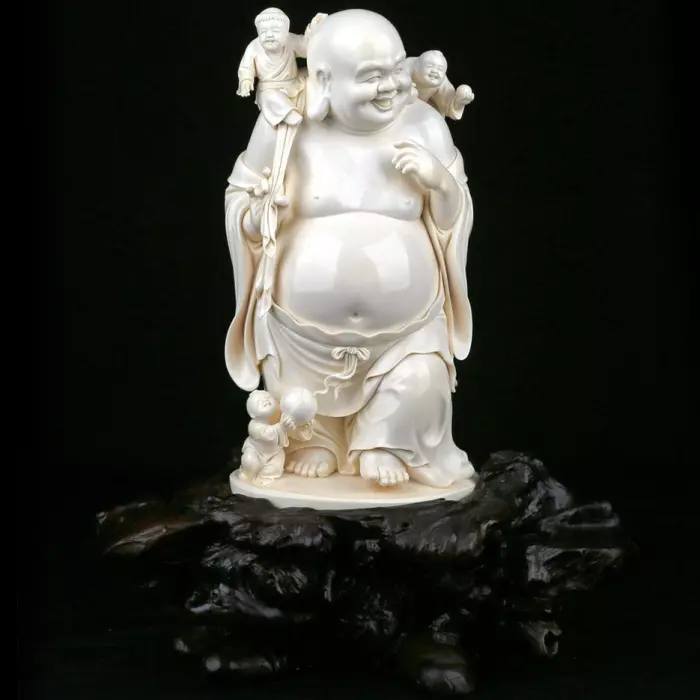
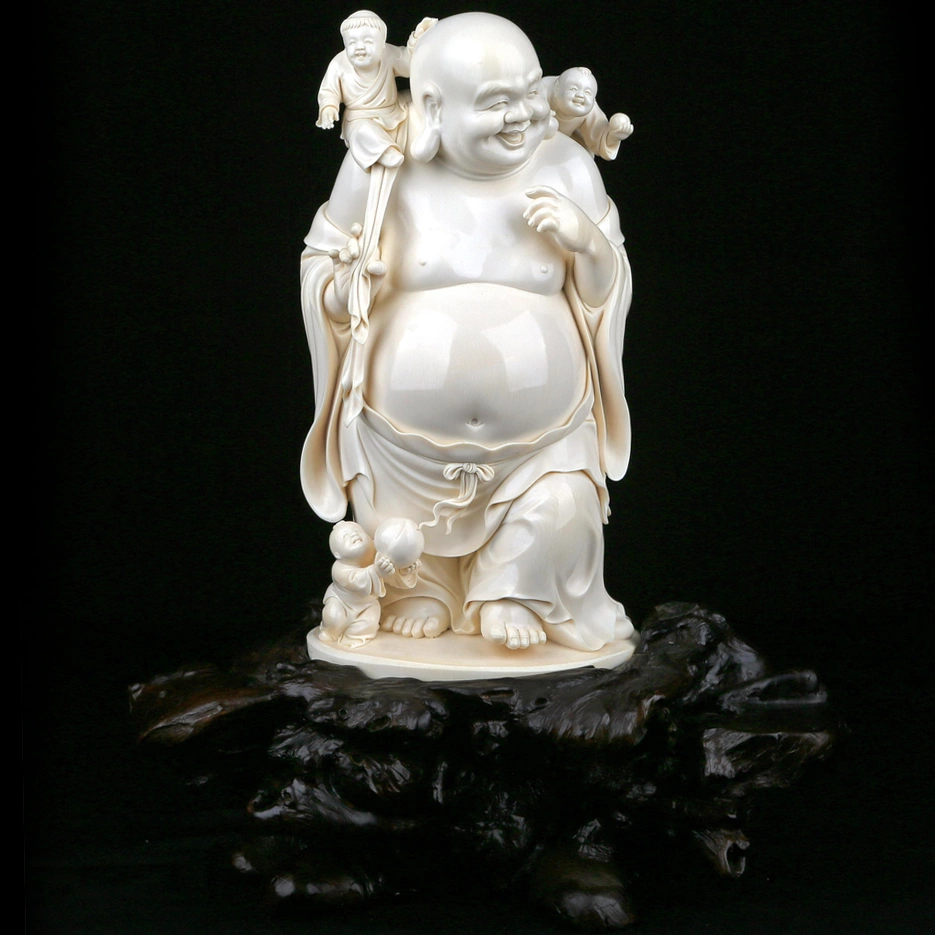
The mammoth tusk composition "Maitreya with three children" embodies one of the most favorable subjects of Chinese symbolism, combining the ideas of joy, abundance and procreation. Maitreya, depicted as a laughing Buddha, is associated with a future time of happiness when the world will be filled with harmony and carefree. His smile and open, cheerful energy convey a state of inner well-being independent of external circumstances.
The image of children enhances the symbolic meaning of the composition. In Chinese culture, children are a sign of continued life, family happiness, and a blessing for offspring. The plot with several children is especially significant — it expresses the wish for a large and successful family, the prosperity of the family and the transfer of well-being from generation to generation. Such scenes are often perceived as a wish for "many sons and much happiness," which has traditionally been considered the highest form of good luck.
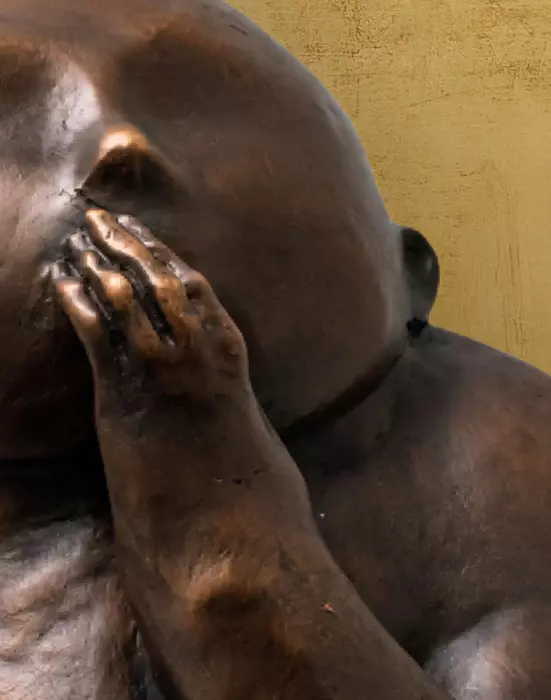
Gestures and the interaction of figures create a feeling of lively movement and sincere joy. The children reach out to Maitreya, play, laugh, and he responds with kindness and a gentle smile. This scene symbolizes the harmony between generations, the warmth of family ties and the natural flow of life, in which joy is transmitted from one to the other.
Additional details, such as the fetus in the child's hands, enhance the image of abundance and well-being. In Chinese symbolism, fruits are often associated with prosperity, fulfillment of desires and fullness of life. In combination with the image of Maitreya, they form a single wish for happiness, material and spiritual prosperity.
"Maitreya with three children" is an image of joy, family well—being and abundance, expressed through the language of traditional symbols. The composition combines the rarity of a mammoth tusk, the softness of plastic and the expressiveness of images, creating a work filled with light, warmth and a sense of living happiness.